Monthly Family Newsletters
October 2026
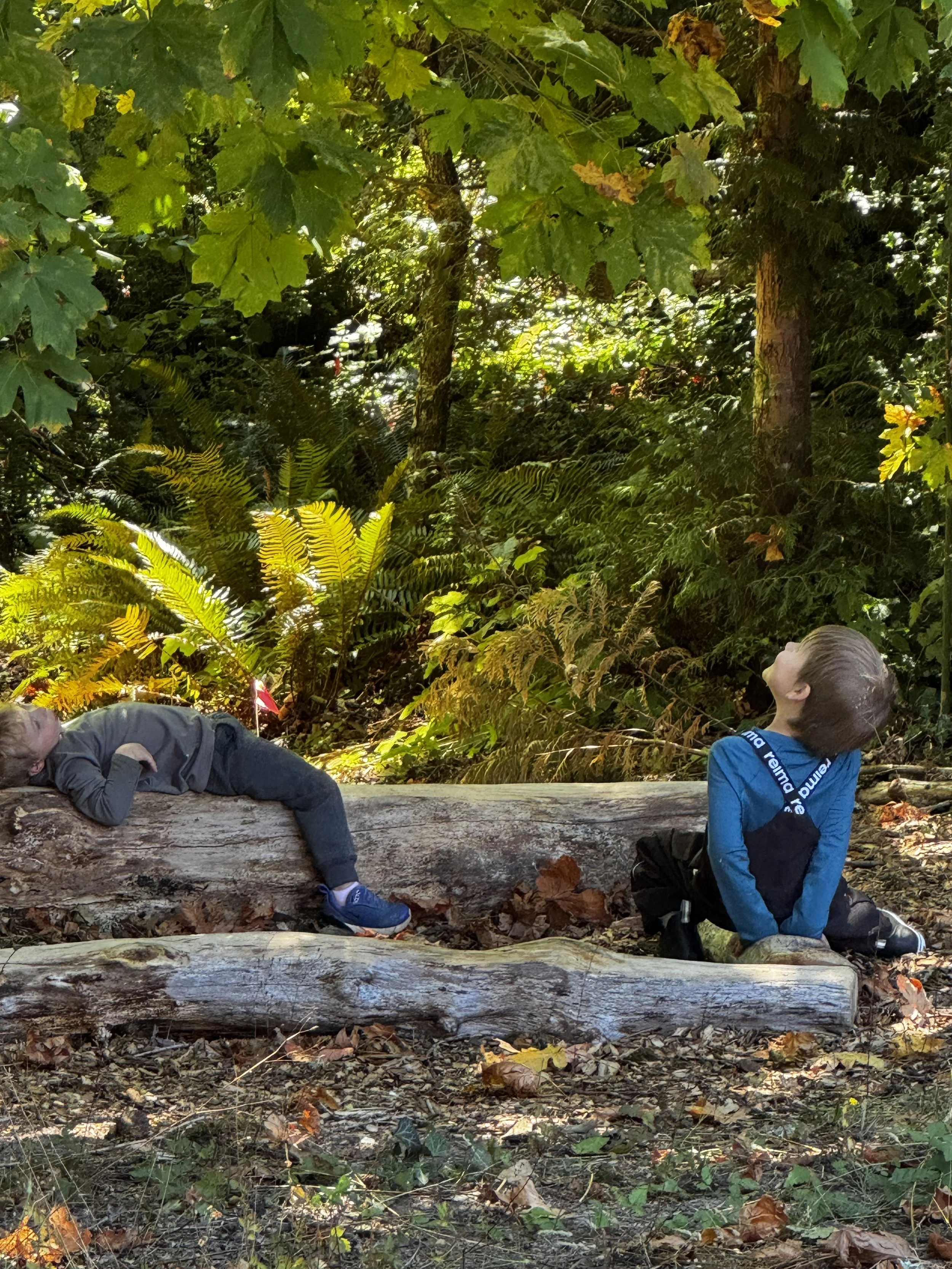
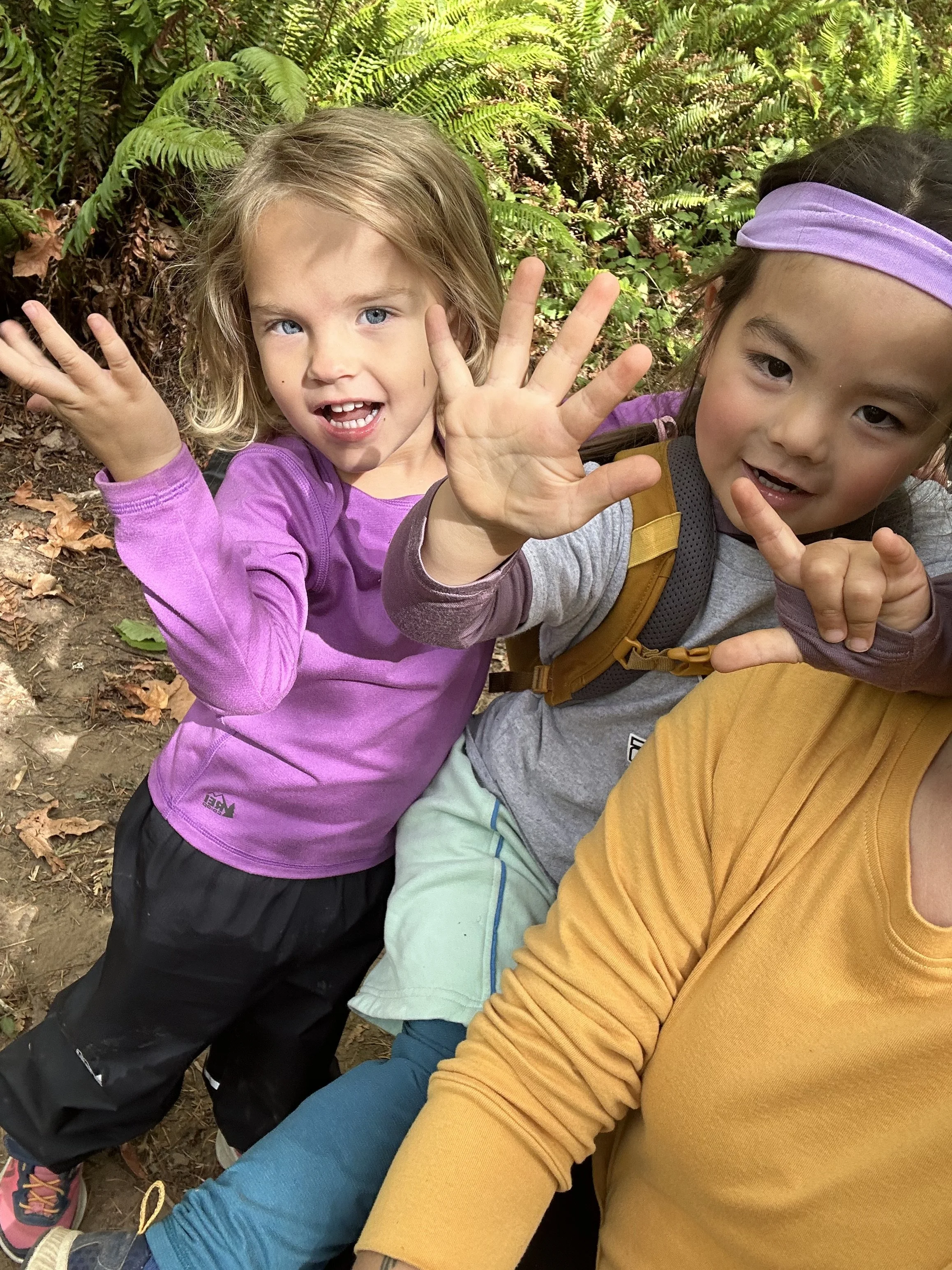
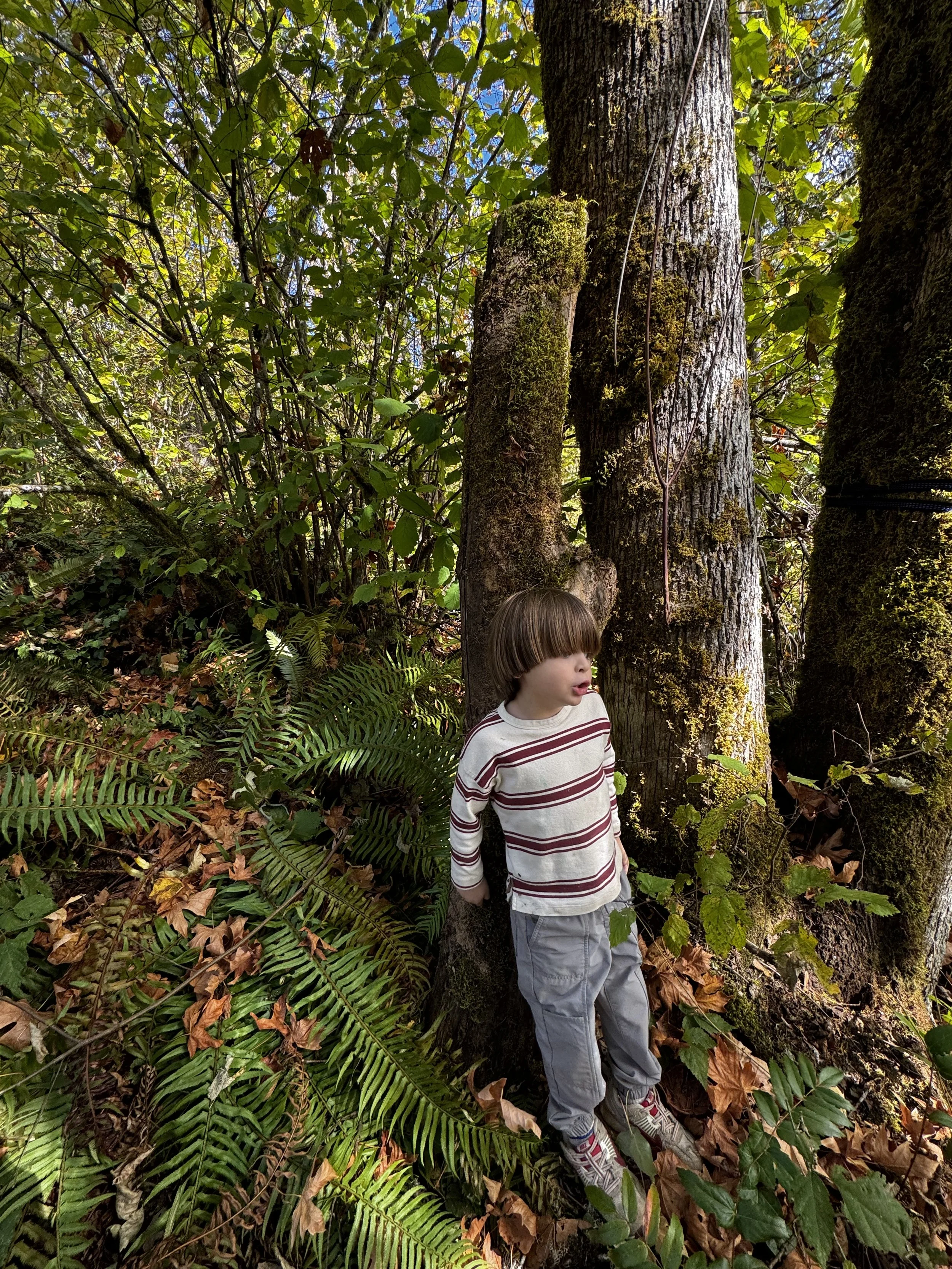
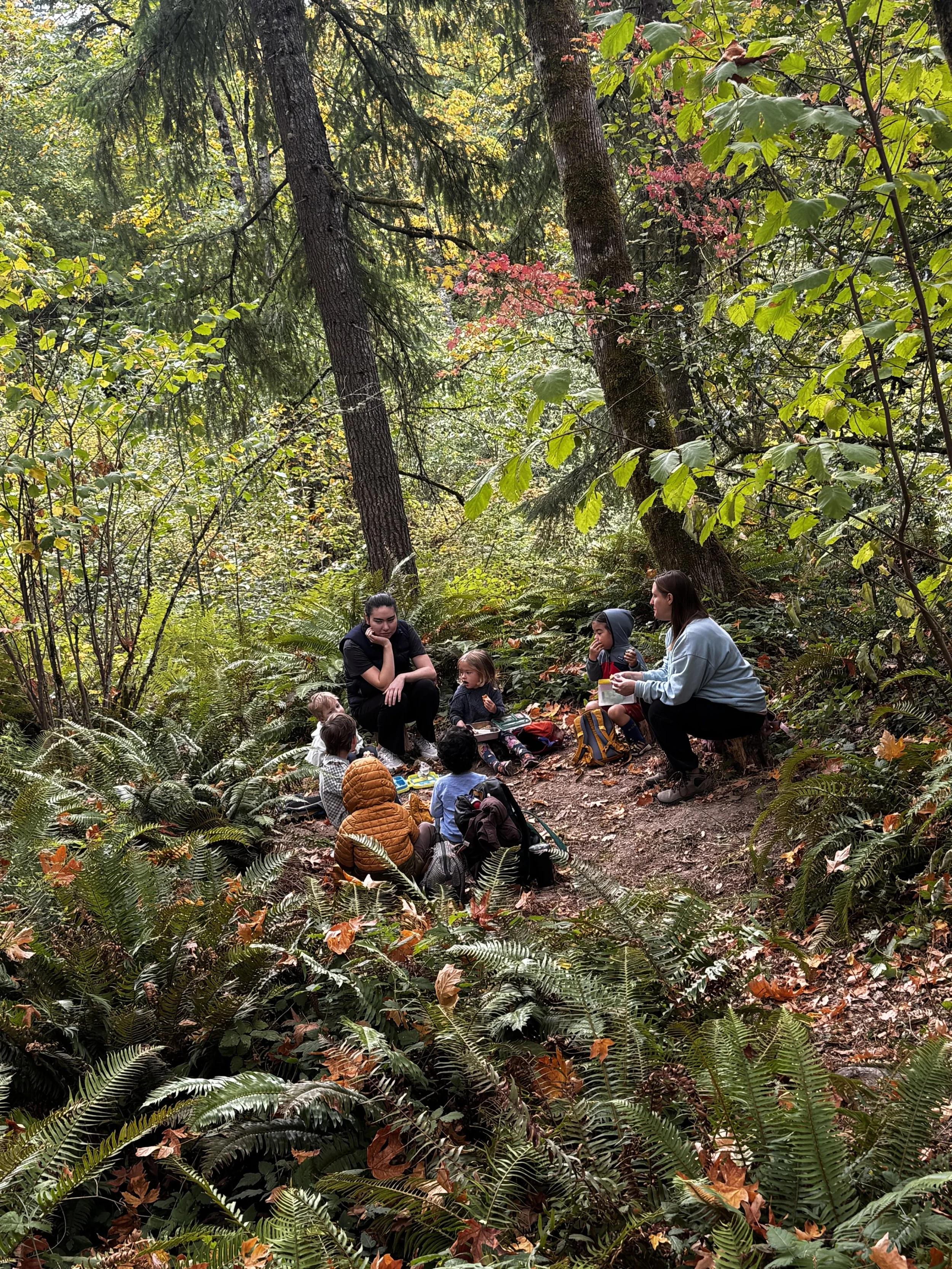
After weeks of summer vibes, October finally brought our first frosty mornings, sustained rain and the official start of mud season! With some welcome relief from yellowjackets, the kids began bushwhacking into new parts of the forest, and we gathered around our first fire together.
We've been engineering switchbacks on a steep hillside, making art deep in the forest, and watching each child discover more of what their own body is capable of.
Our school grew too…we welcomed 2 new families to Cedar + Bones this month!
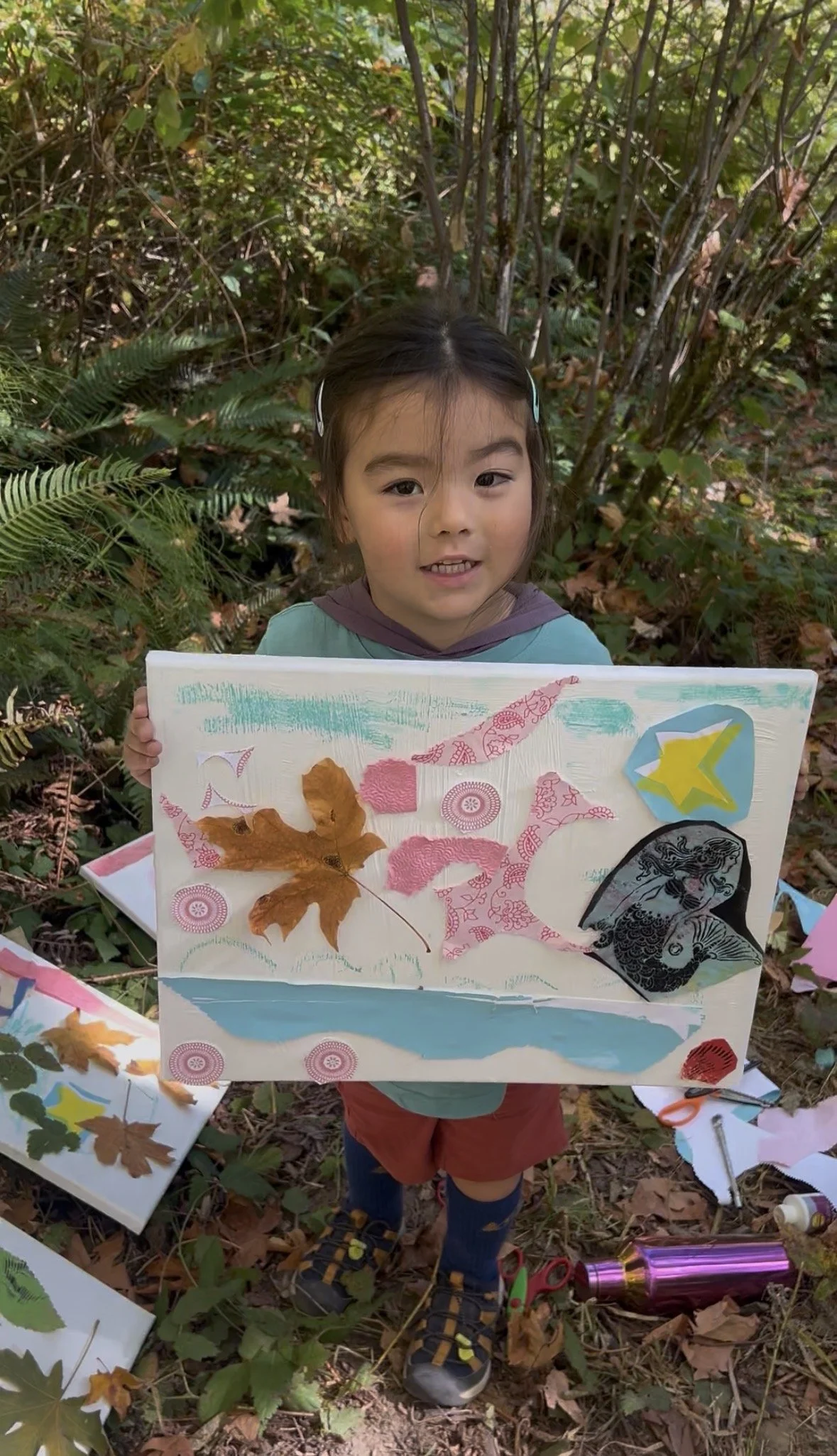
Art in the Forest
Our art studio moved deeper into the forest and that's where all the art happened this month.
Children ages 3–5 have limitless imaginations. It's process over product, creativity without the burden of expectations. They just want to explore and try.
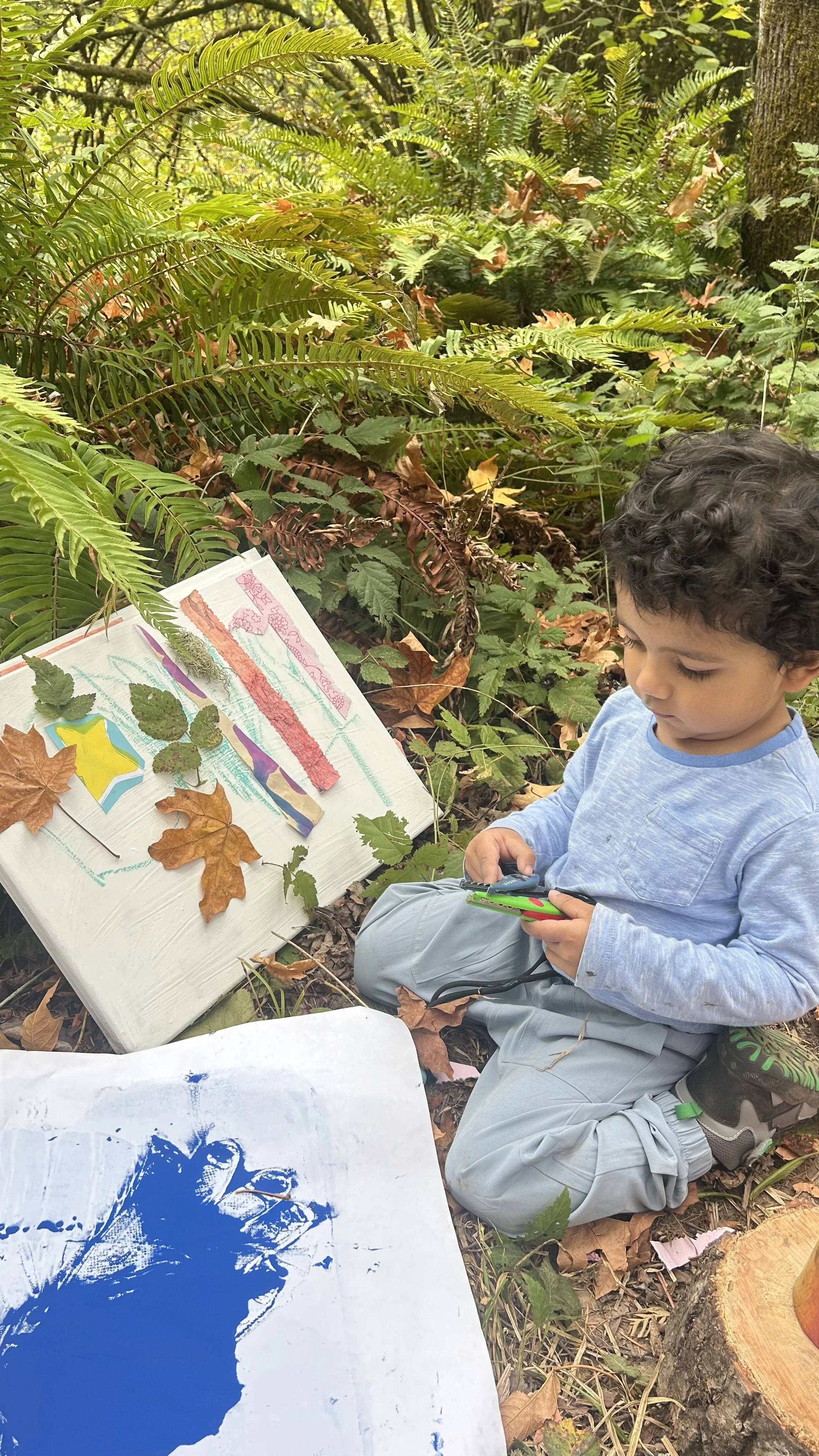
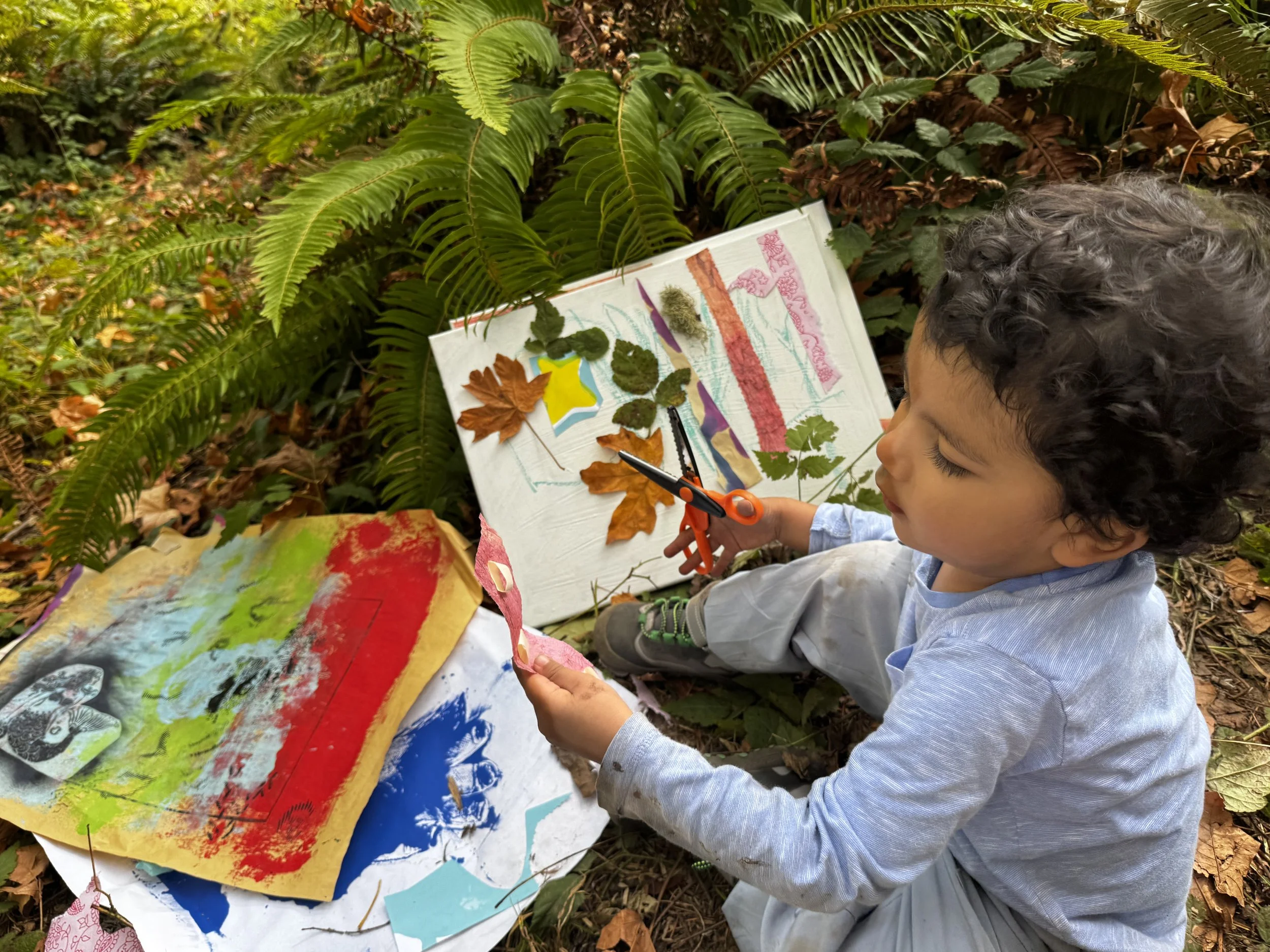
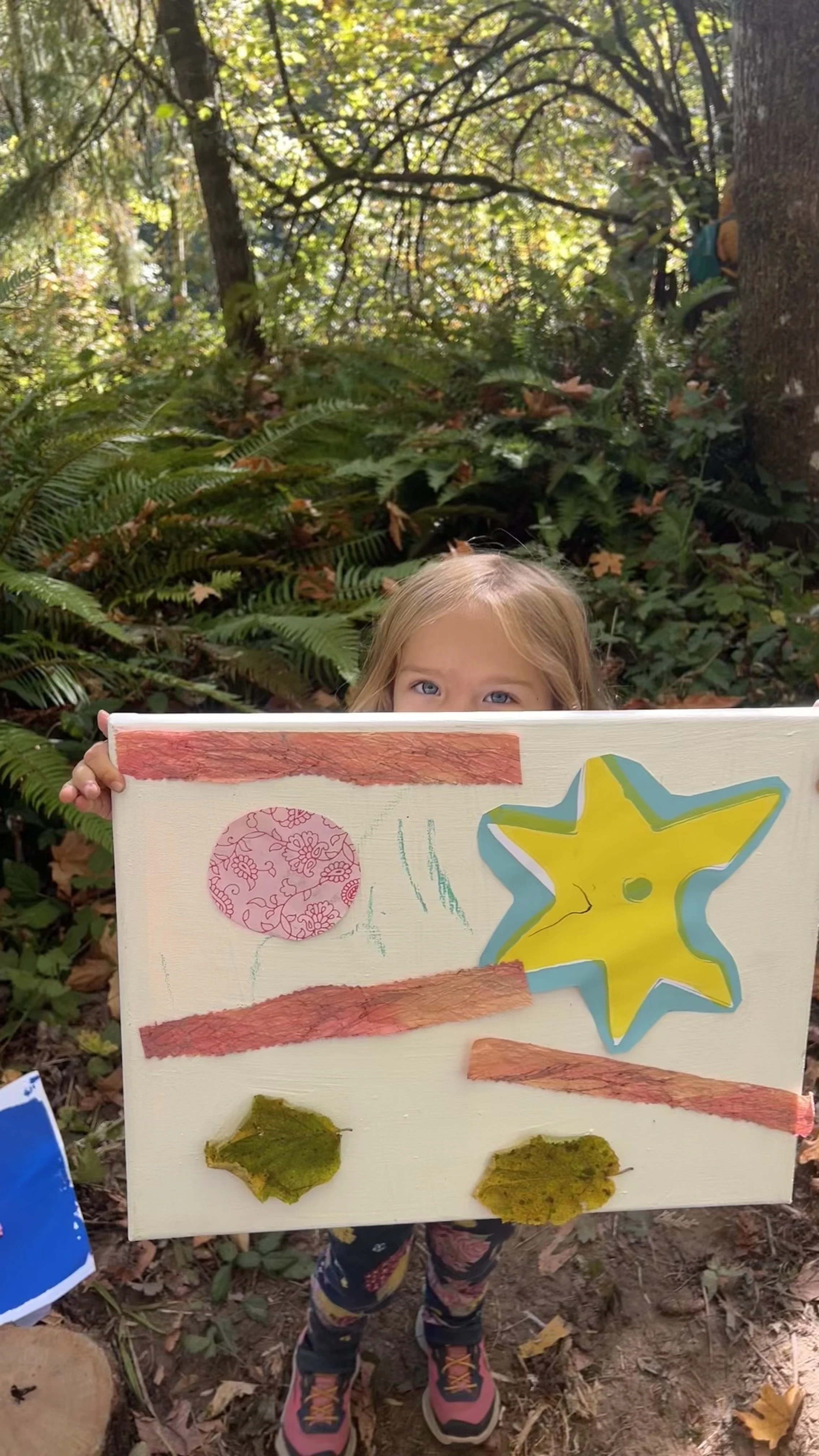
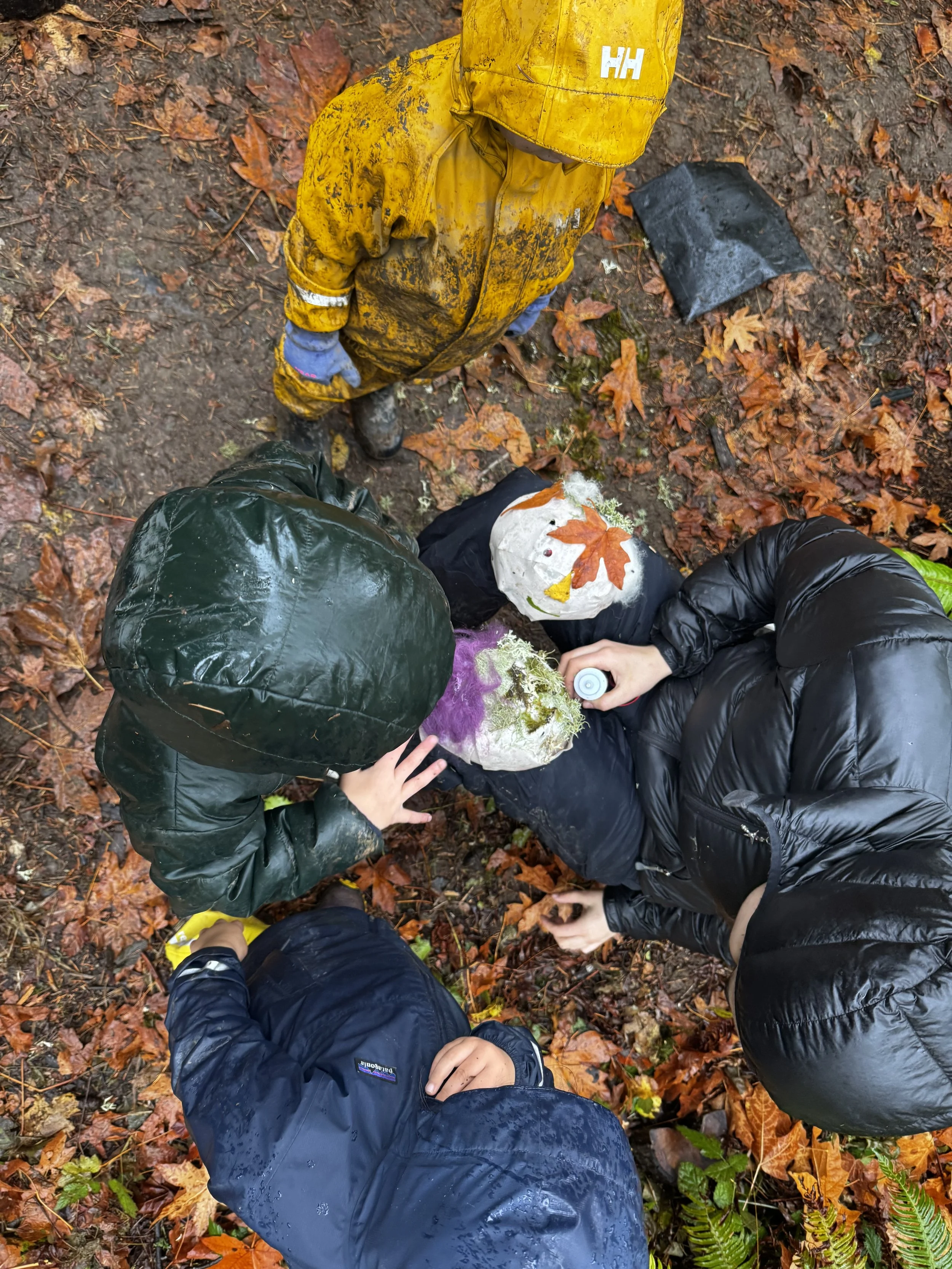
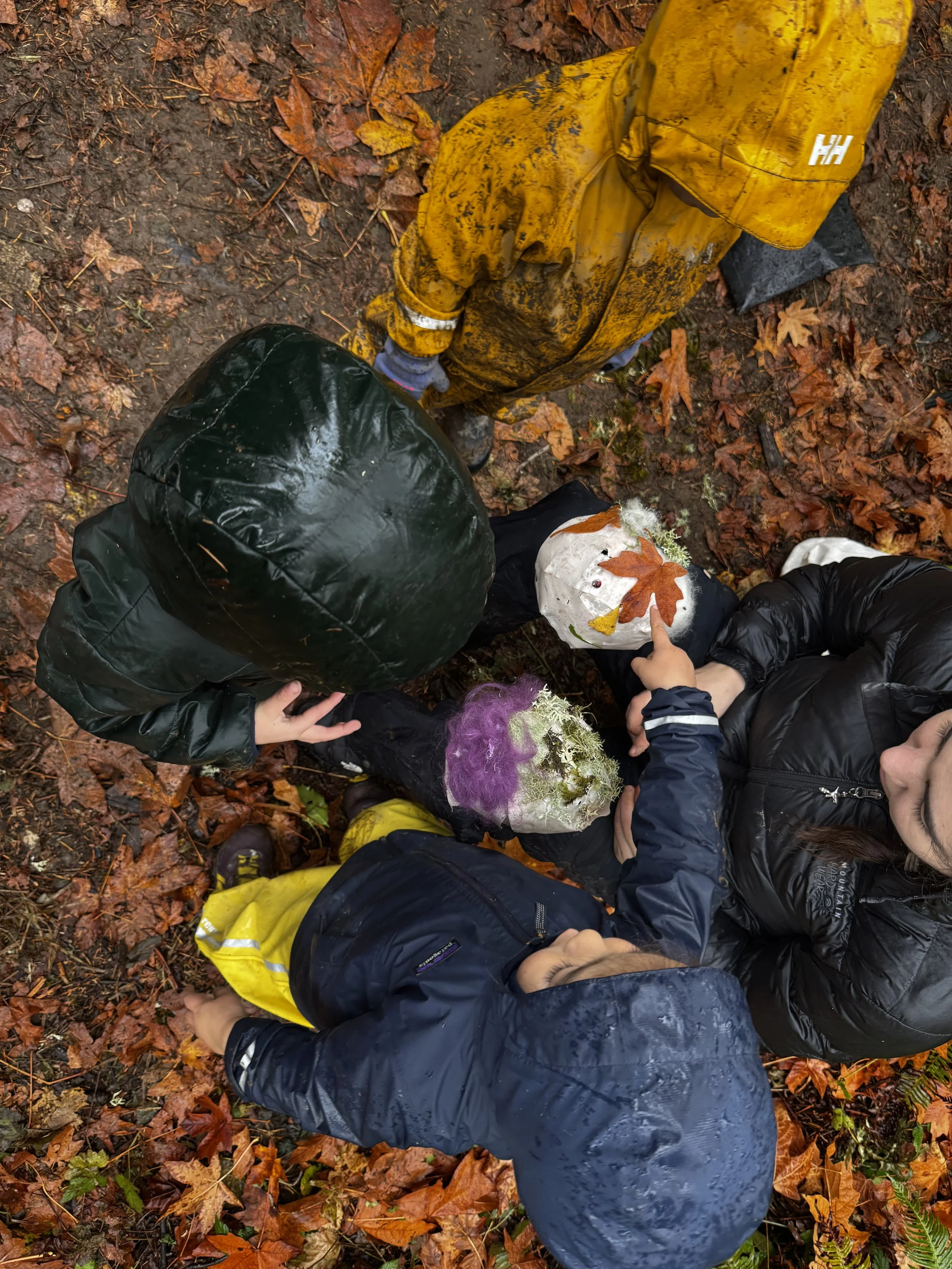
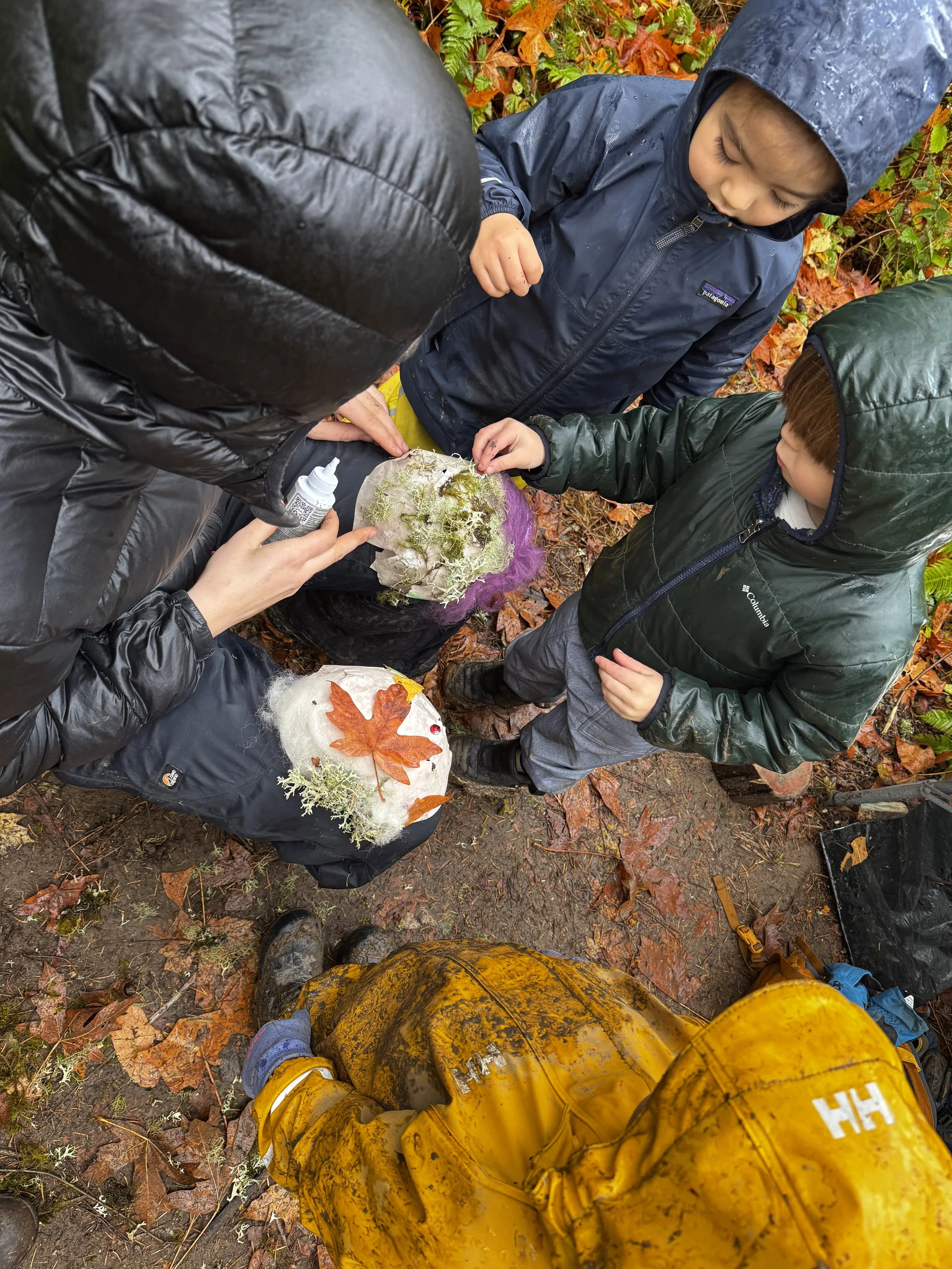
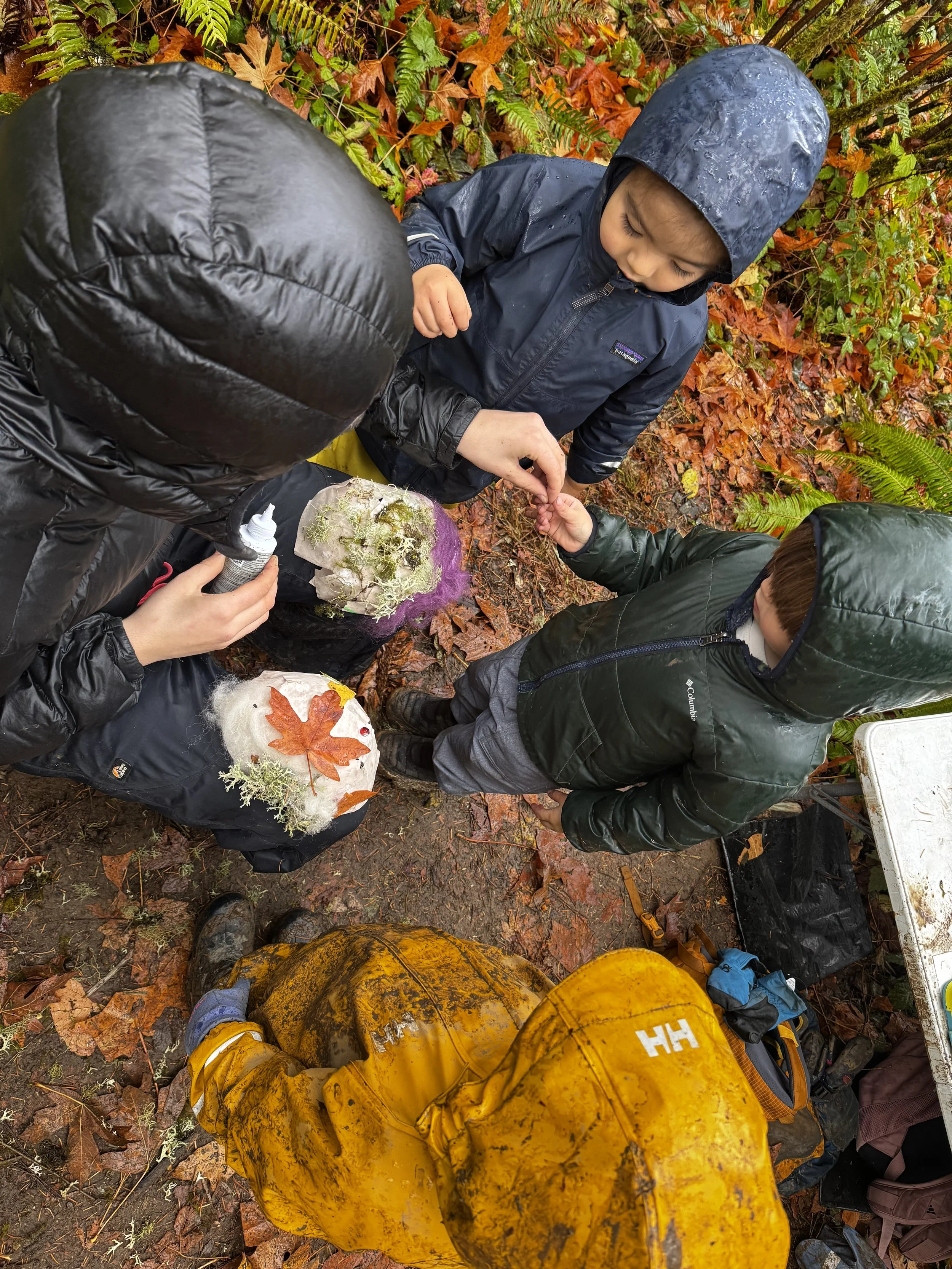
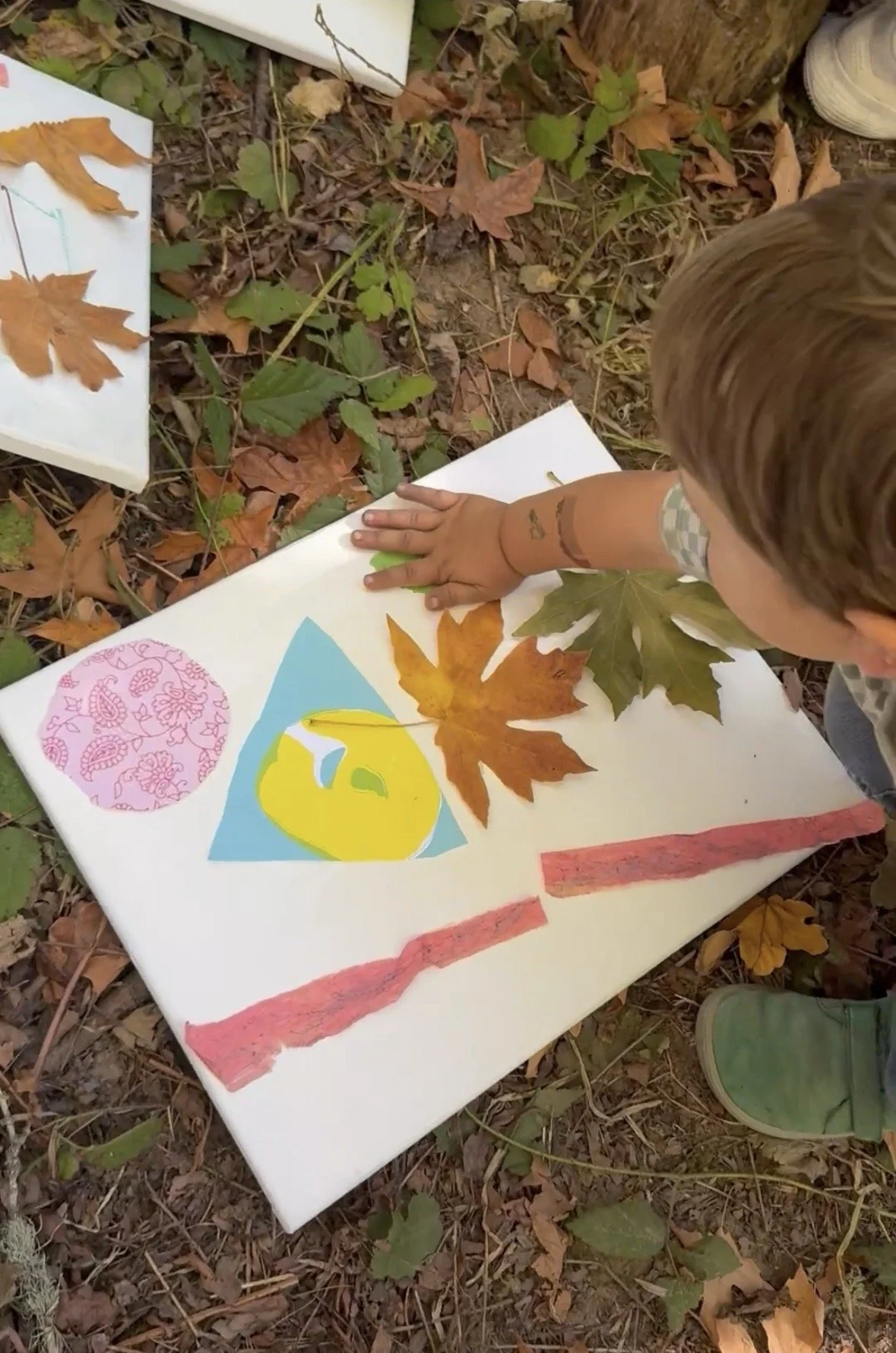
With Elena, each child had their own stretched canvas, scissors, glue and the freedom to design their own work. They made their own choices about materials, colors and composition, creating mixed-media pieces that combined leaves, moss and other materials gathered from the forest with colorful patterned papers, bold shapes and textures from Elena's own studio.
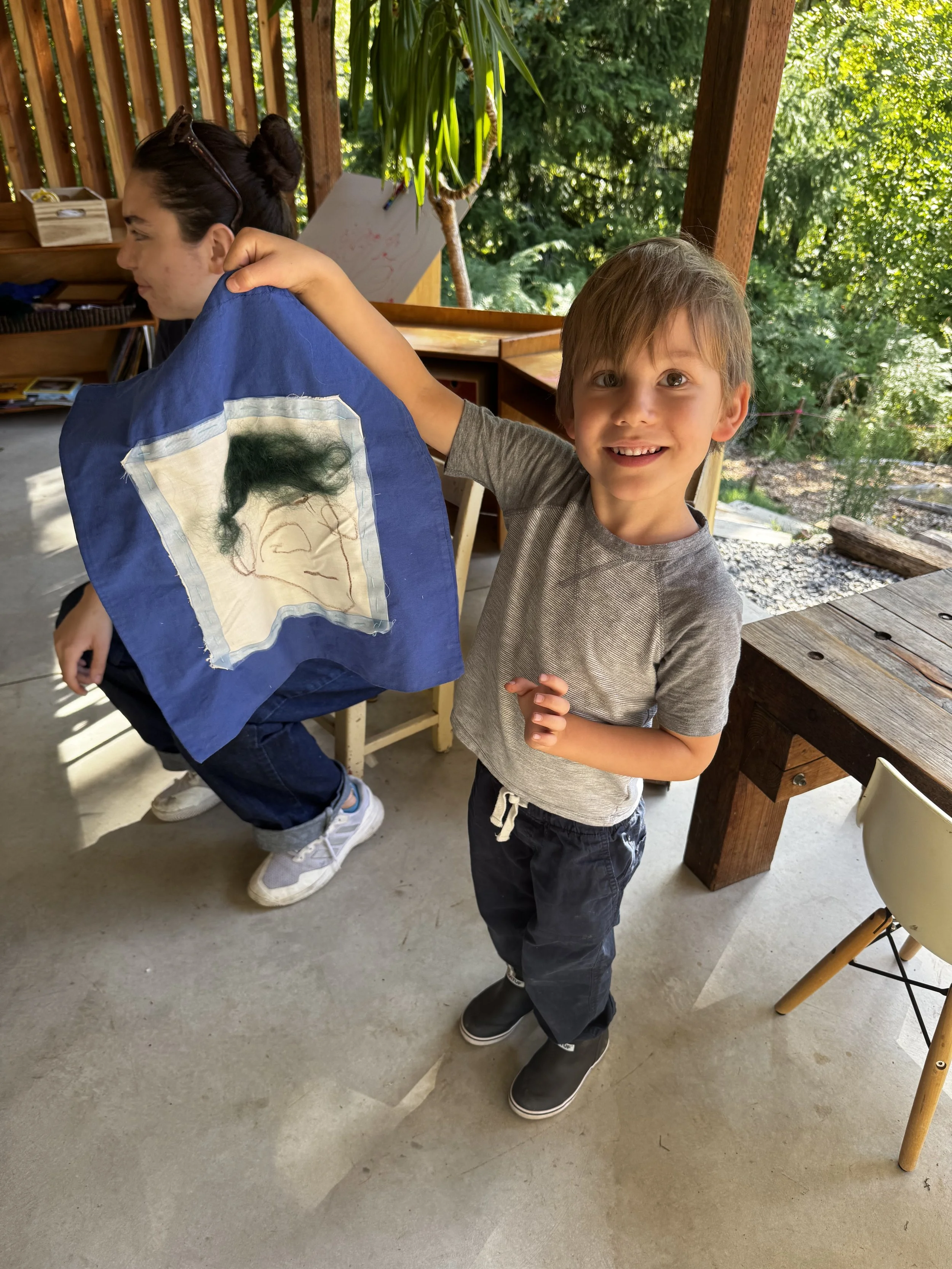
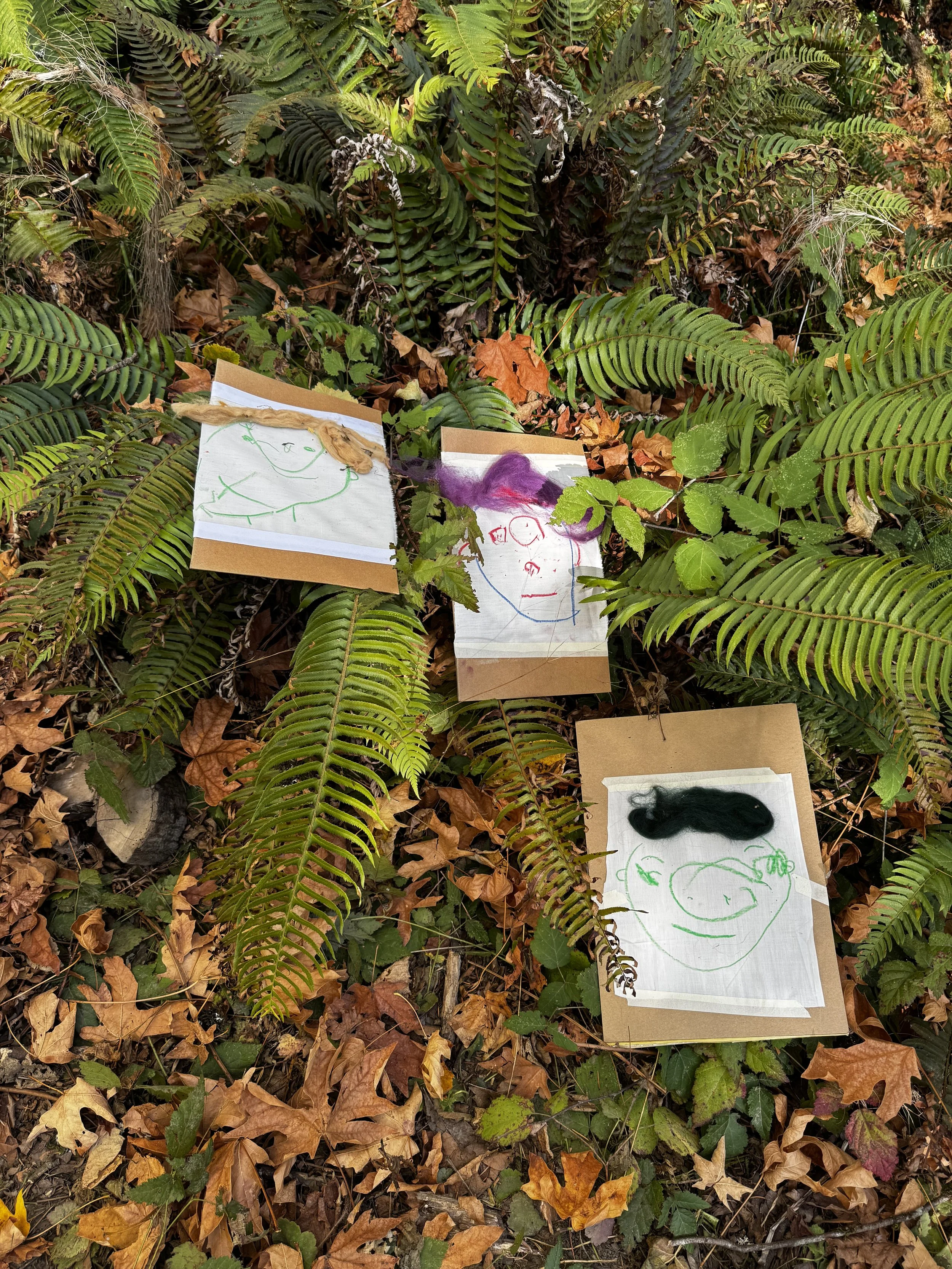
Nearly all seven children have now completed their self-portrait art bags! Not everyone makes the same things on the same days, and that's part of following each child's interests. Elena has sewn the completed portraits onto the bags, which are hanging on the hooks. Take a look at drop-off or pickup this week!
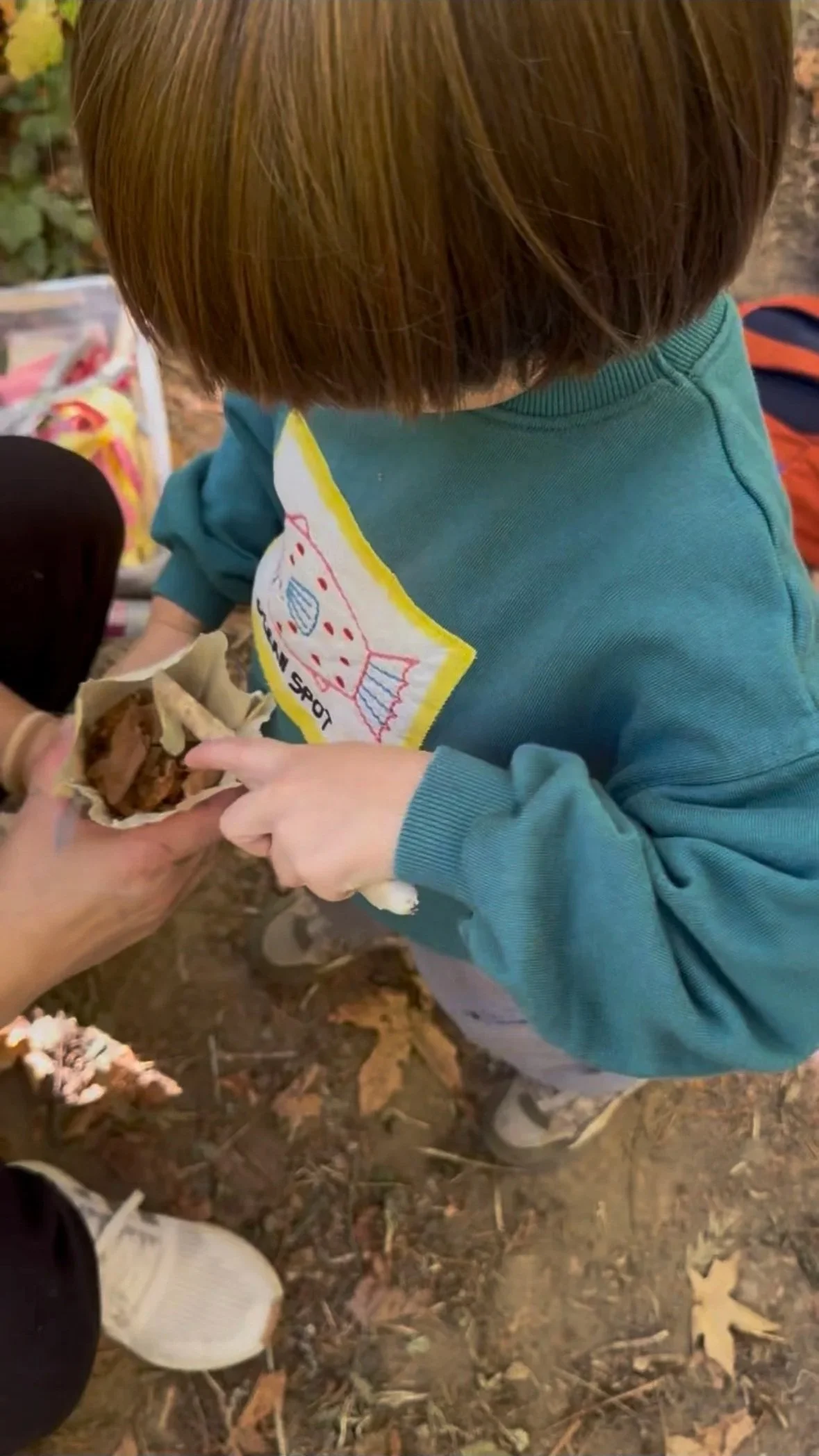
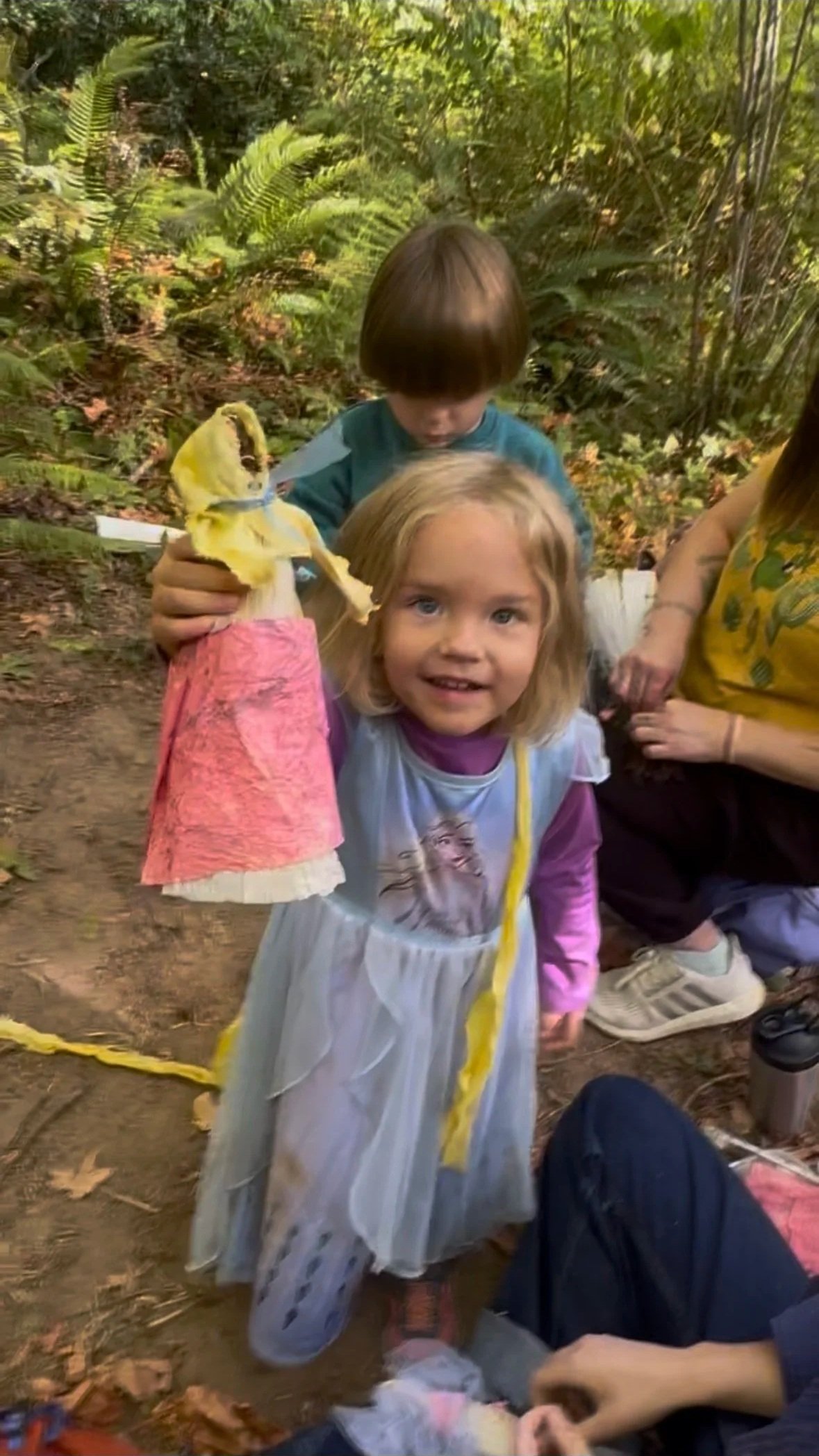
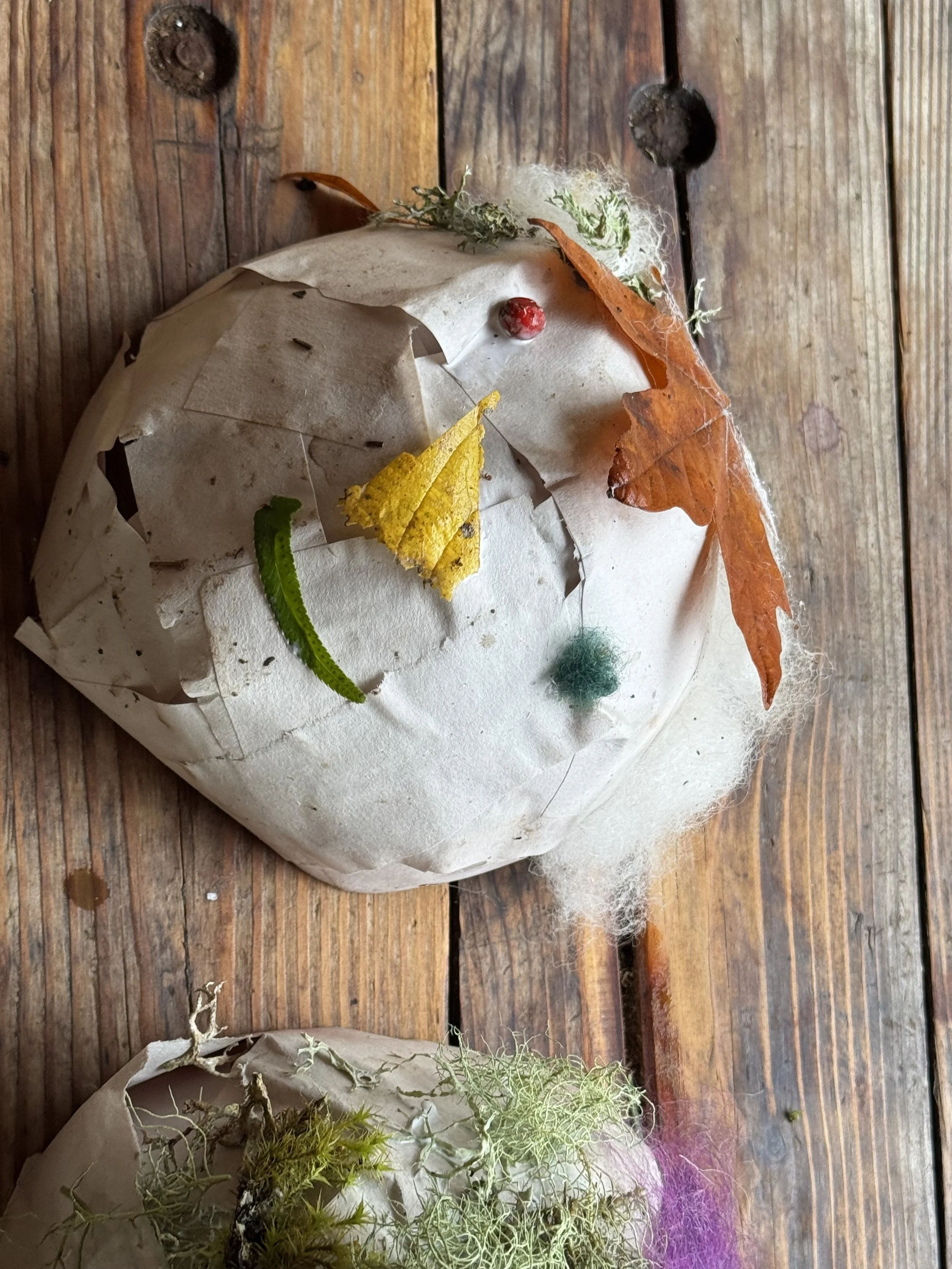
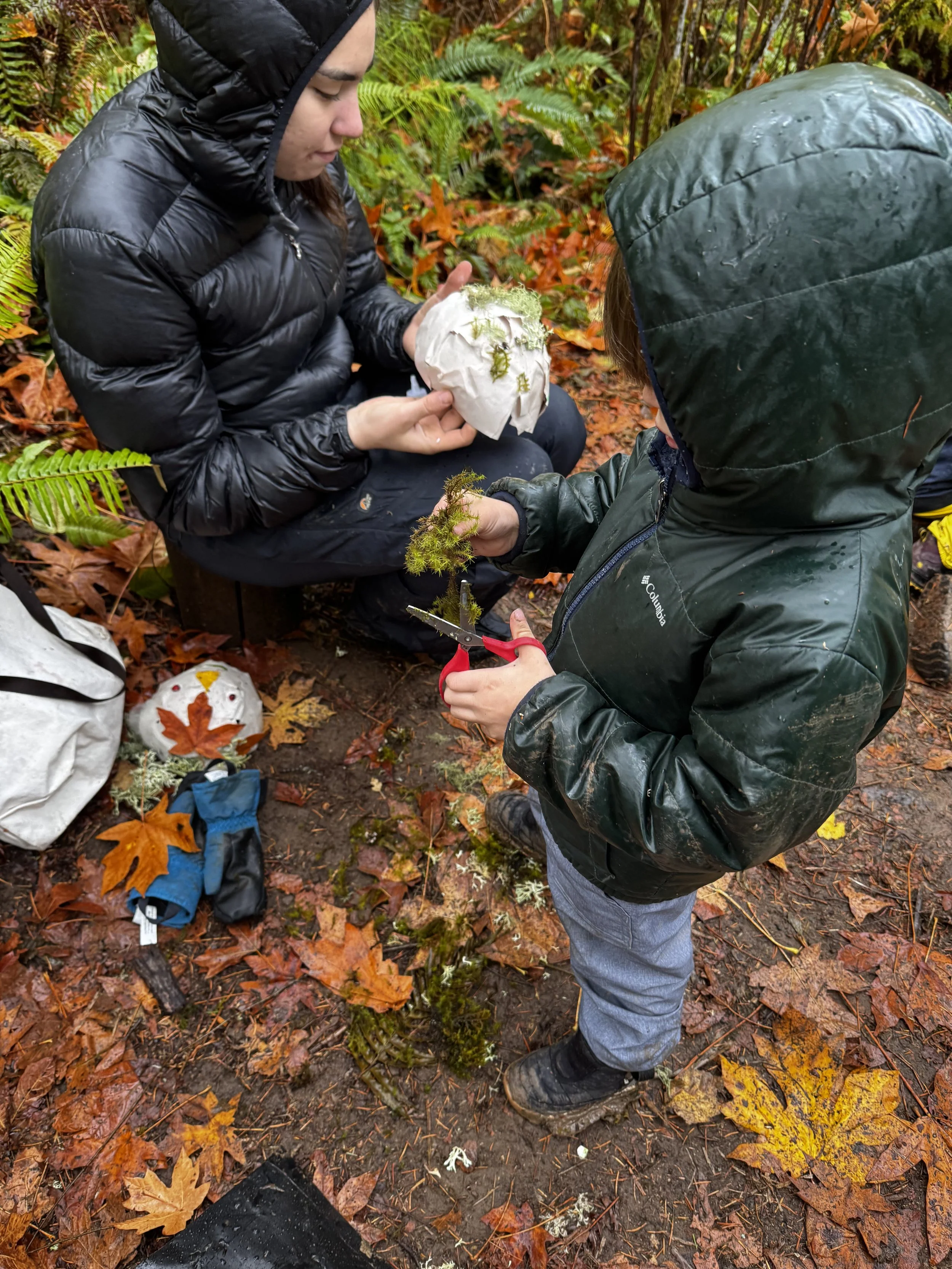
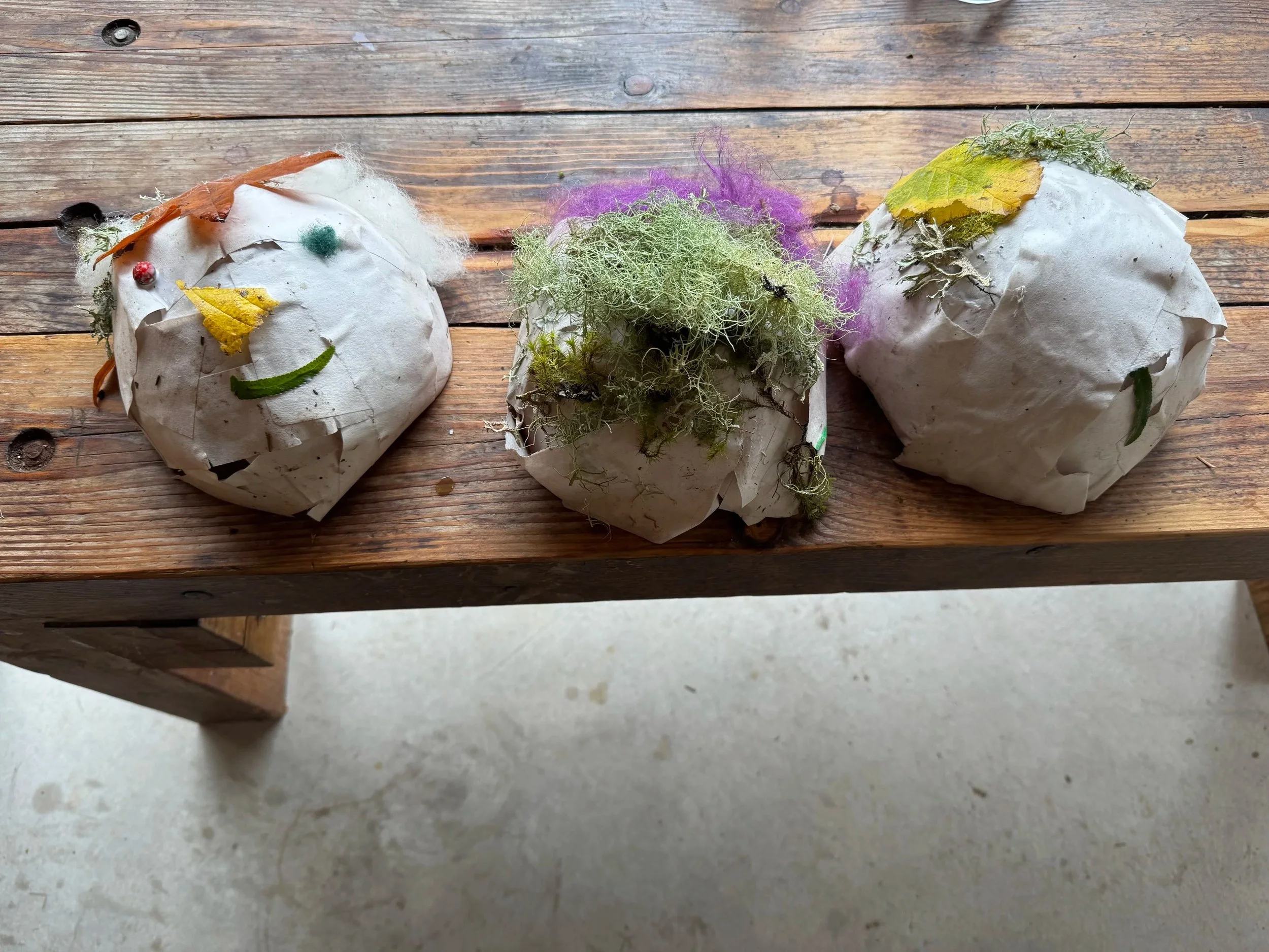
We've also started making paper mache masks. Many are still underway, and the children have been enjoying each part of the process, from building the forms to adding leaves, lichen, wool and other materials. It's been great seeing how proud they are of what they've created, even while the projects are still in progress.
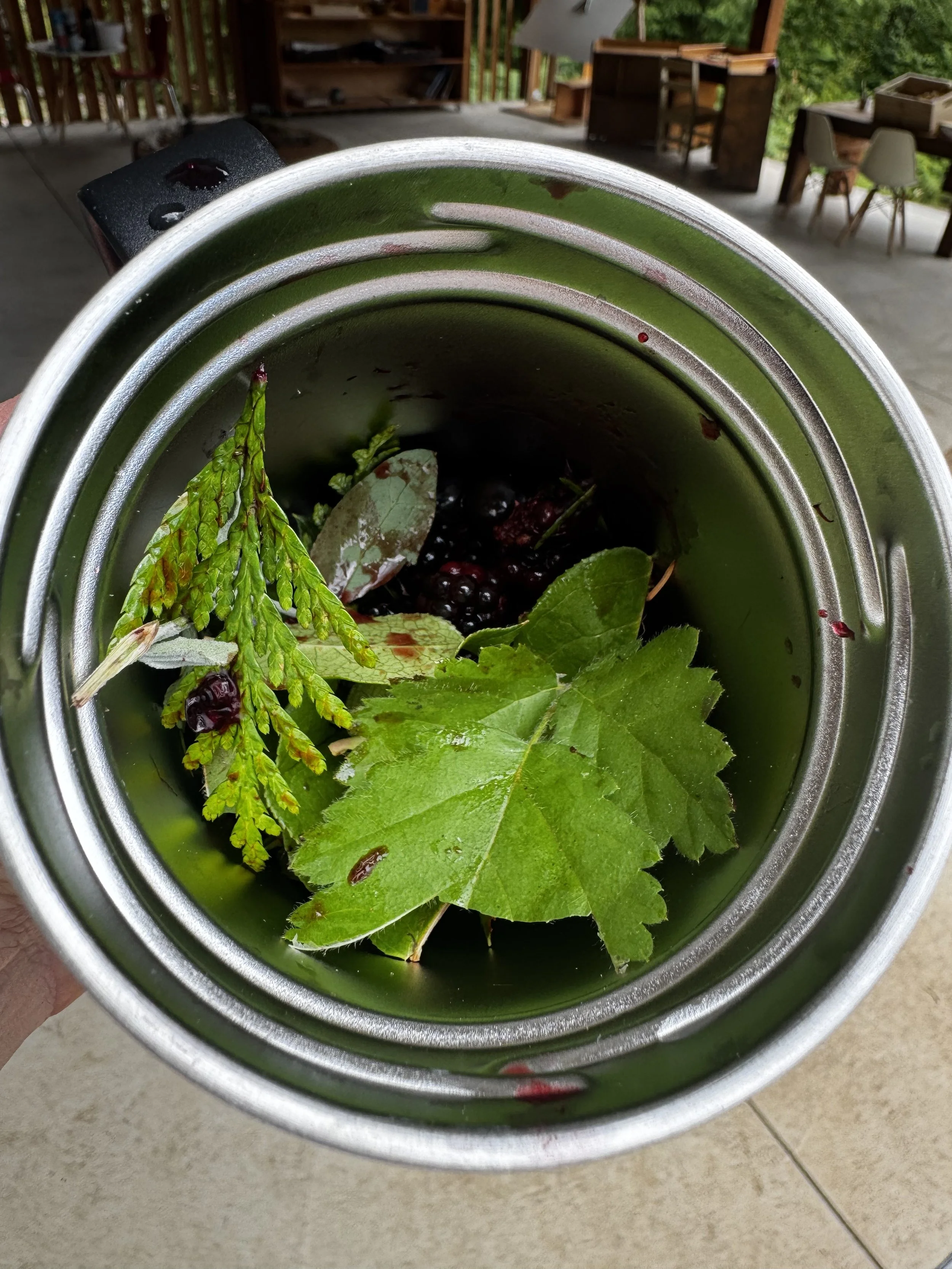
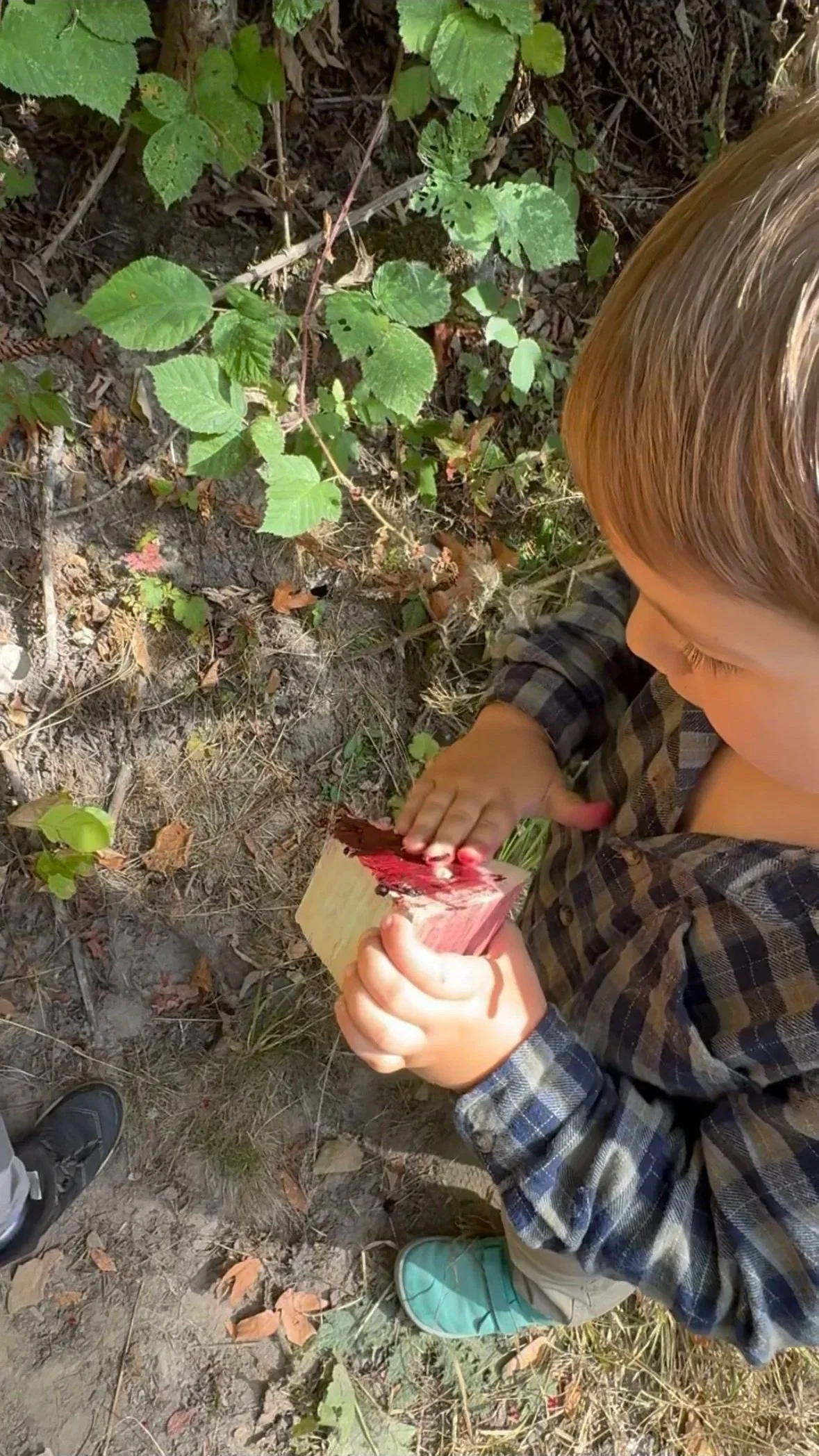
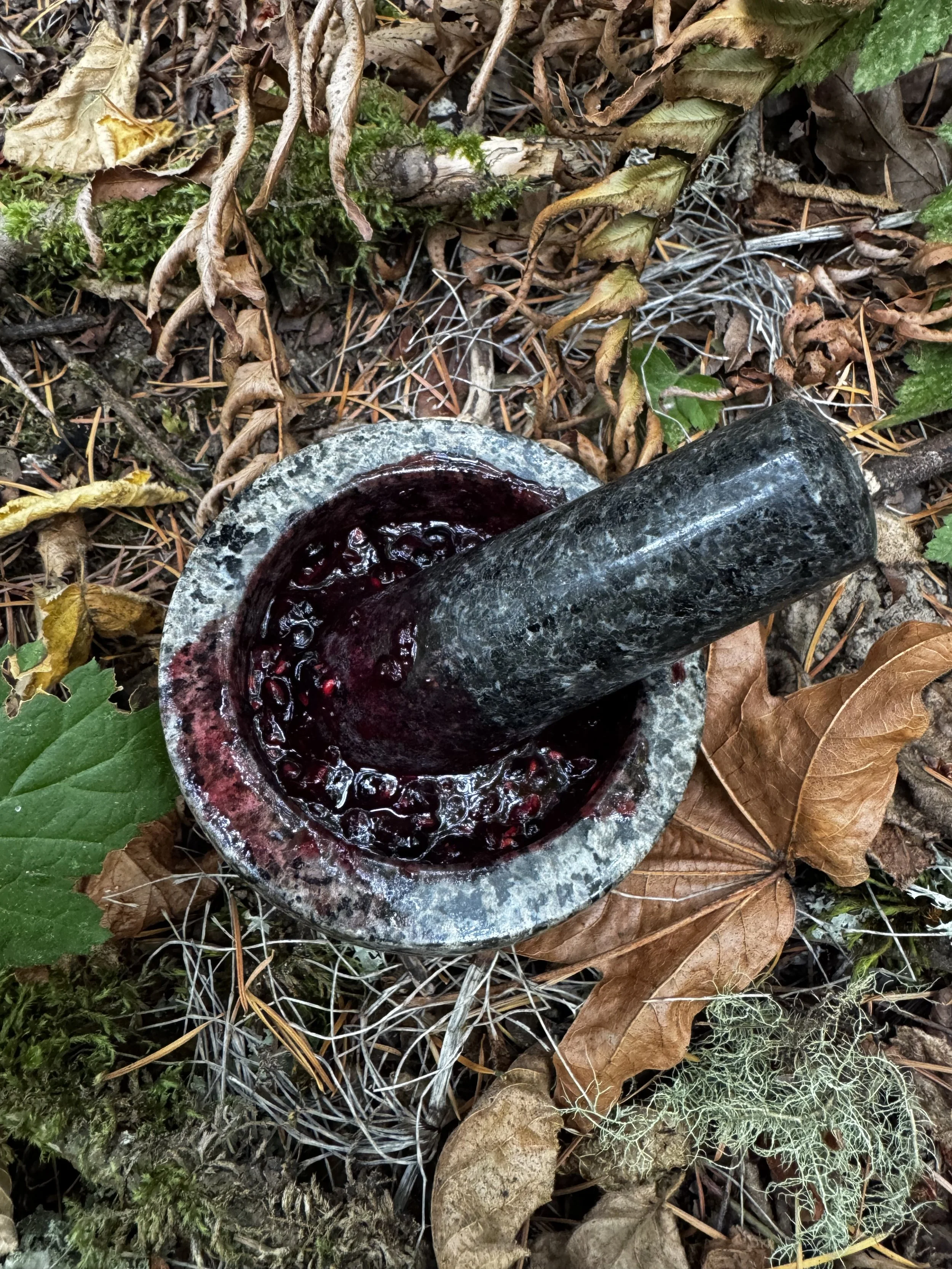
And the art doesn't stop when Elena leaves. What's been really cool to see is how often the children initiate their own art, completely unprompted. They'll grab chalk to color sticks for a pretend fire, or use the last blackberries of the season to paint their tools. They're coming up with their own ideas, gathering materials and getting to work, without needing a teacher to suggest how or what to make. It’s a gift to watch it unfold.
Who Else Lives Here?
We've had some pretty incredible wildlife encounters this month.
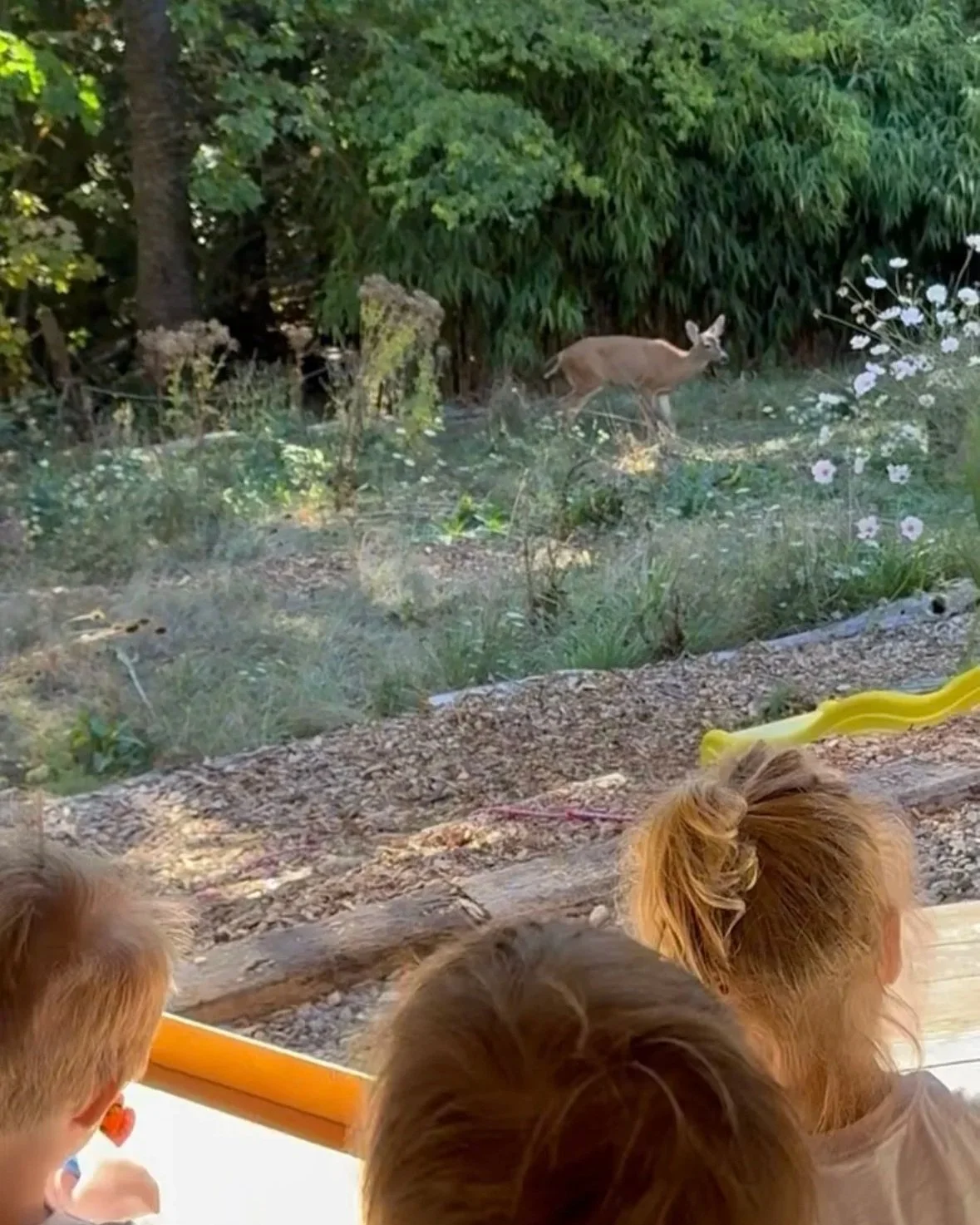
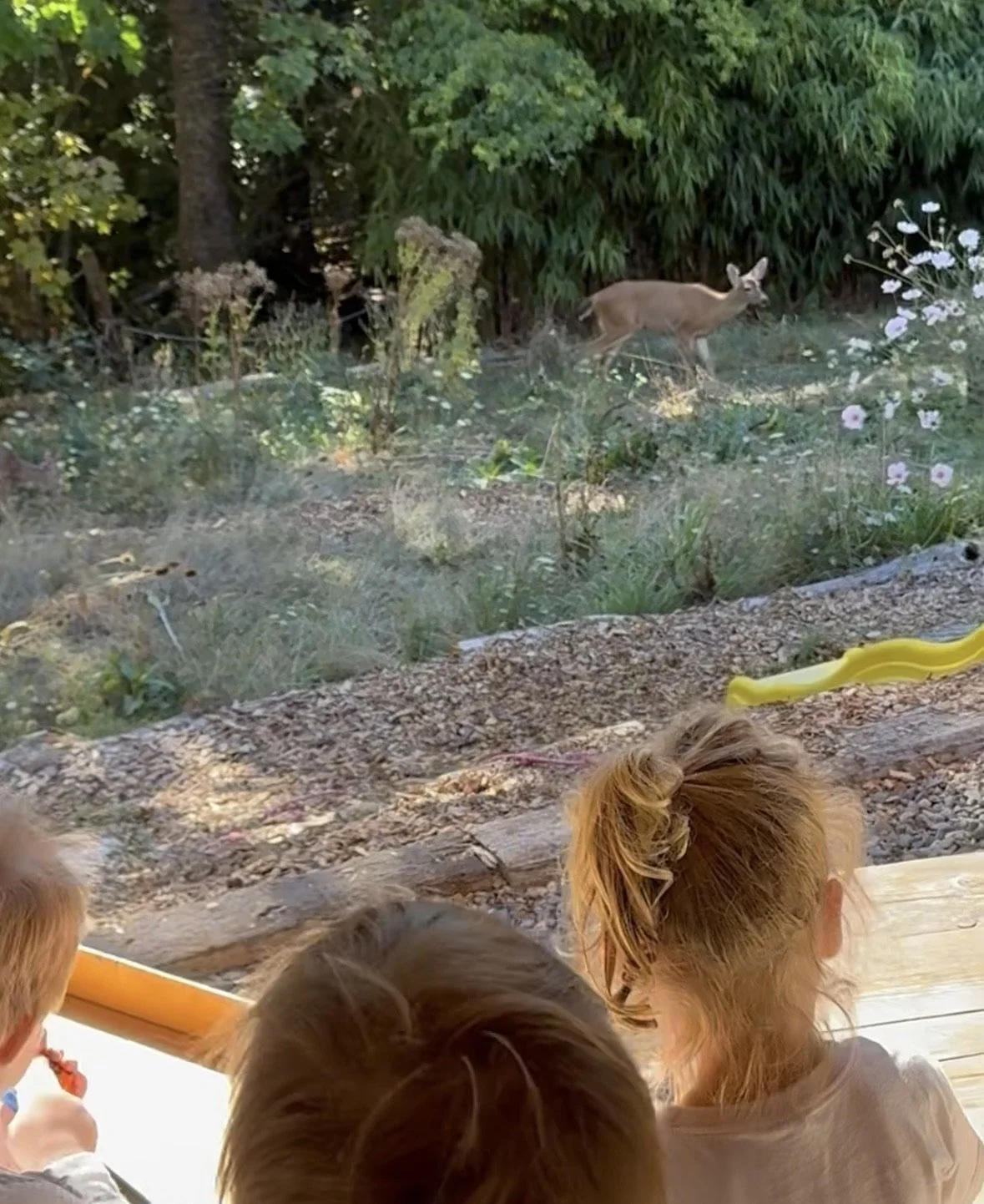
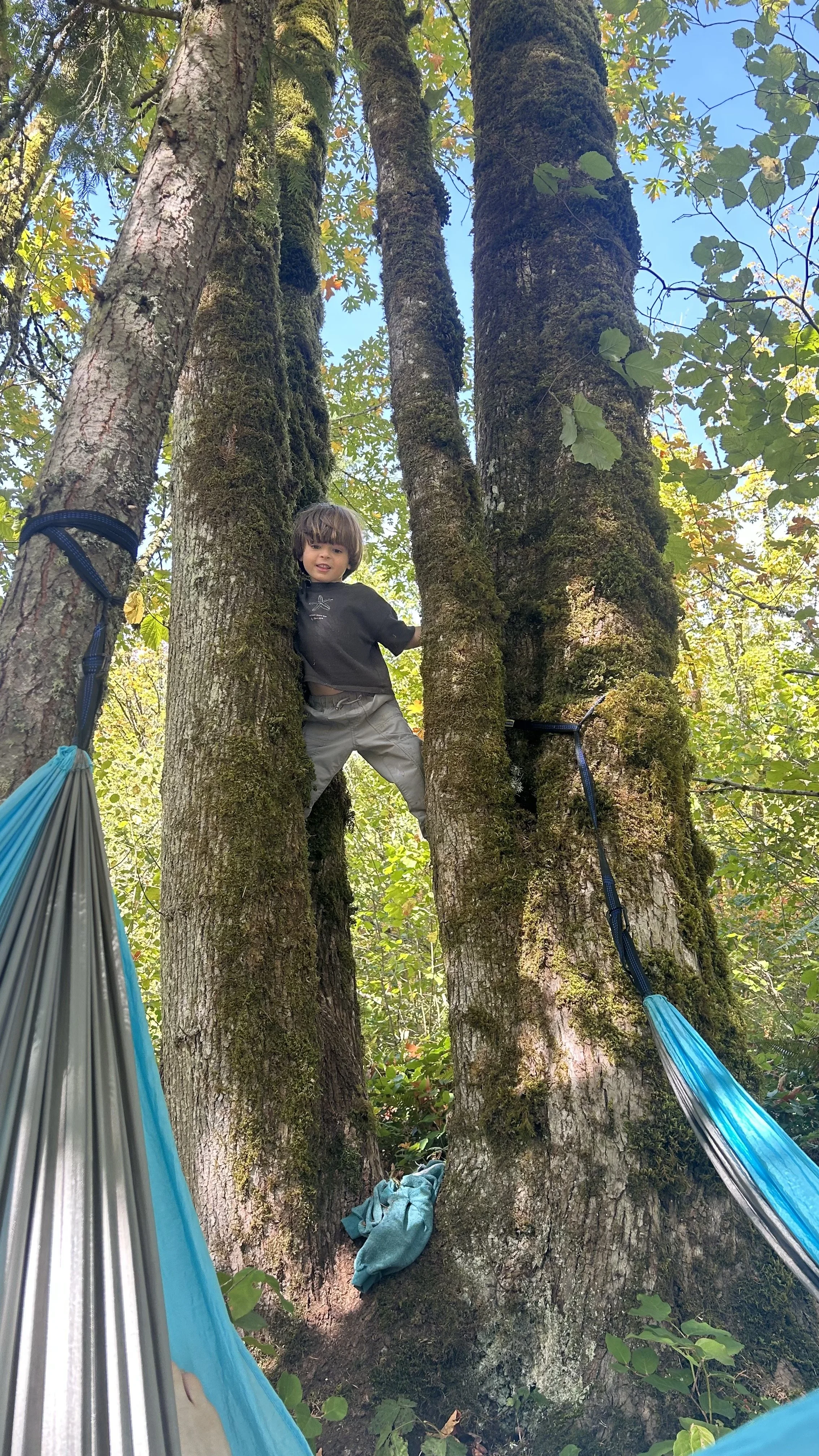
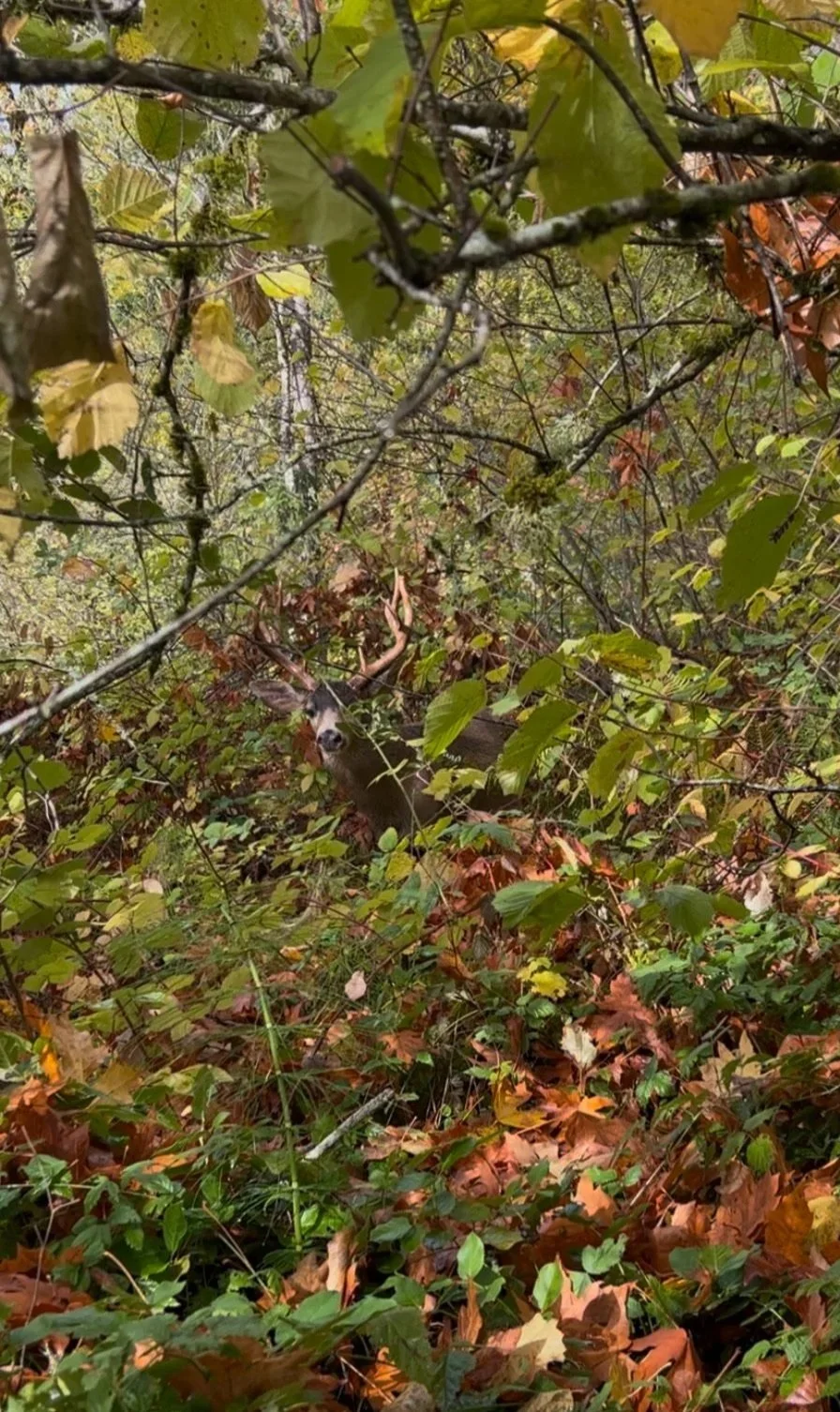
A large, young buck visited us two days in a row, once to the classroom and once right on the other side of our hammocks, munching away while the children played nearby. He stayed for a while, no one approached, because the kids know by now that if we are quiet and give space…they will stay longer.
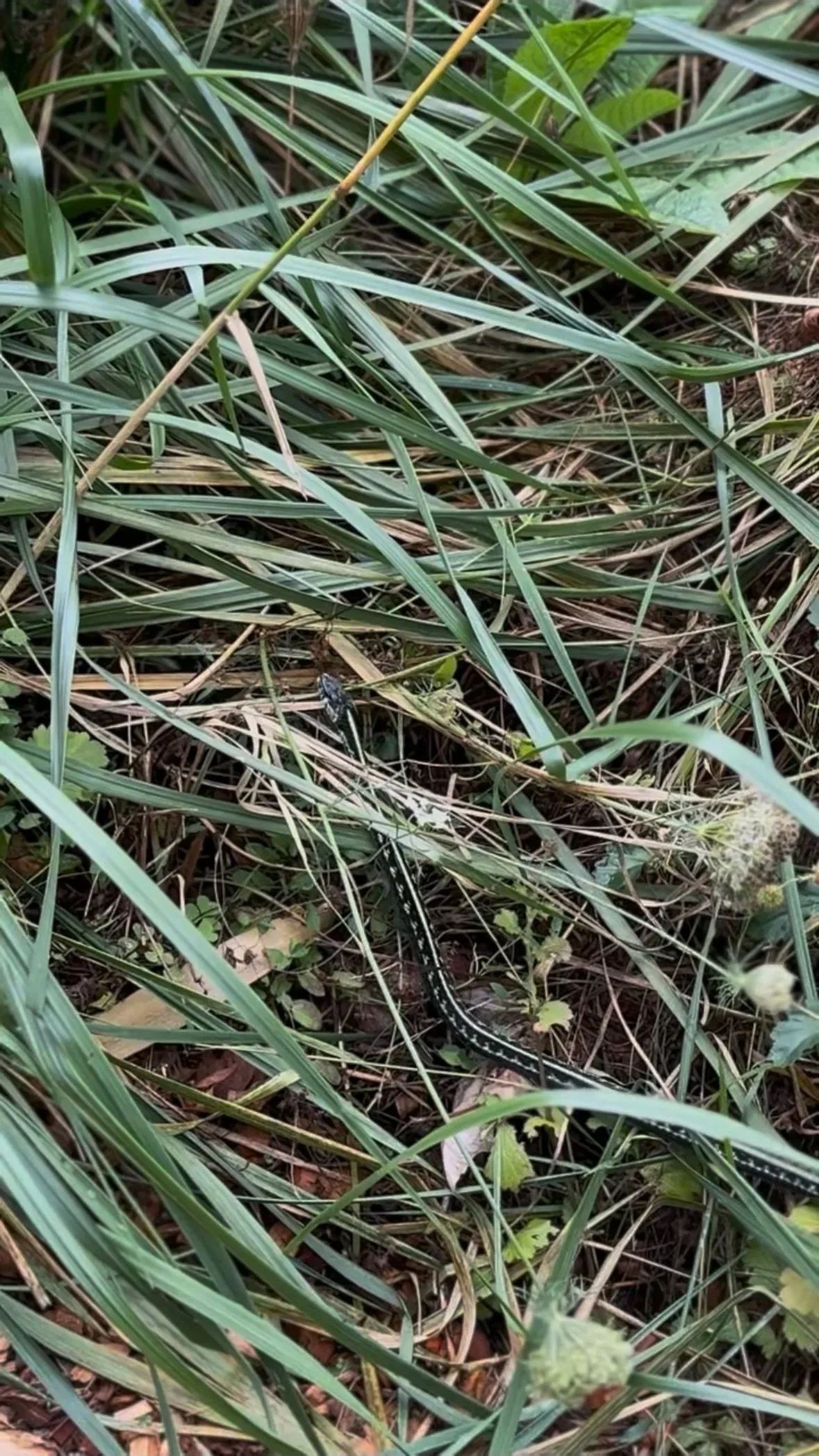
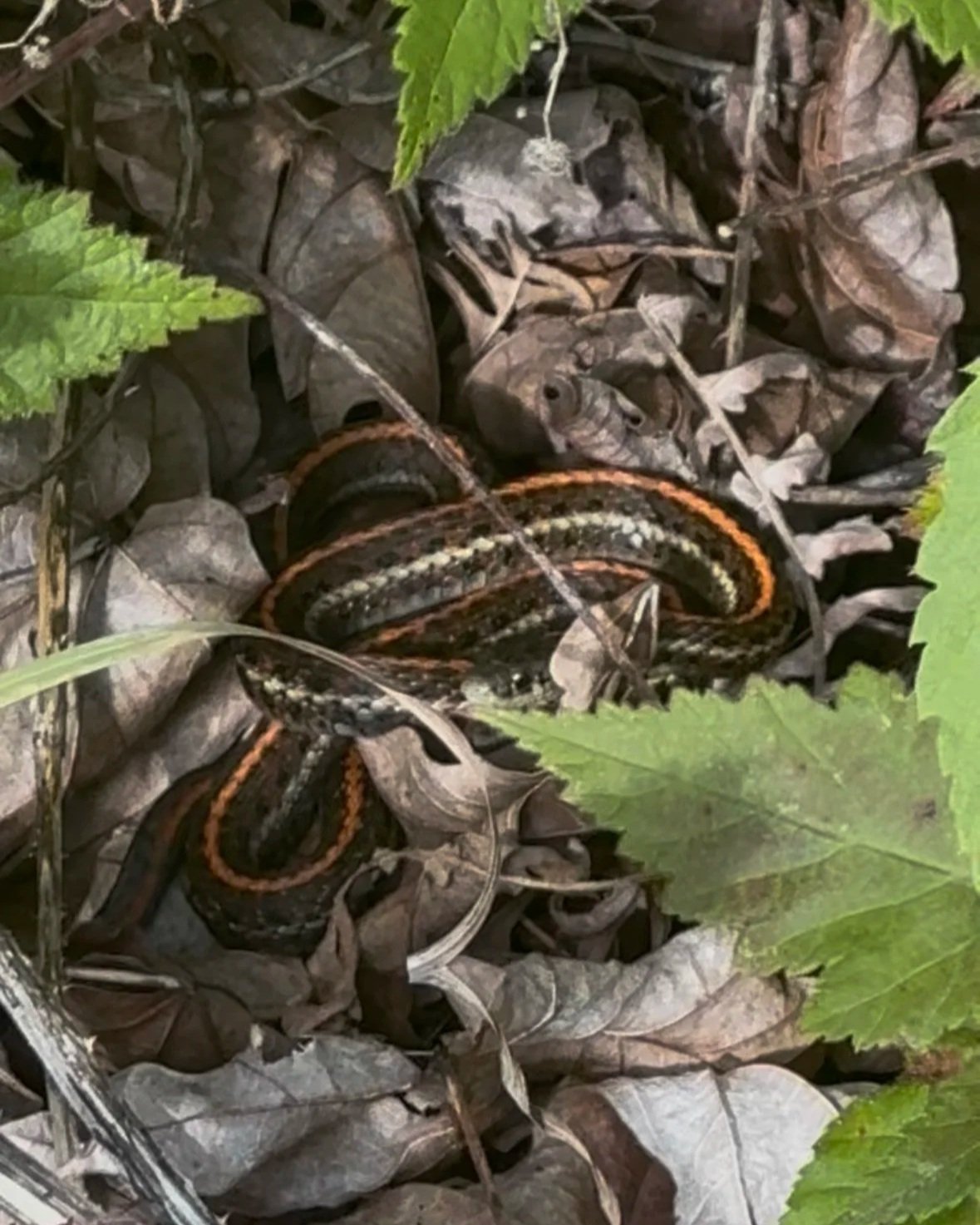
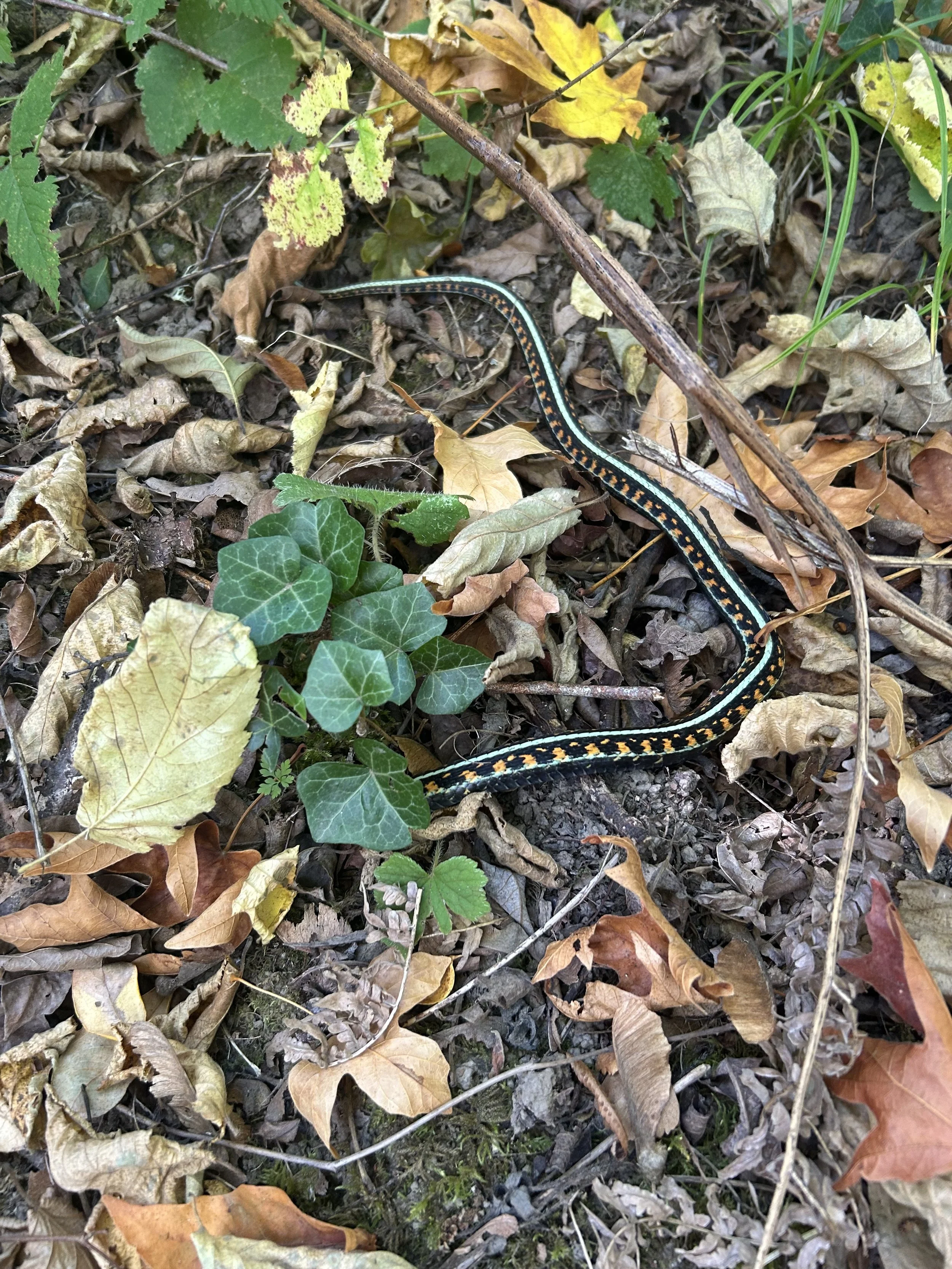
We've also found snakes and plenty of worms. One day we had six kids, one worm, and EVERYONE wanted to hold it. A whole lot of coaching from Janay and me, and a few close calls, but what an opportunity to practice gentle hands, patience and caring for little creatures.
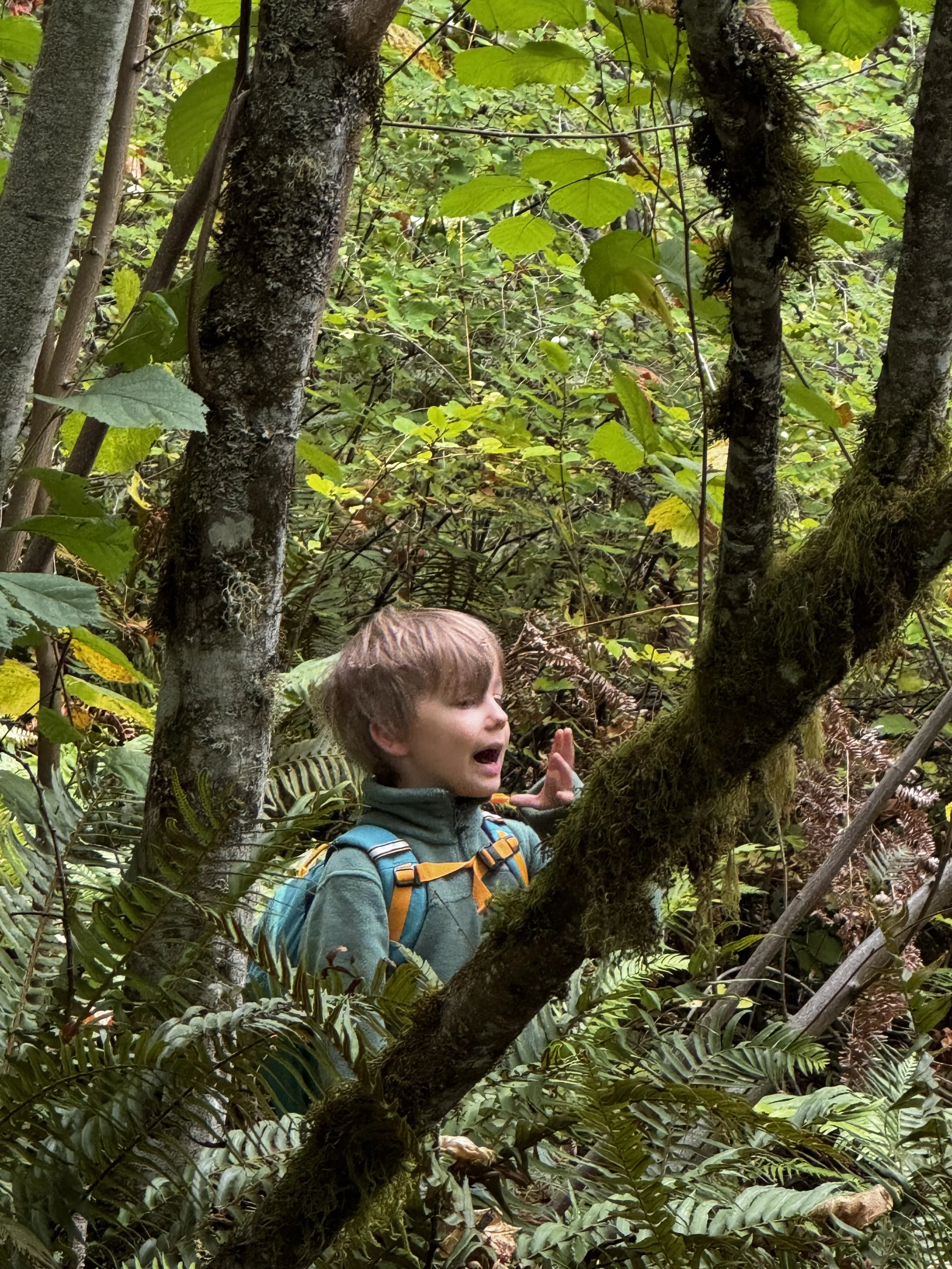
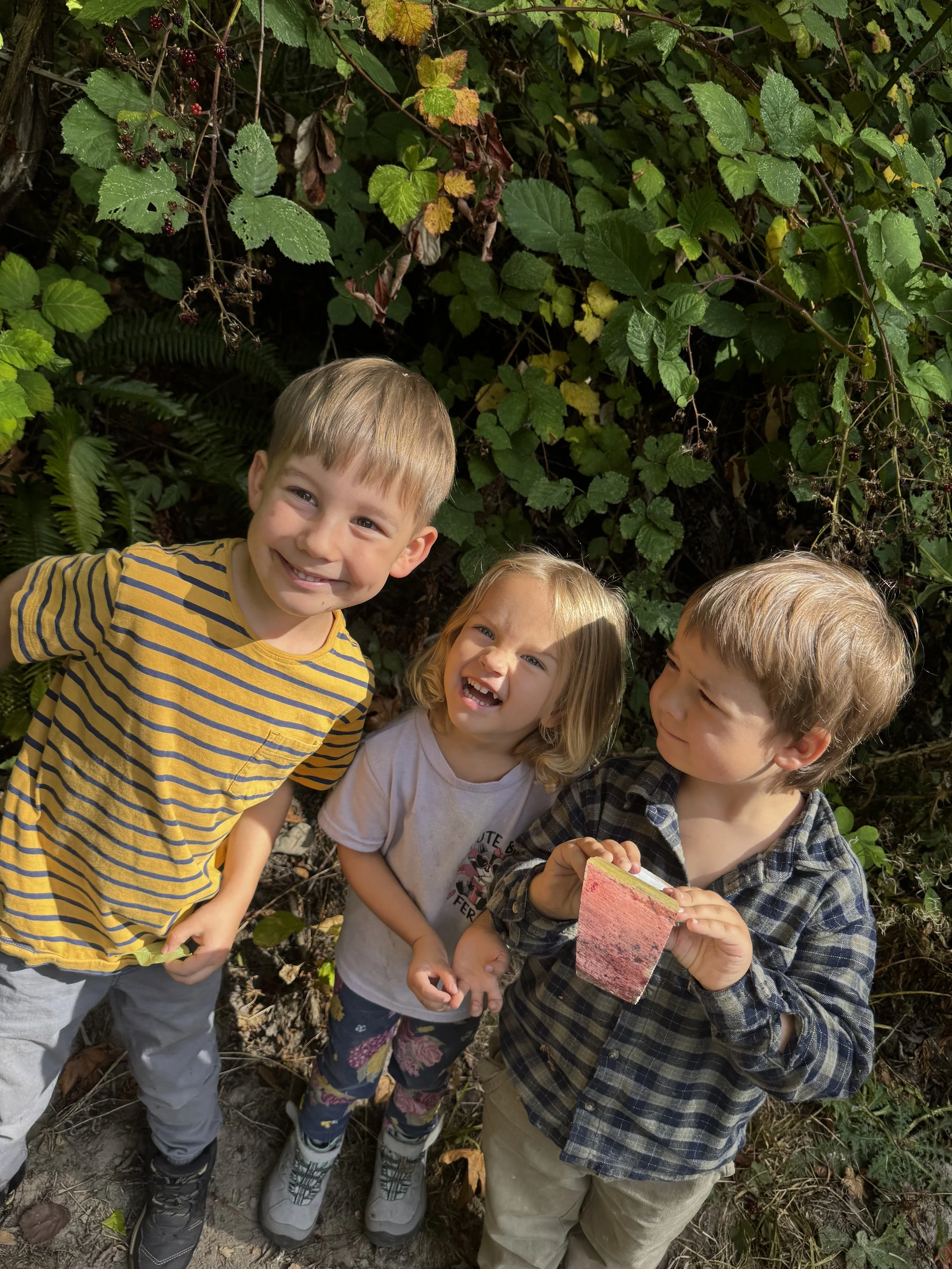
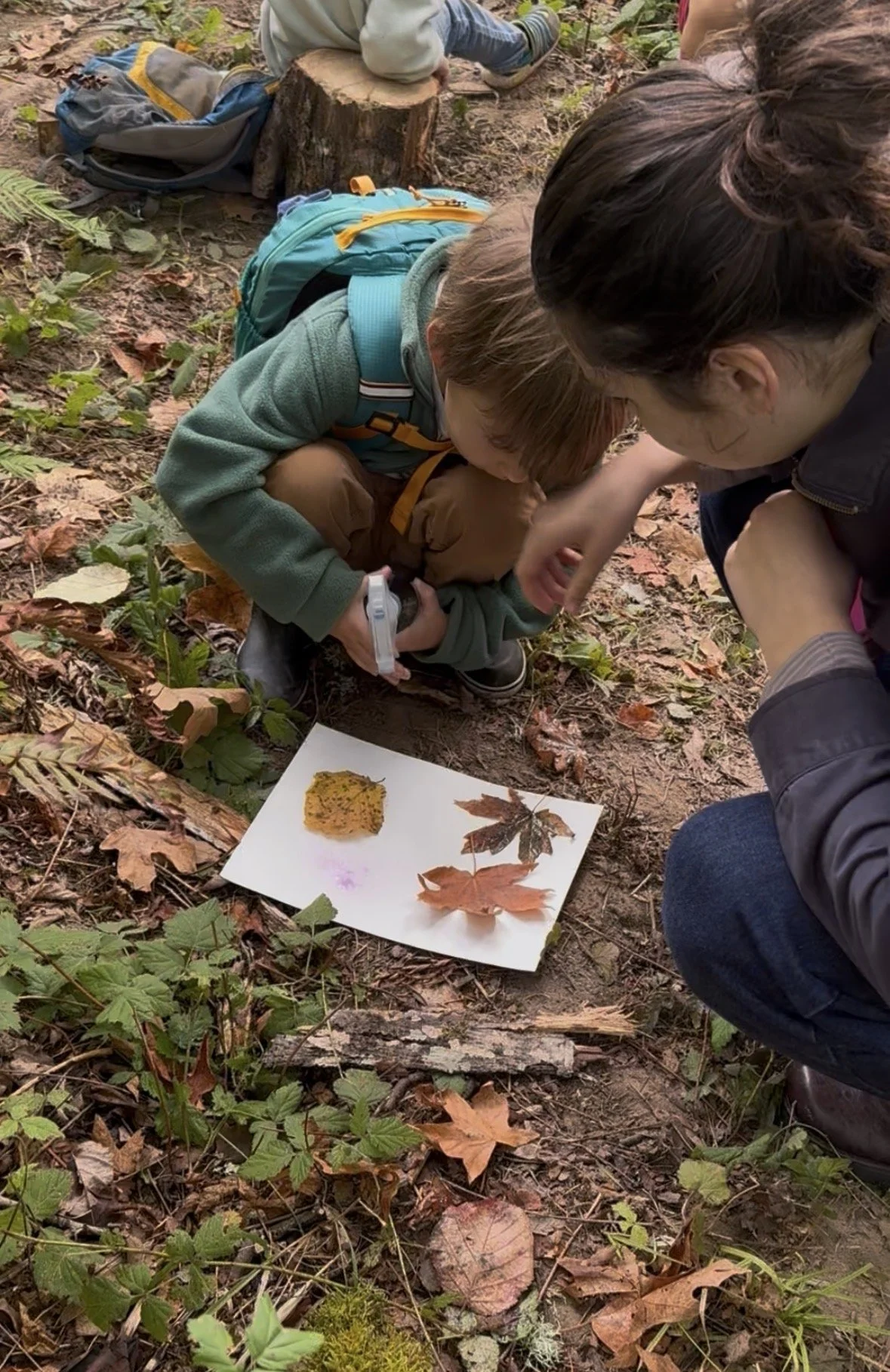
The end of blackberry season hasn't meant the end of foraging. The children are getting pretty good at identifying plants by their leaves, noticing differences in shape, size, texture and color.
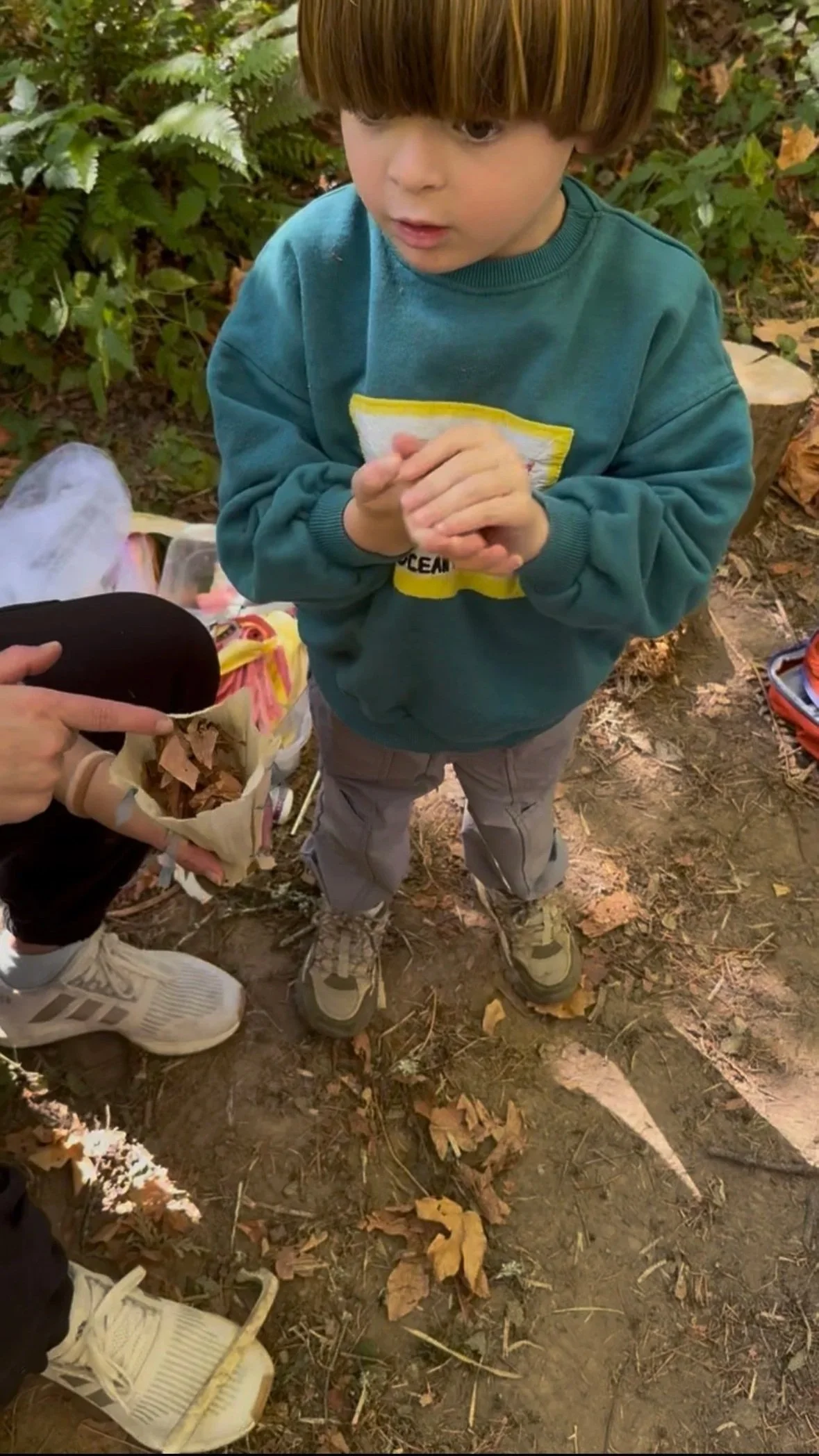
Salal, maple, hazelnut and thimbleberry have all become familiar. Hazelnut leaves are everywhere, and they've earned the nickname “nature's toilet paper.” Thimbleberry leaves are even softer but in short supply at this point in the season.
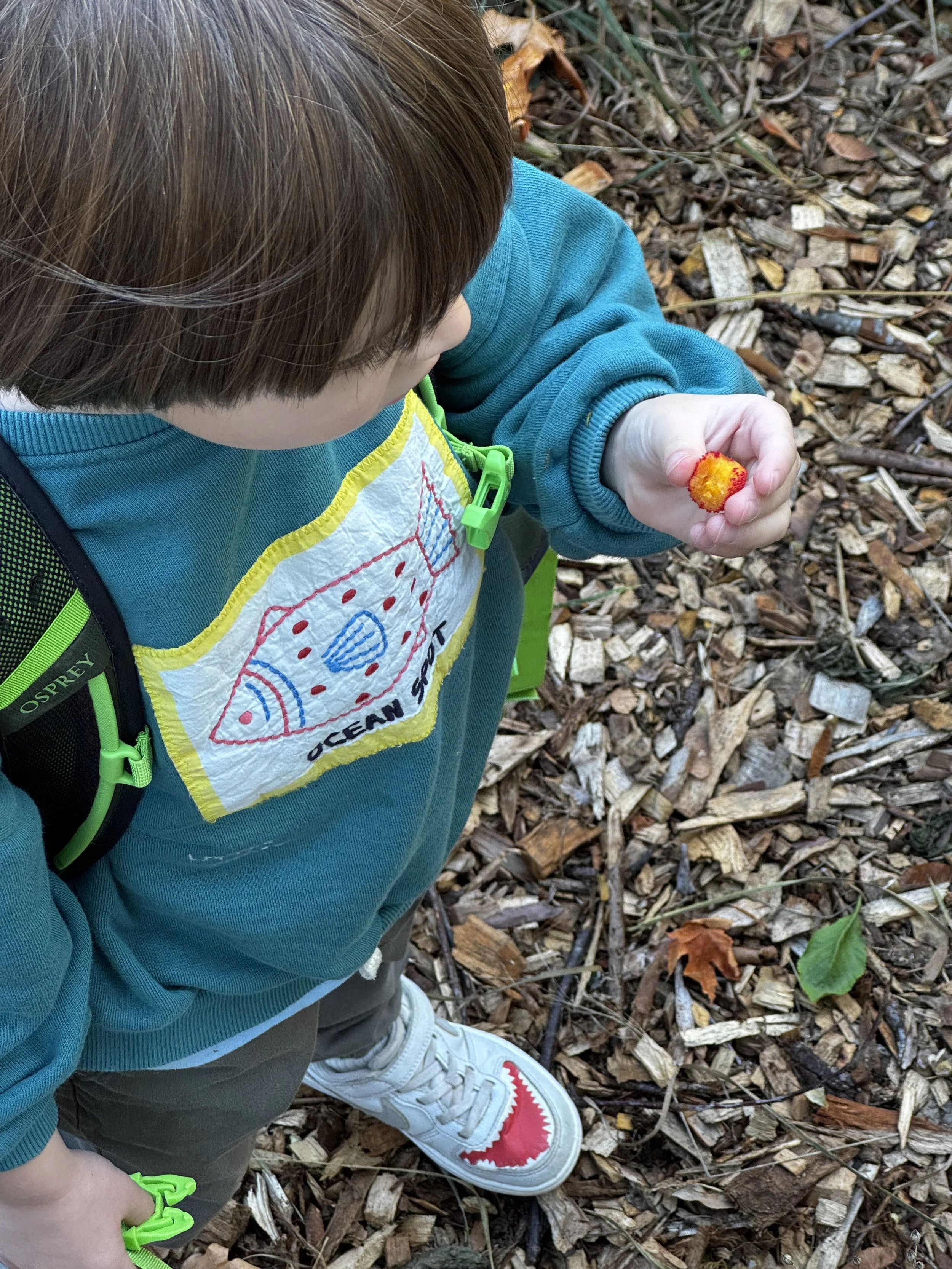
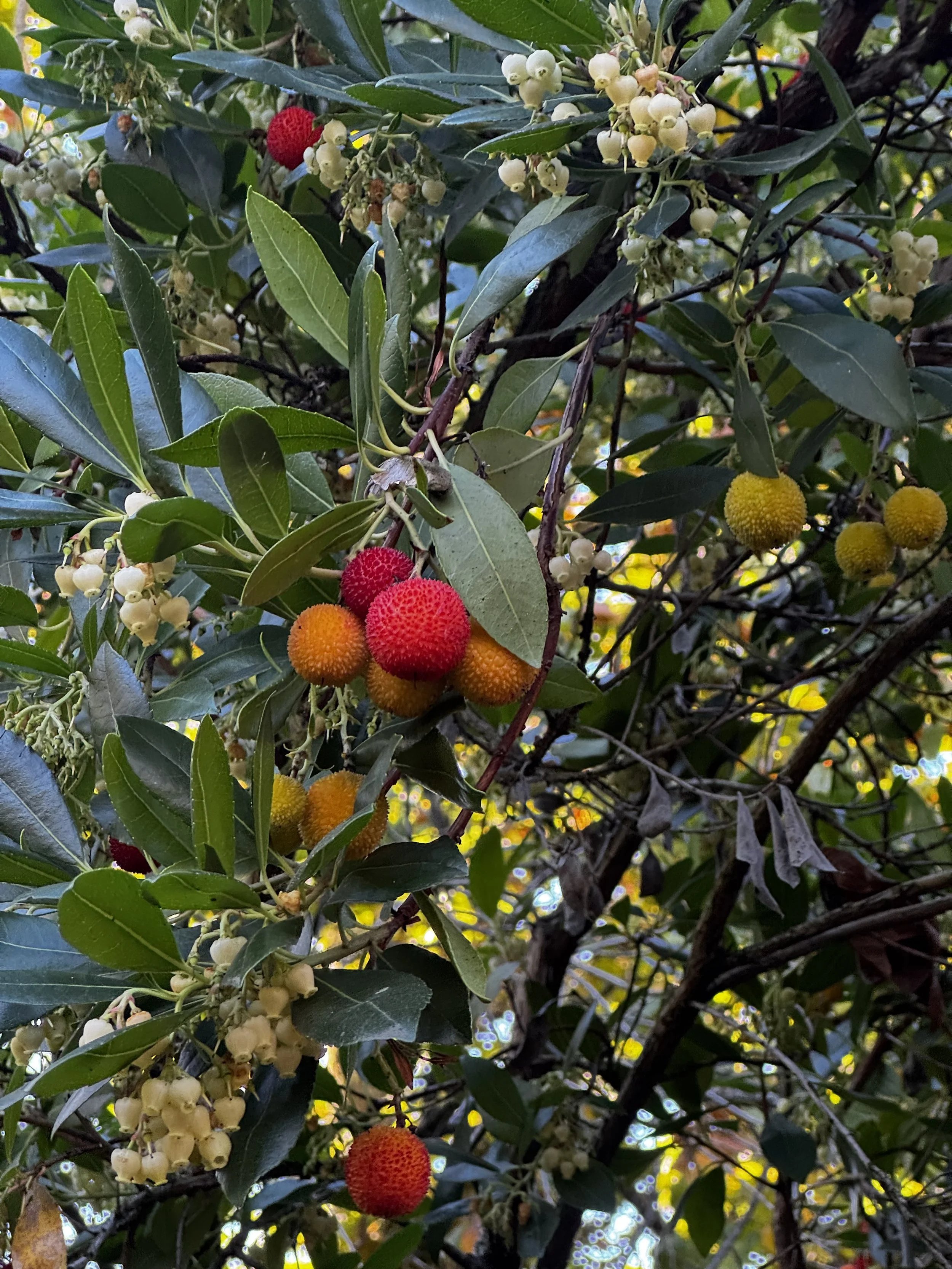
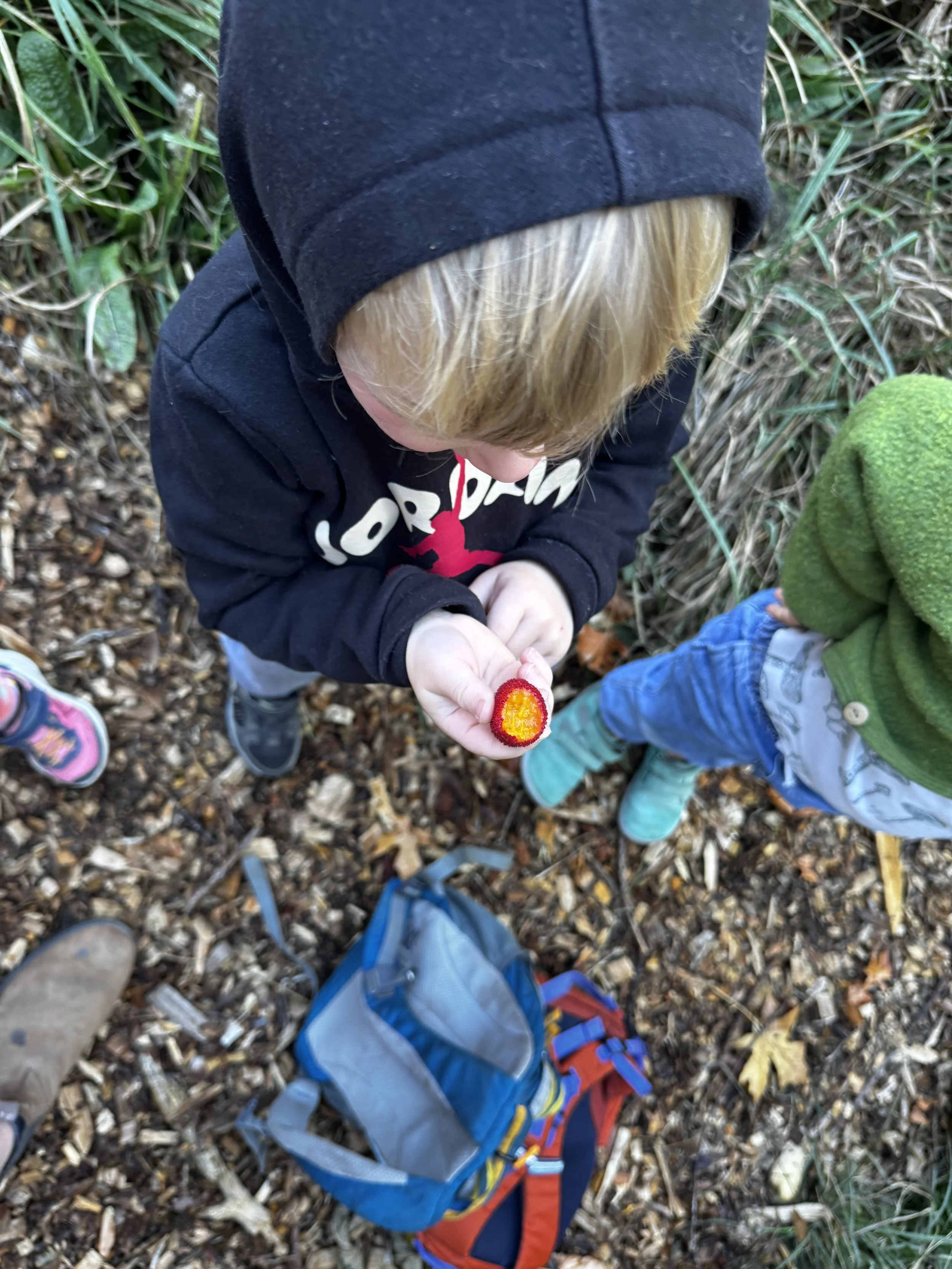
Many of the children have also been chewing salal leaves, and we discovered ripe fruit on our strawberry tree. The fruit has received some pretty mixed reviews, but the tree has become a regular stop on our way to the forest.
Our rule with foraging is simple: Always ask a teacher before eating anything, even if you know what it is. We also check both sides of leaves before gathering them, making sure nothing is growing or making its home there.
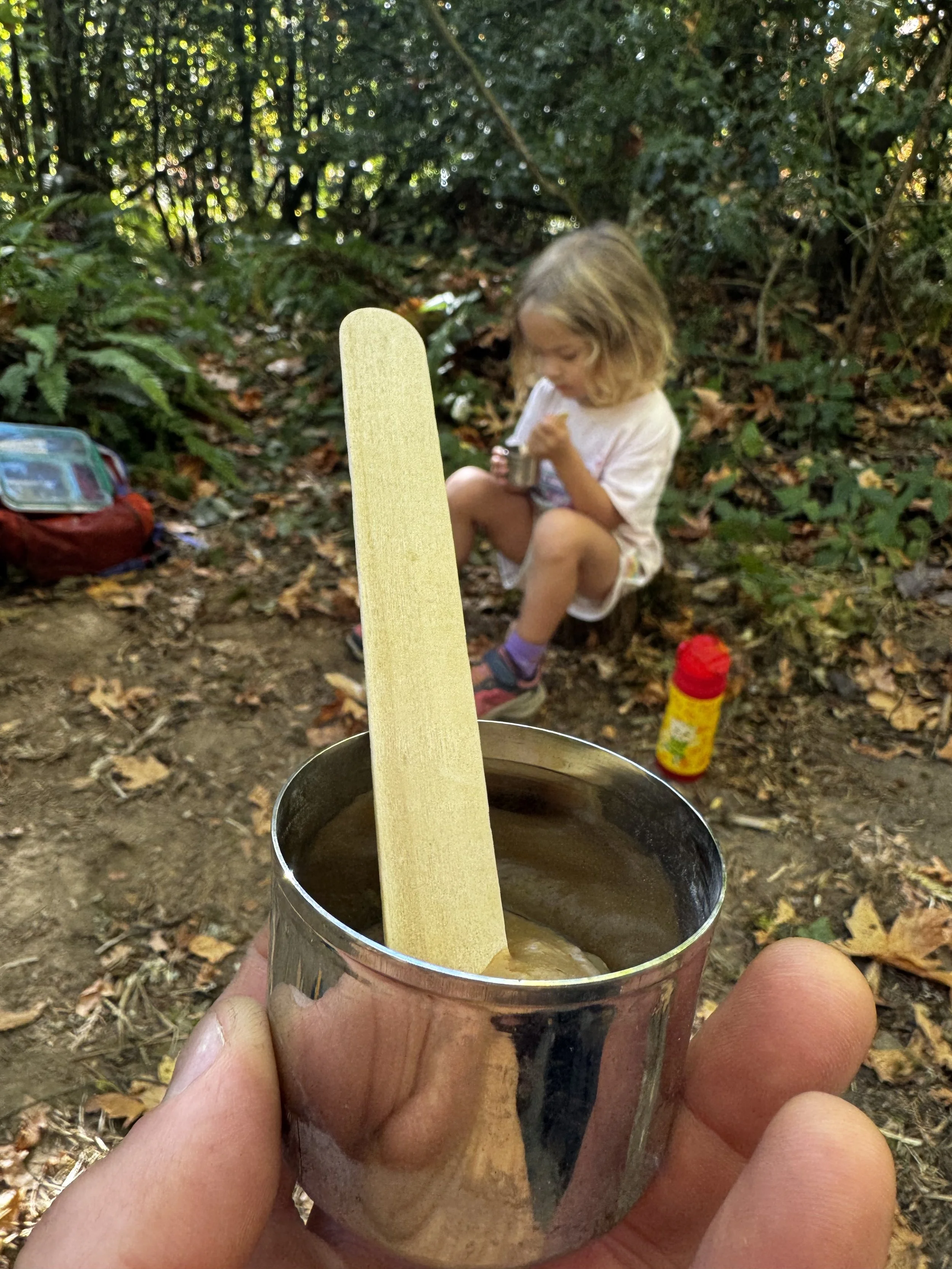
Kathy joined us several times this month, including a morning devoted to apples from her orchard. The children tried fresh apple slices, homemade applesauce and apple fruit leather, all from the same tree. Different textures, tastes and ways of preparing something familiar.
She even brought an apple with worms inside, giving us a chance to explore what happens to fruit that doesn't make it into our food.
New Friends, New Places
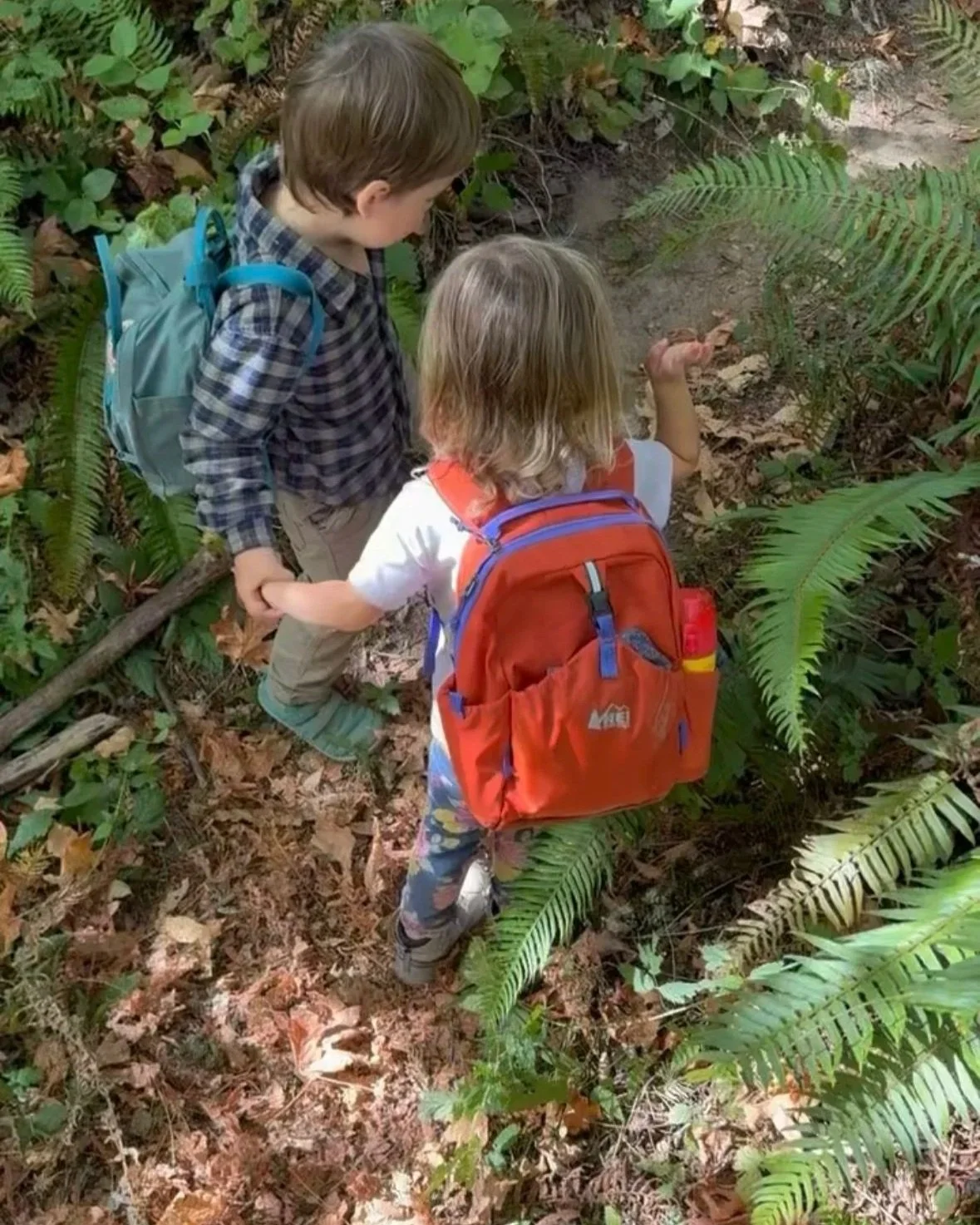
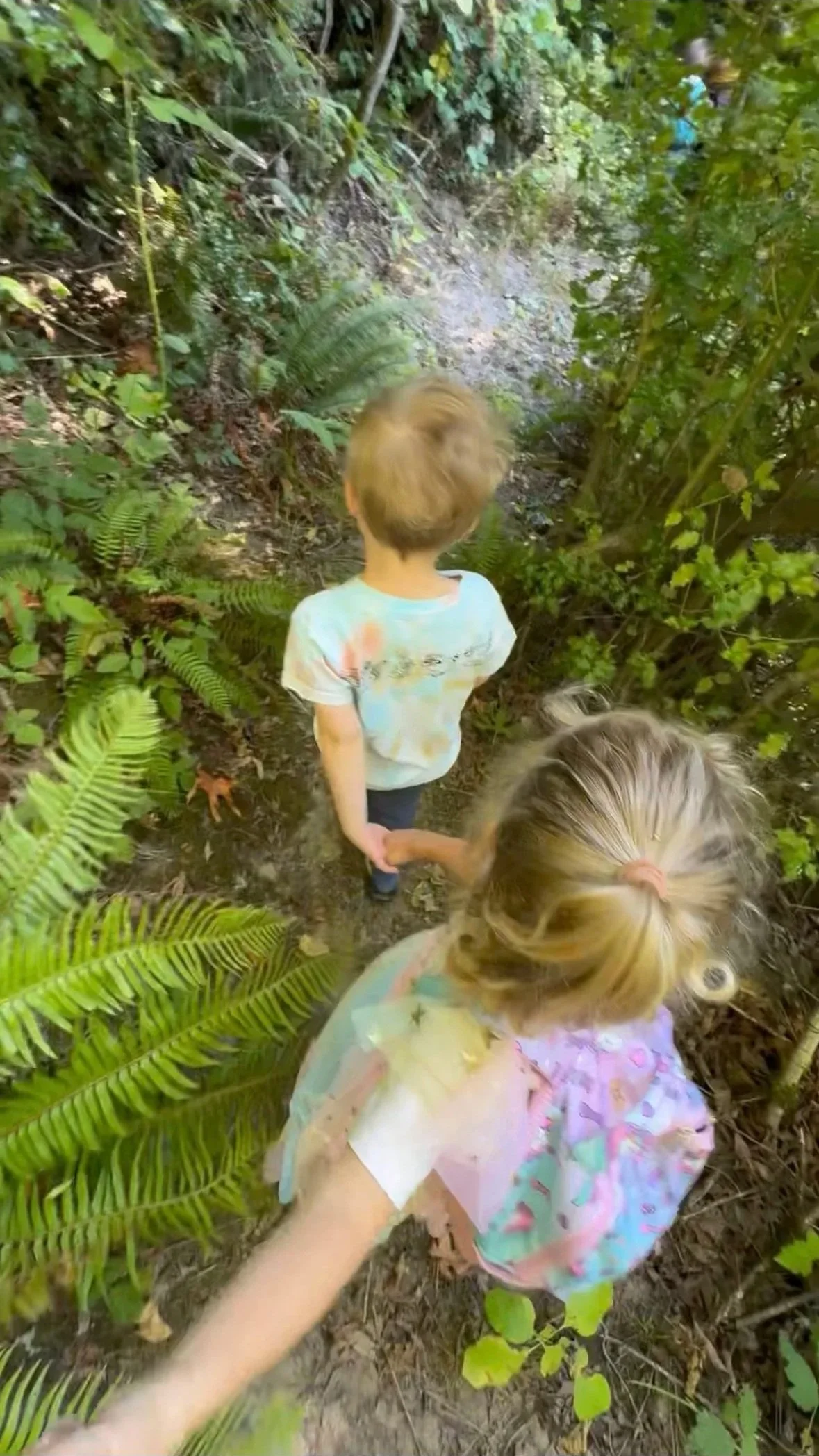
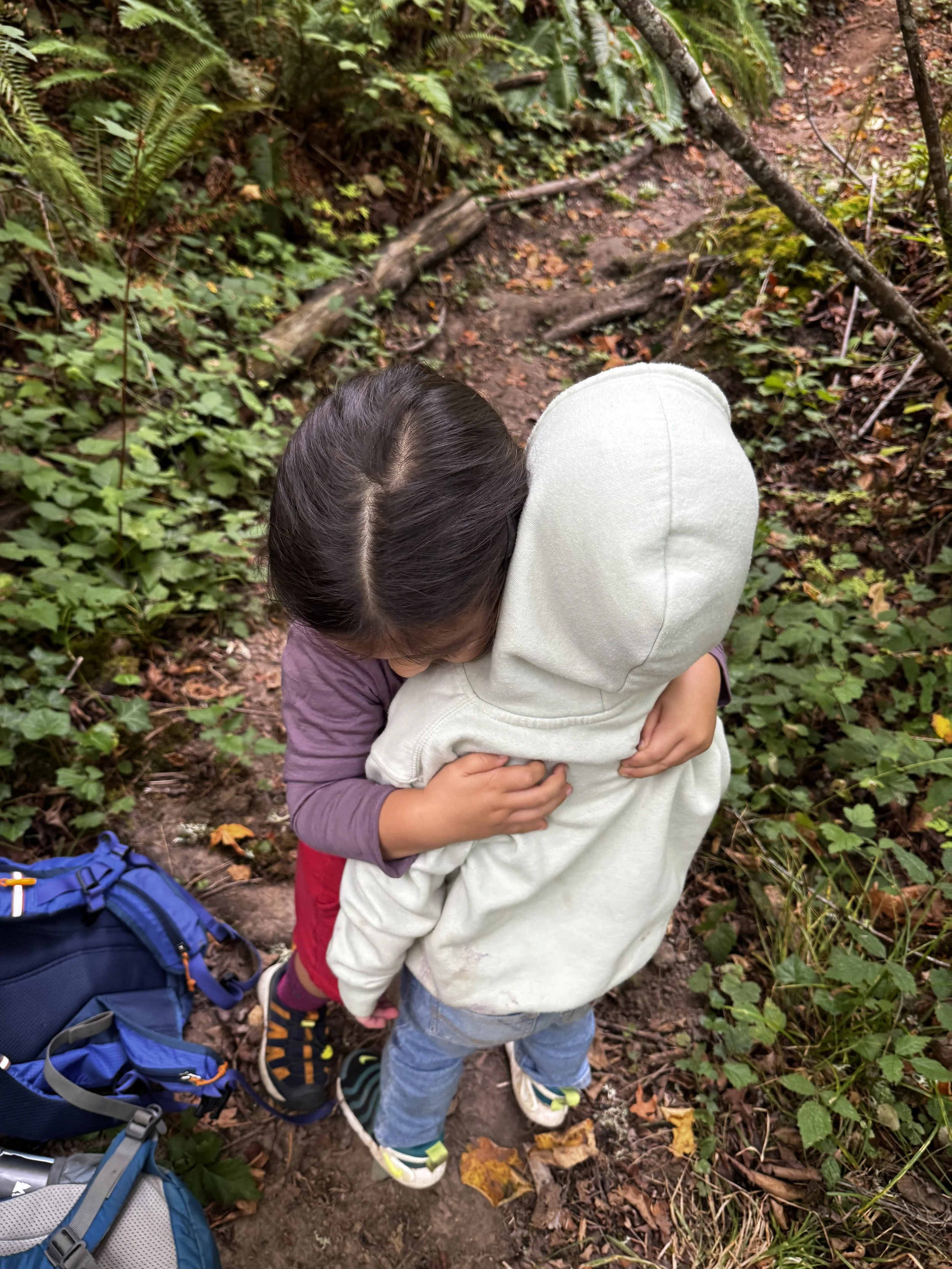
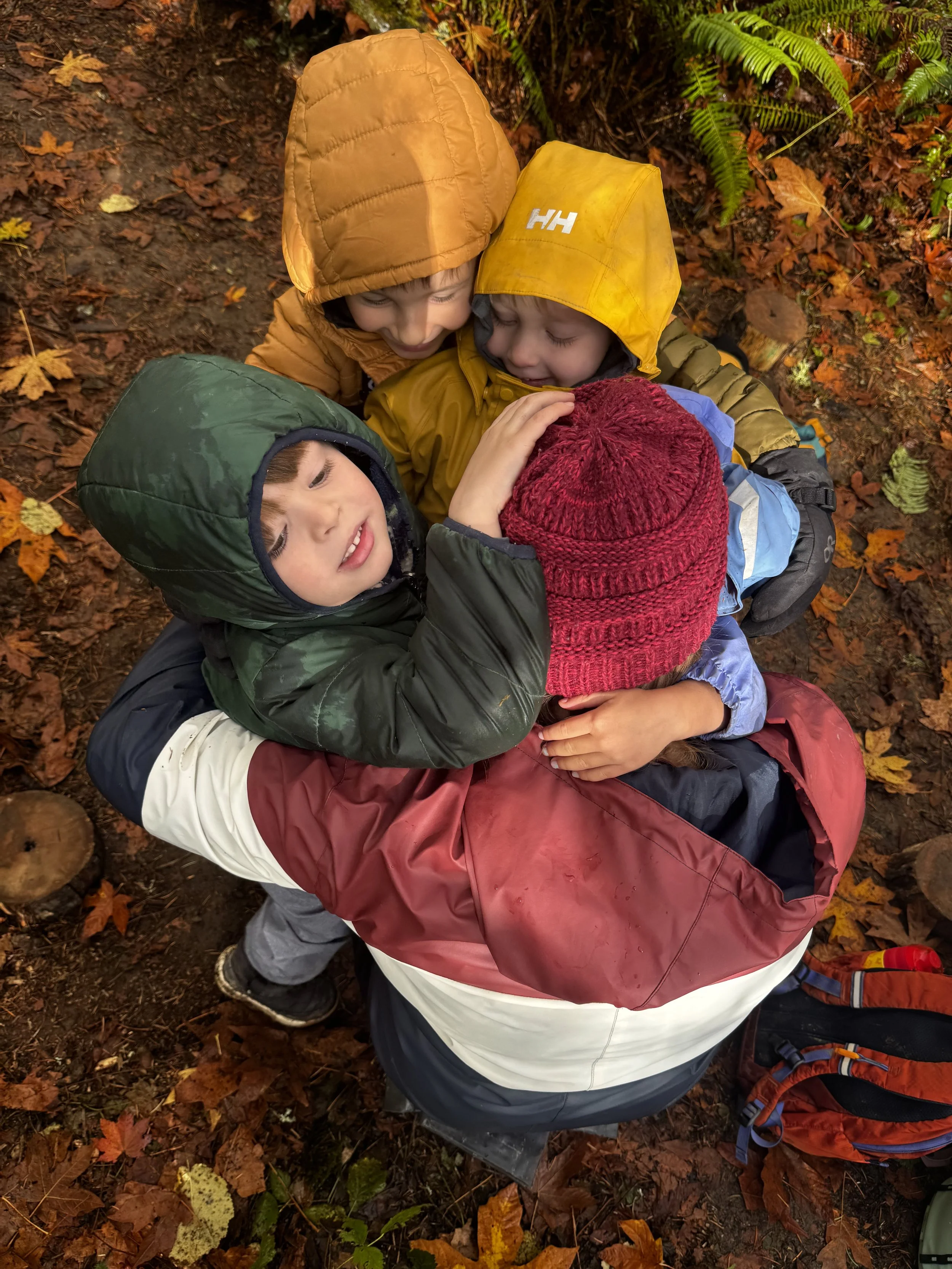
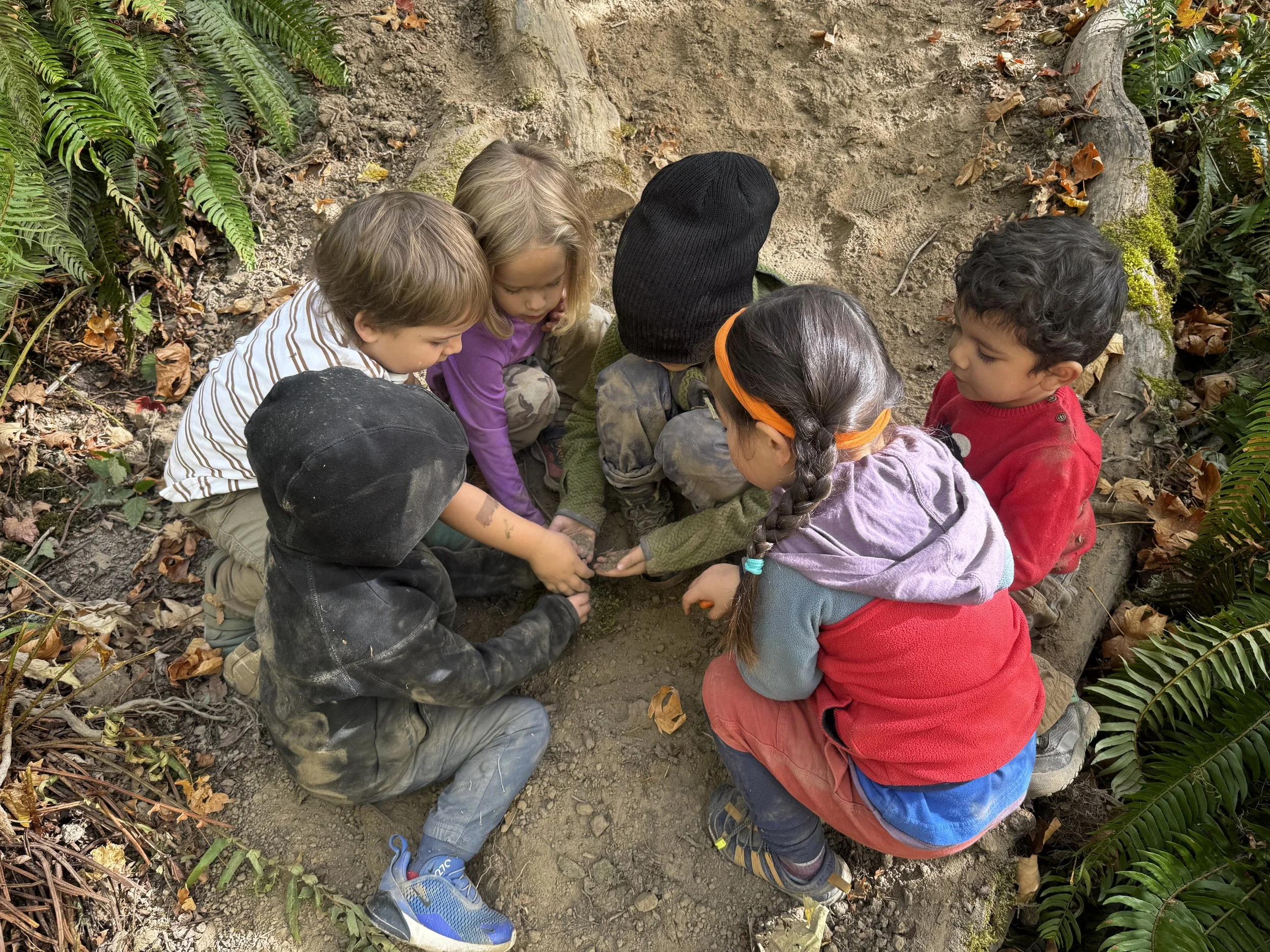
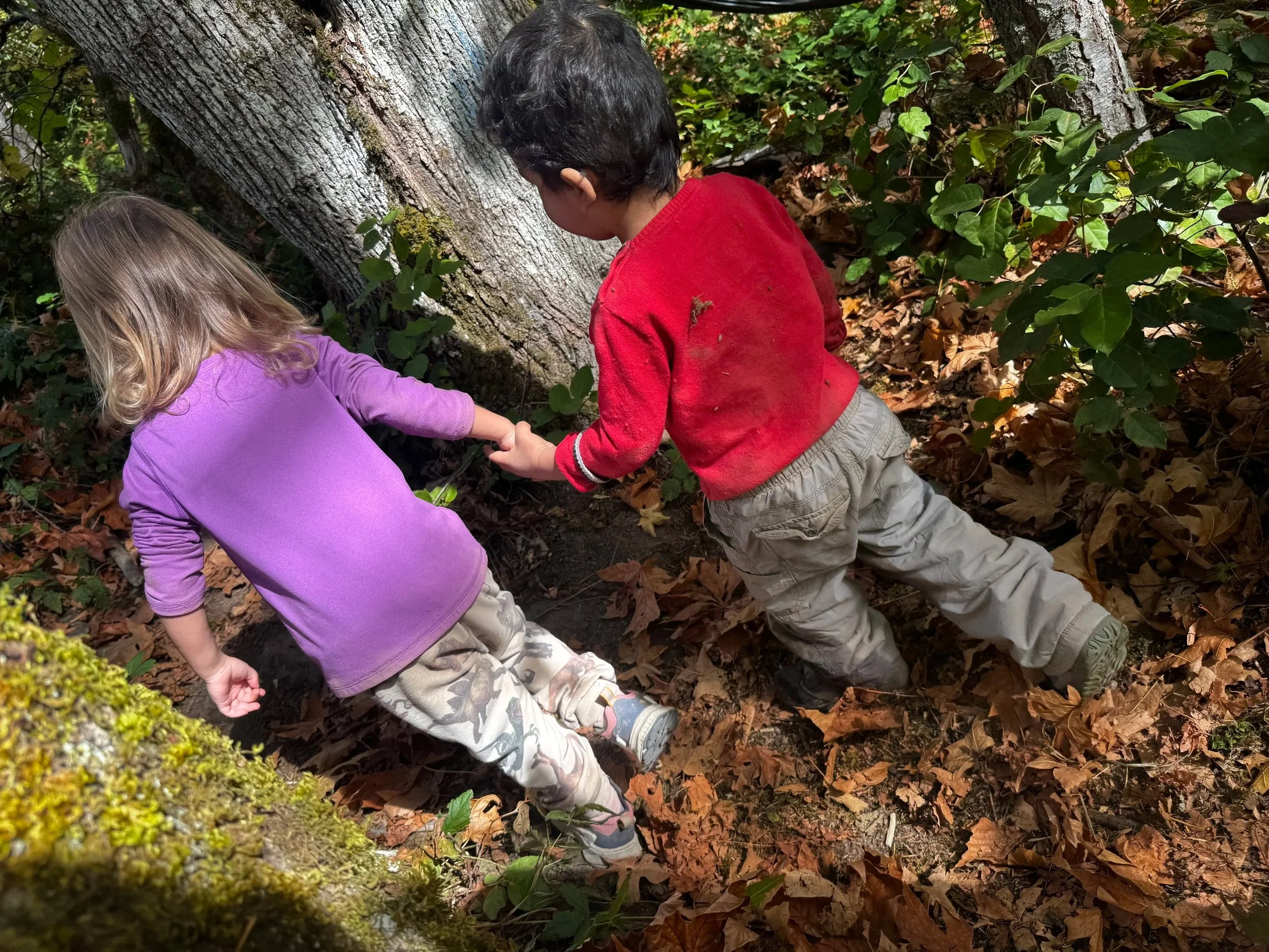
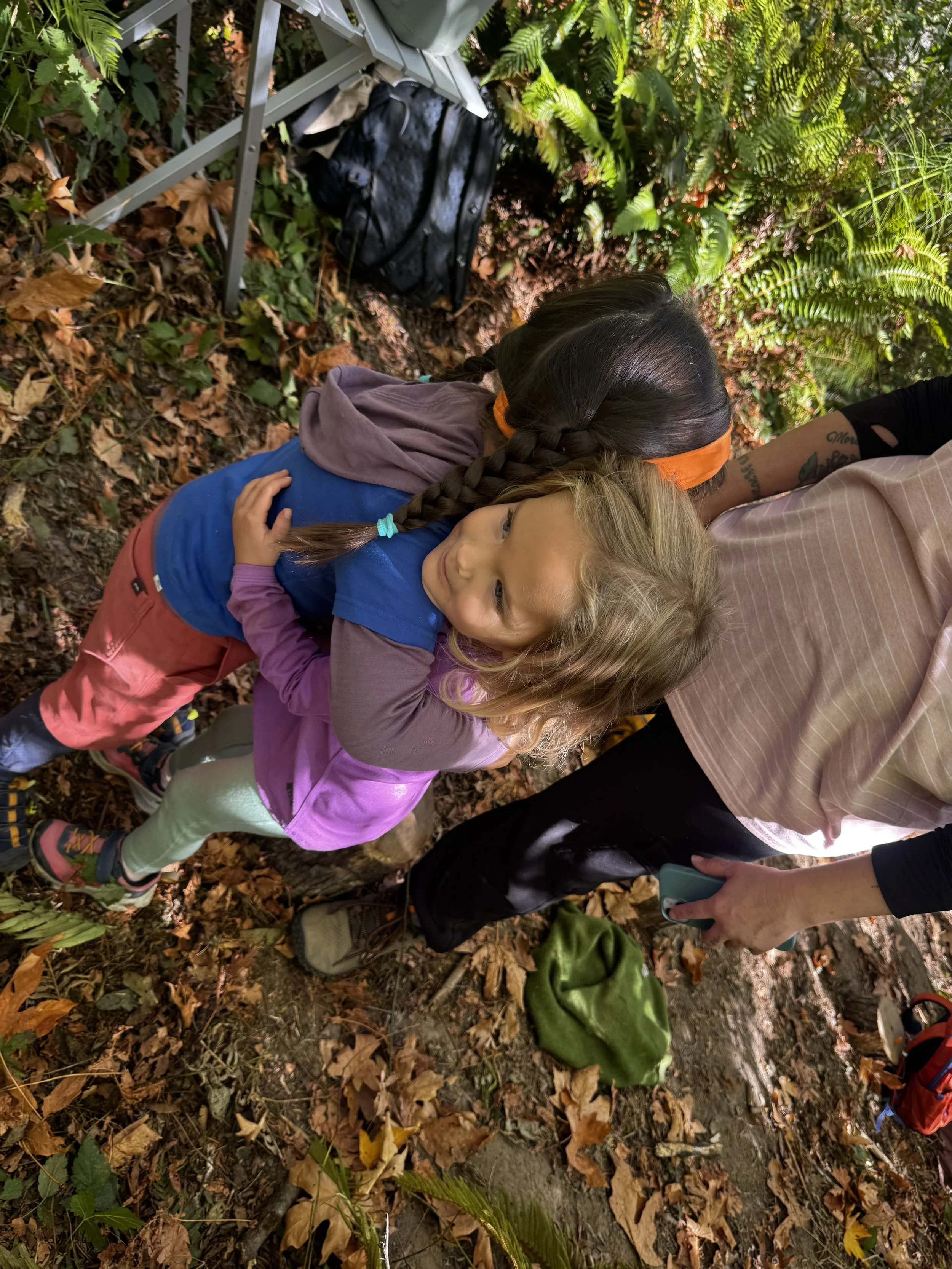
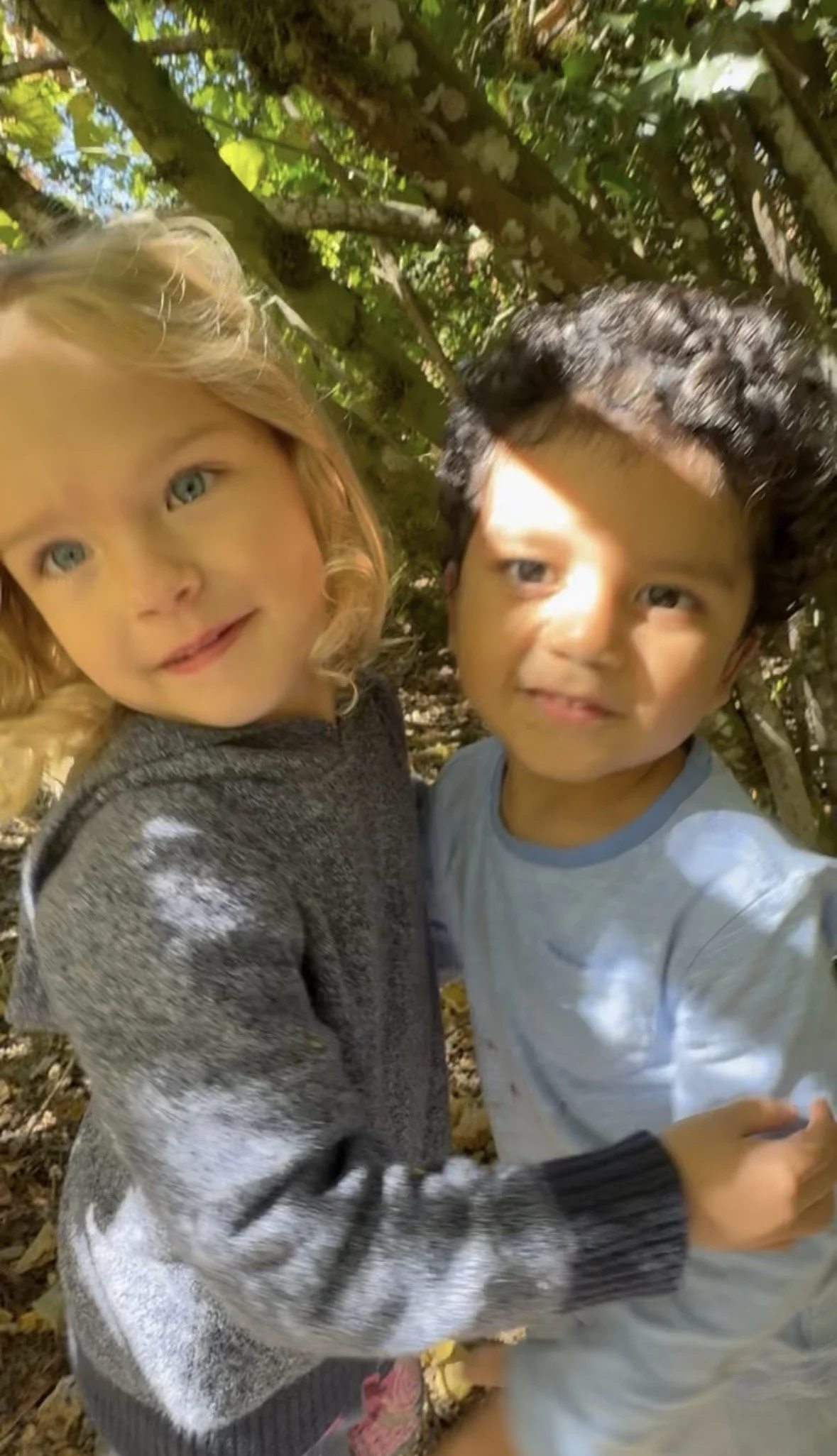
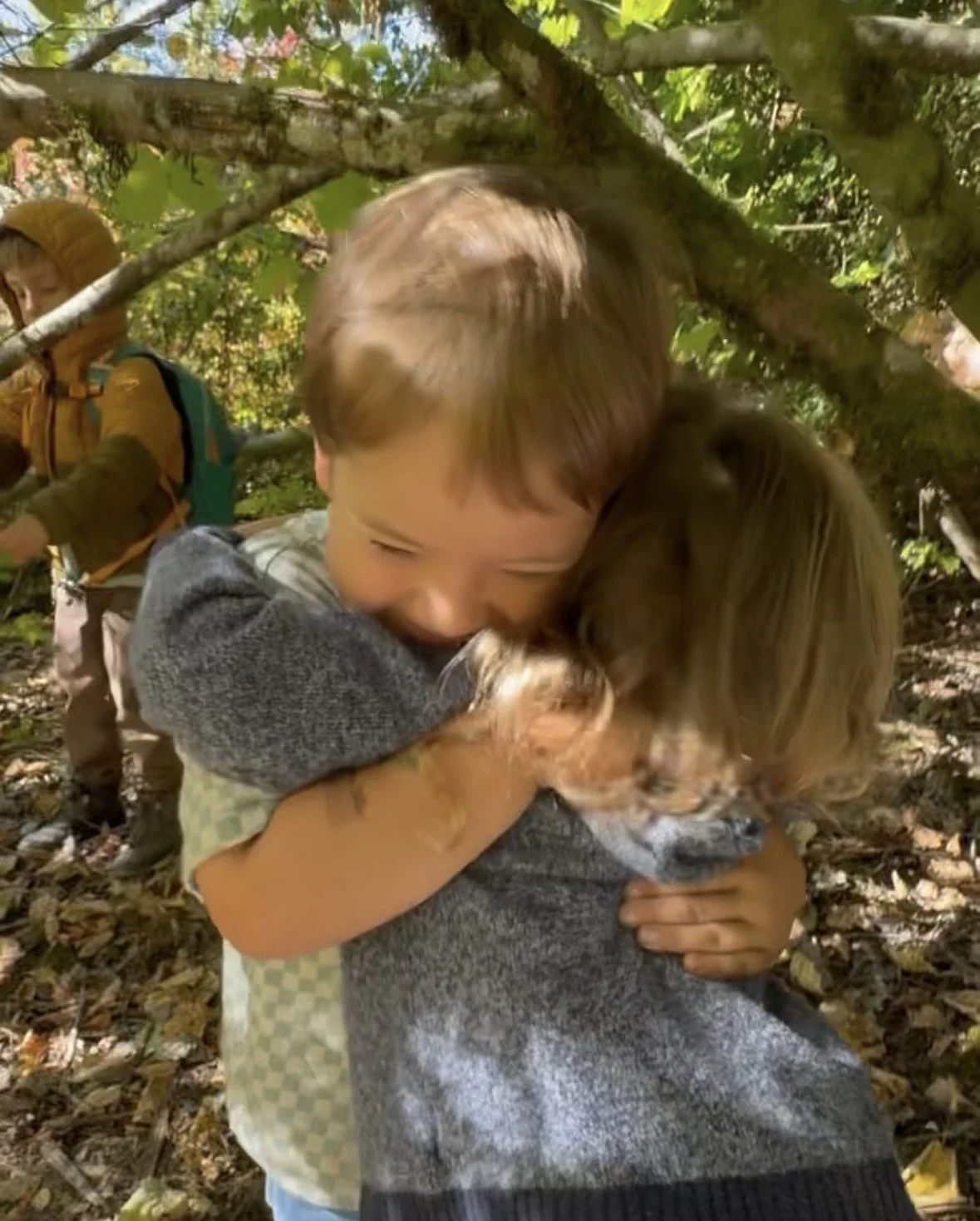
Two more children joined Cedar + Bones this month, and there have been a whole lot of hugs, hand-holding and new friendships.
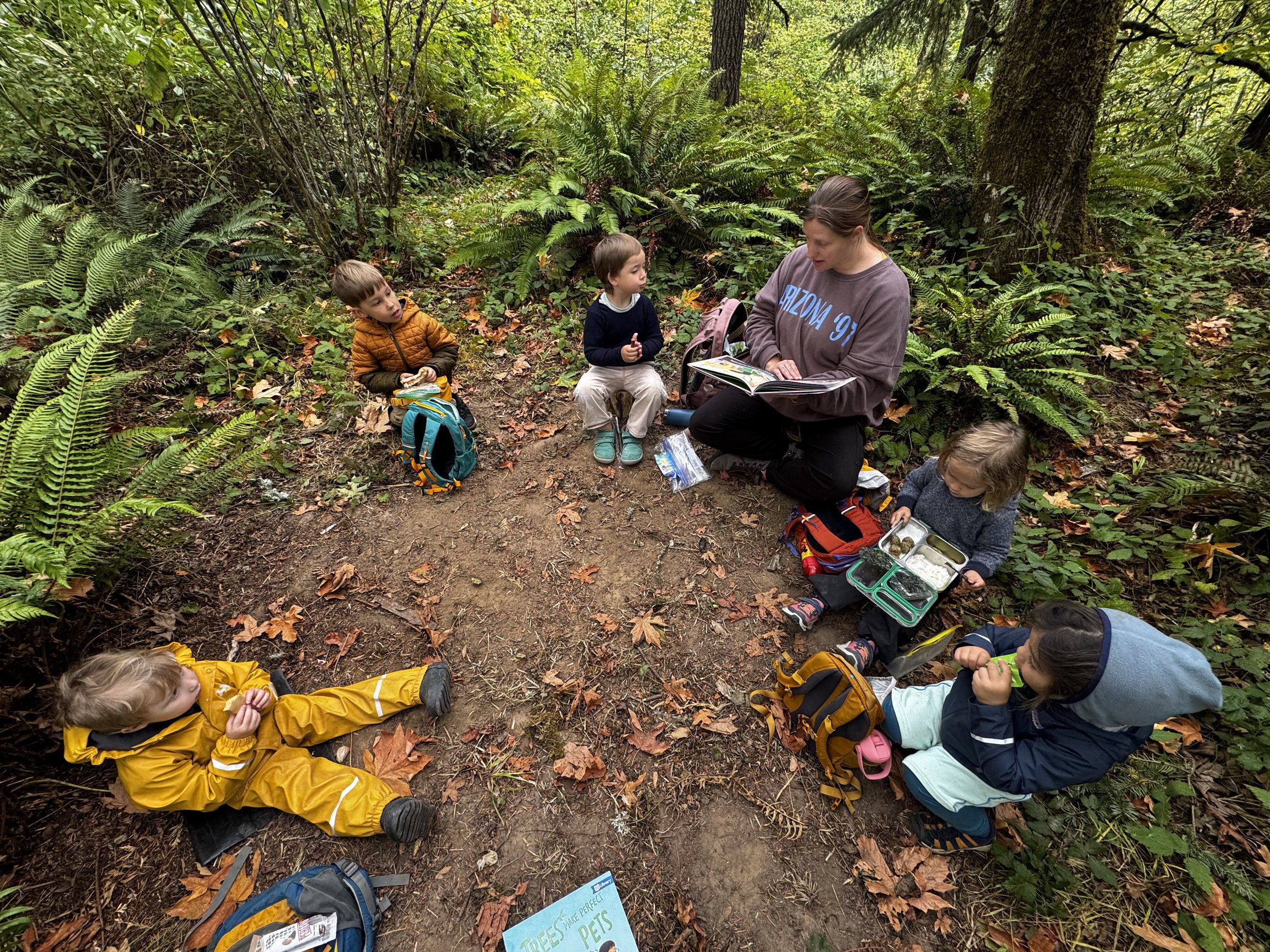
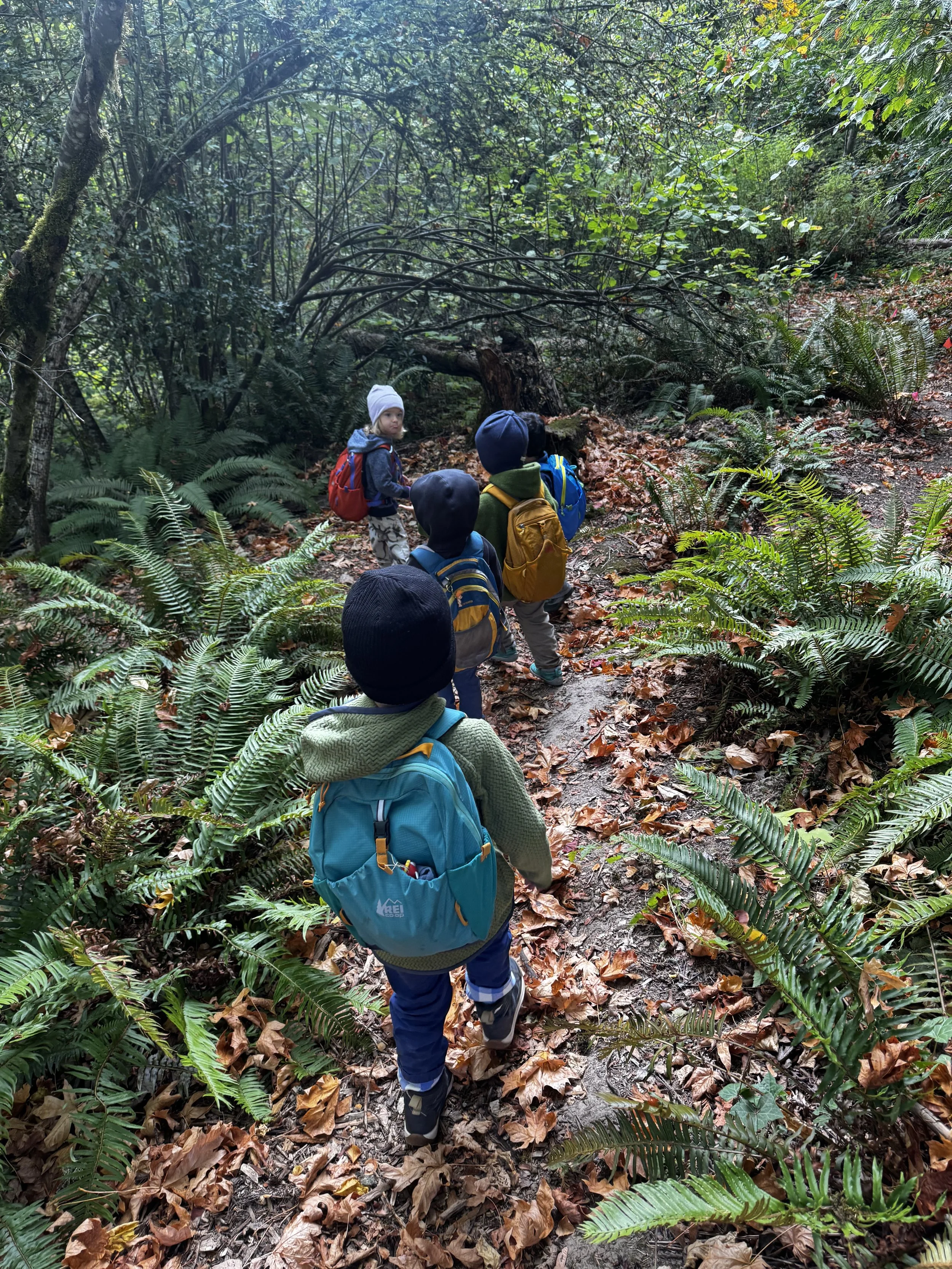
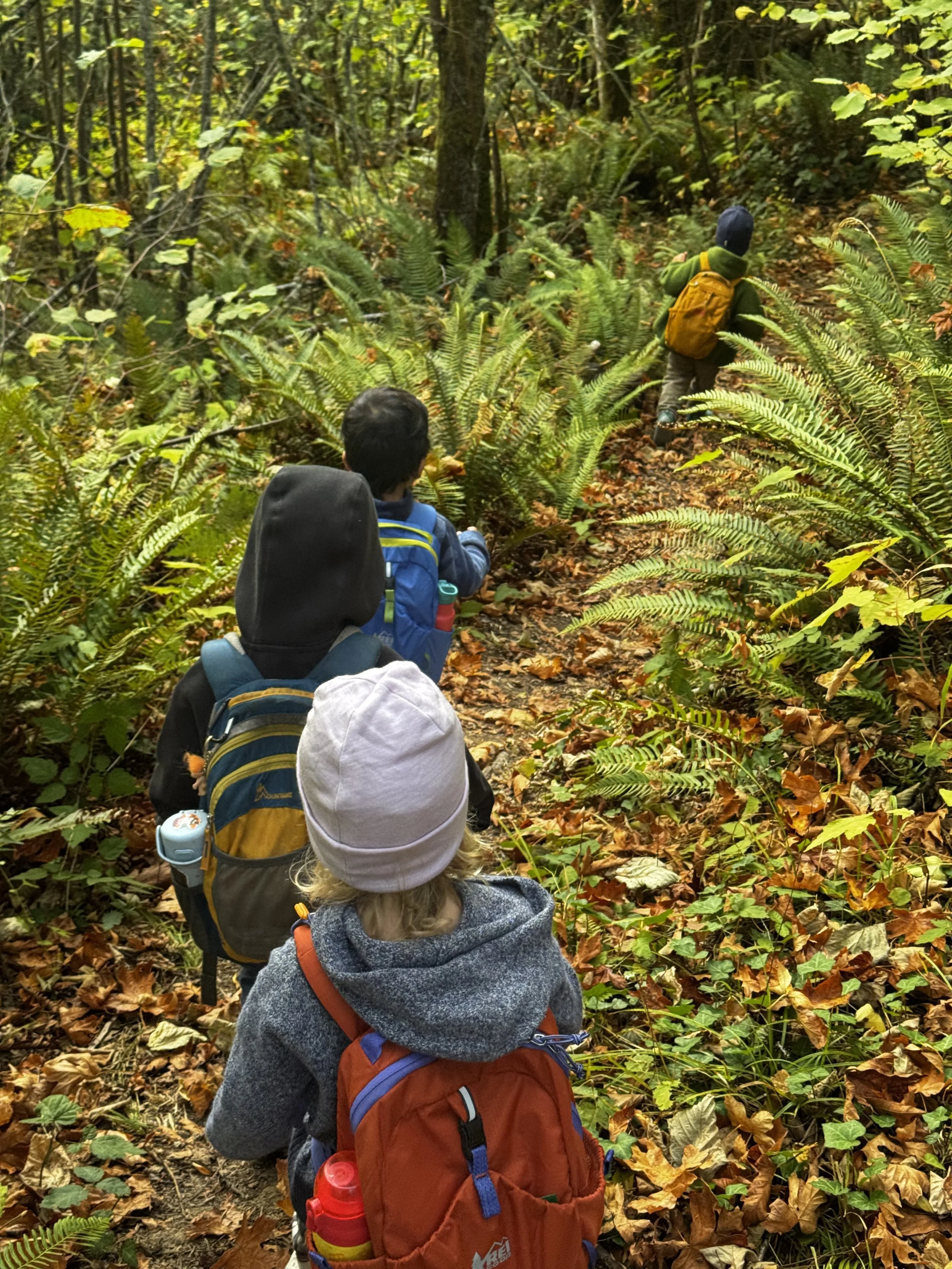
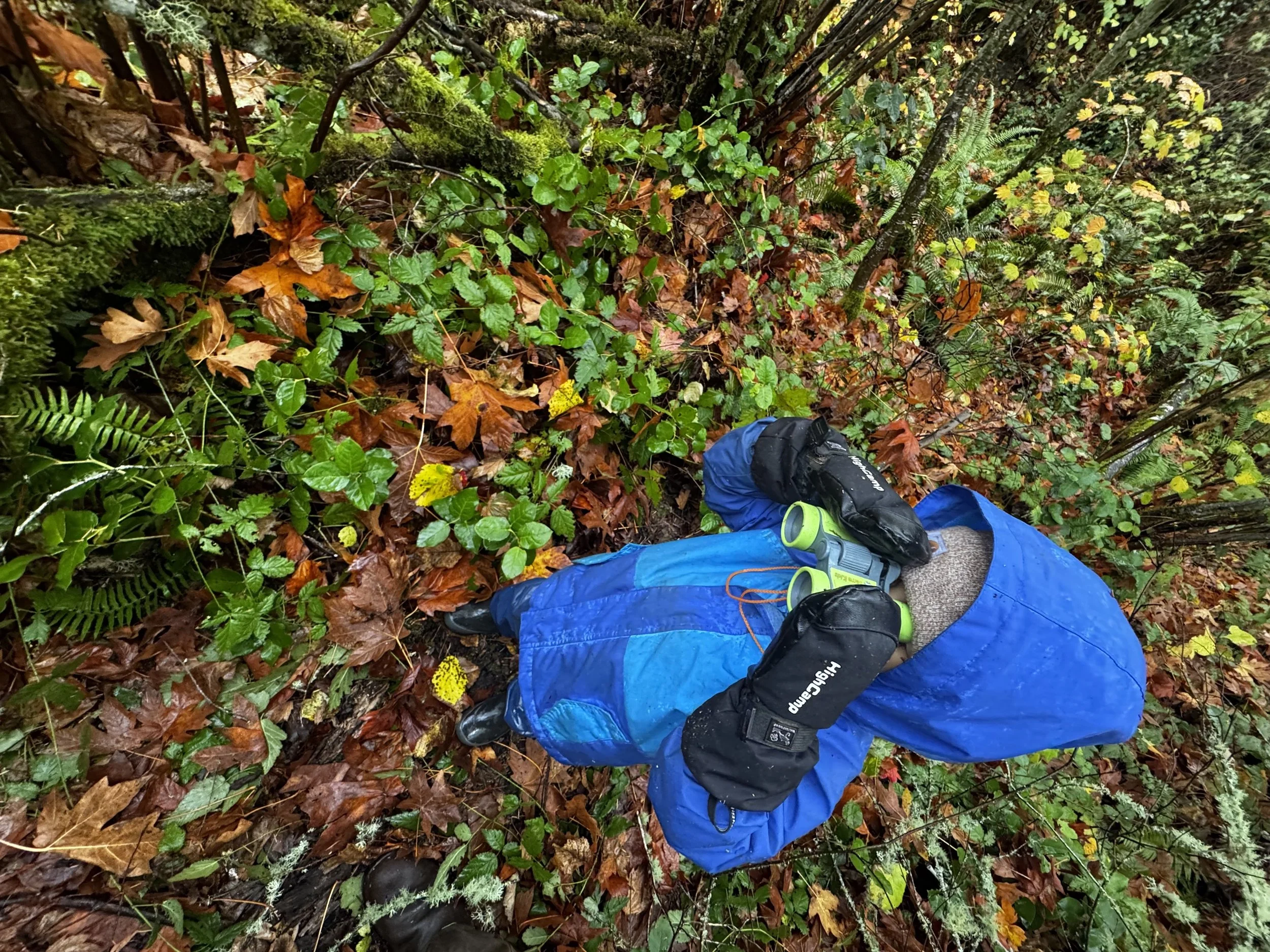
With our home base now deep in the forest, the children average about a mile of strenuous hiking each day, much of it carrying their own packs and gear.
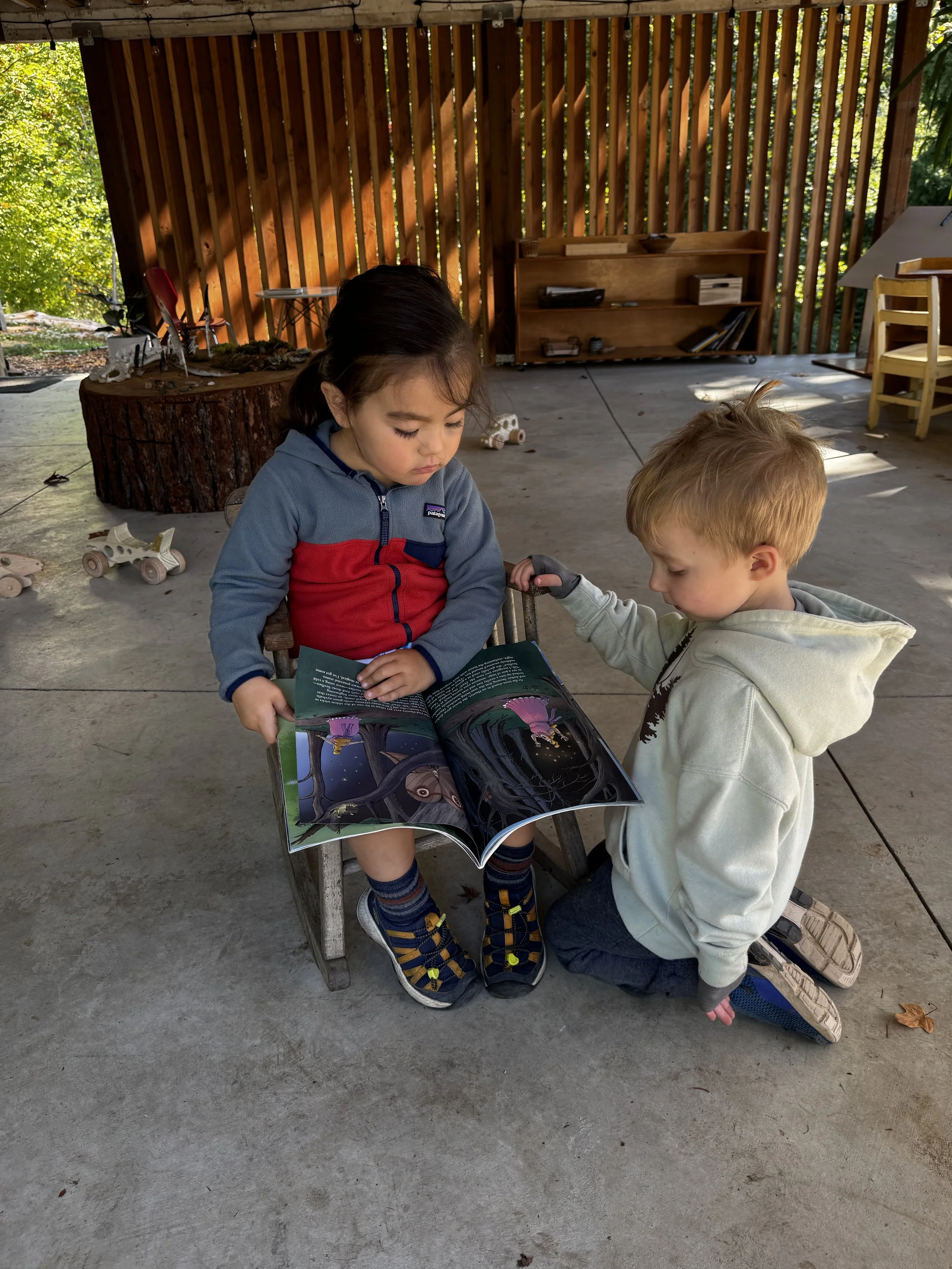
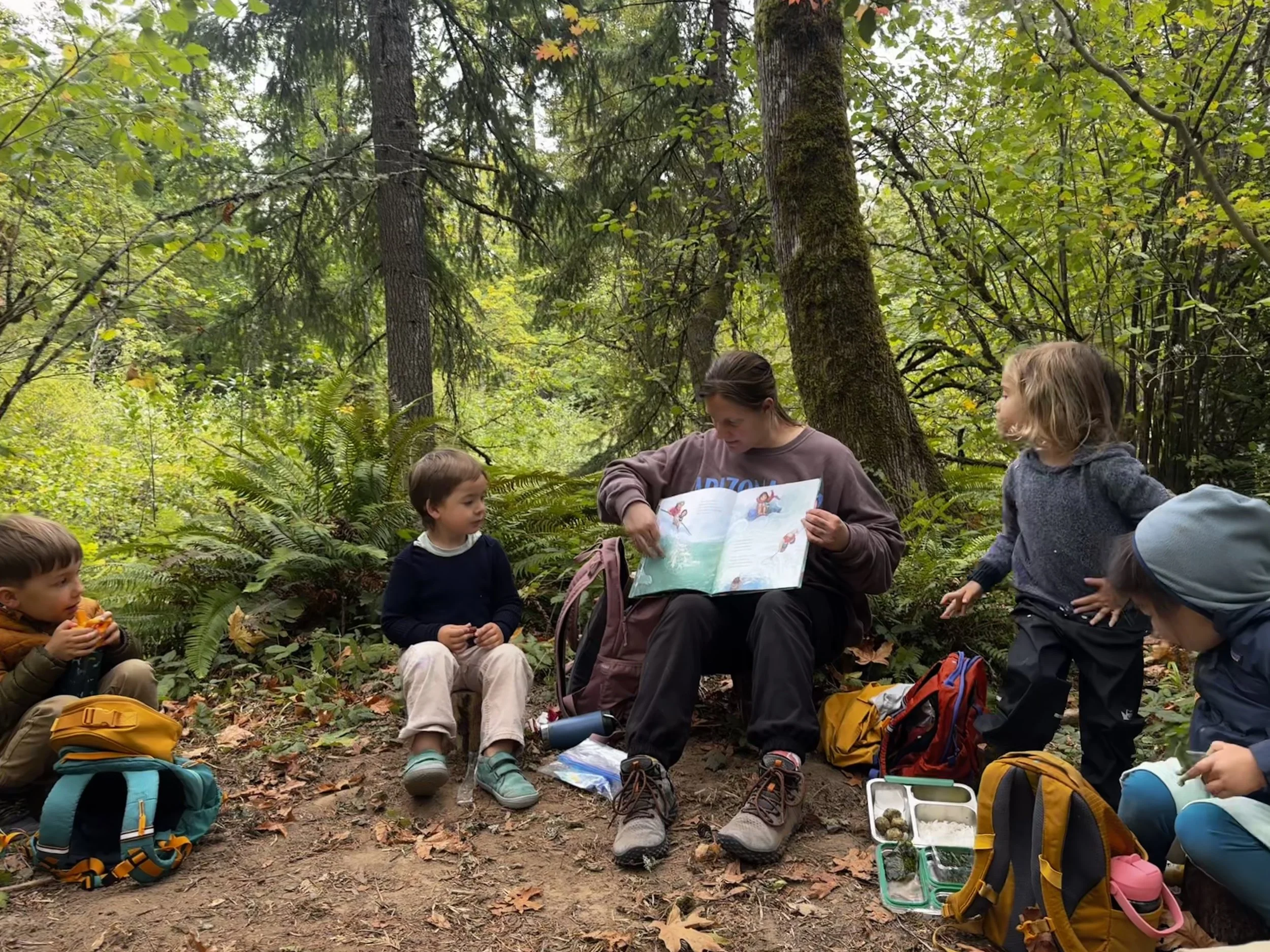
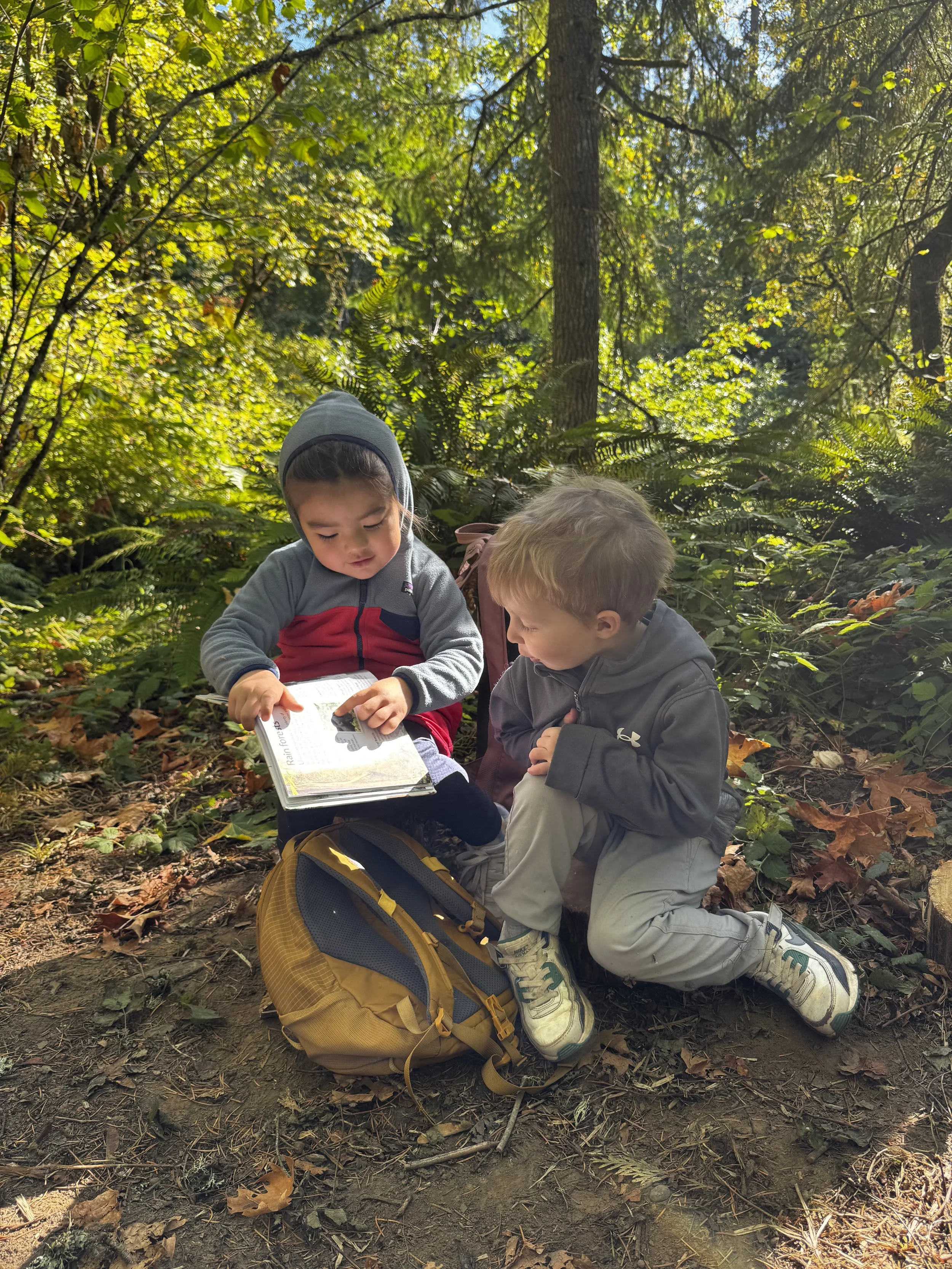
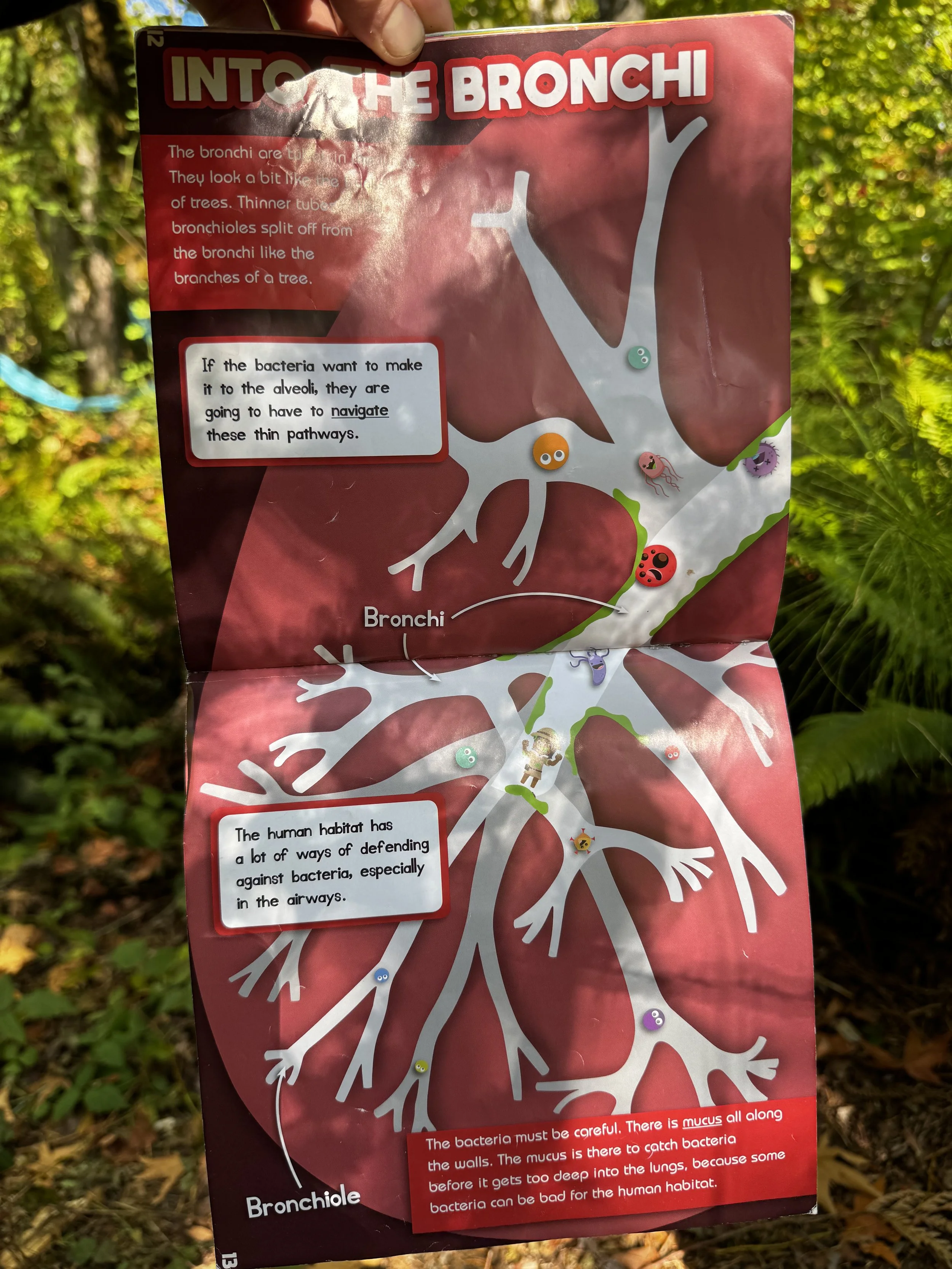
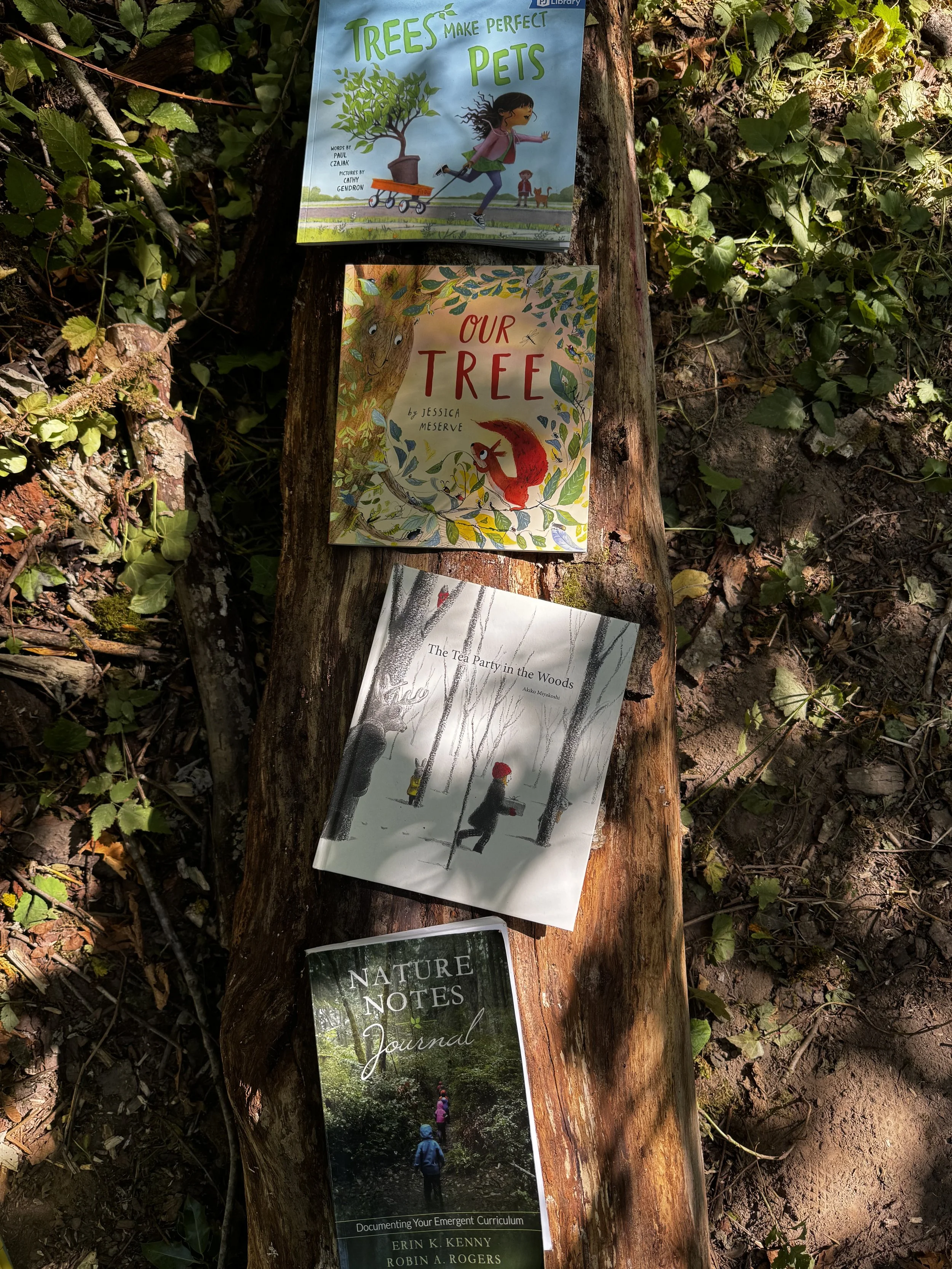
The teachers are discovering our own capacity too! Child-led, emergent learning means being ready to follow a lot of different interests. Our packs are loaded with books the children chose for us to read during snack and lunch, sit-upons, stacks of whiteboards/chalkboards, plexiglass, paints, markers, chalk, spray bottles, charcoal, hand tools and whatever else might come in handy.
It's a lot to carry, but it means the forest can be our classroom, art studio, library, STEM lab and playground without having to head back to the classroom or say no if someone has an idea.
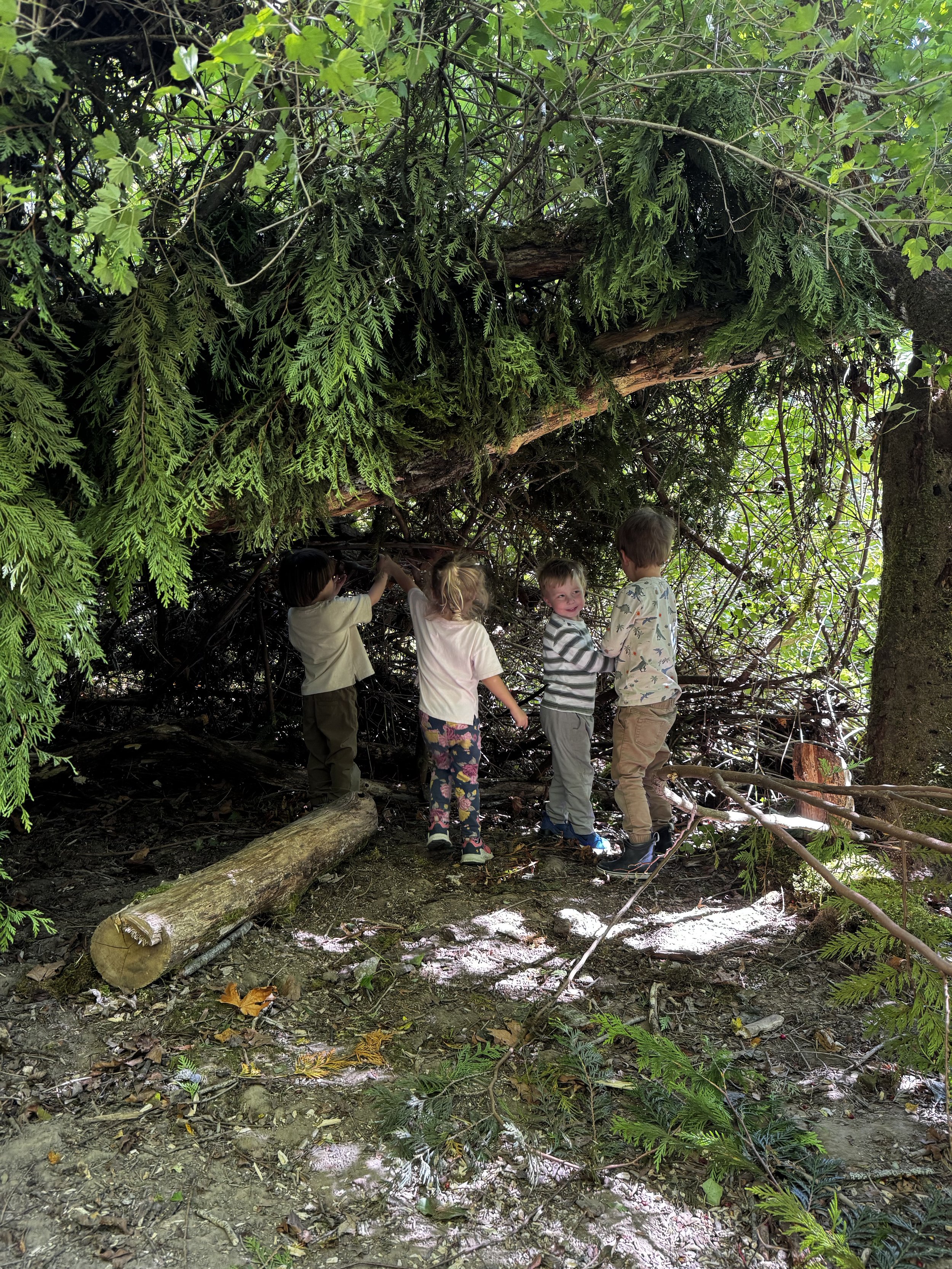
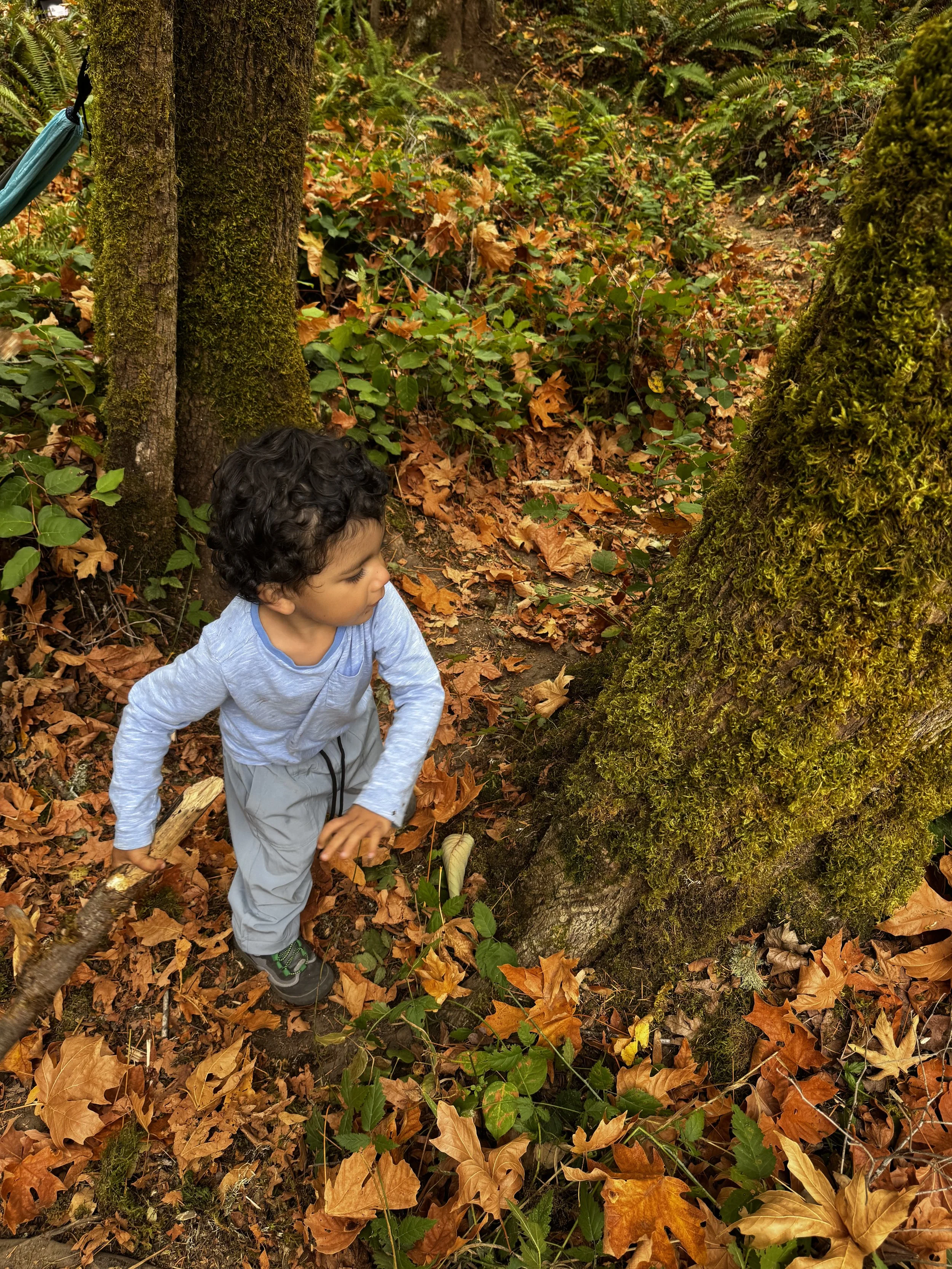
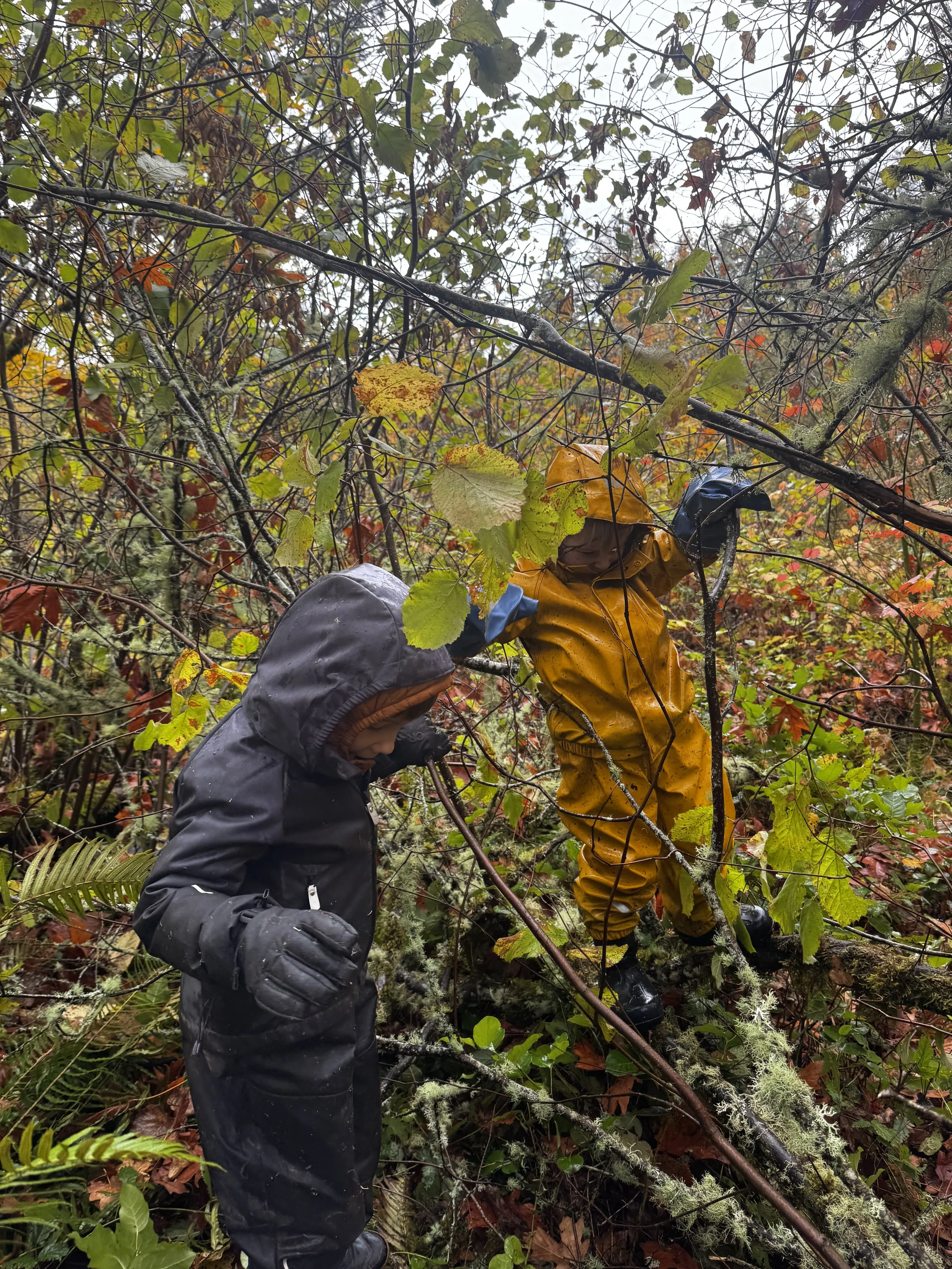
Toward the end of October, the kids began bushwhacking off our familiar trails, exploring new parts of the forest. We also cleared a spot for our first bushcraft shelter, including some serious blackberry removal, and introduced rakes so the children could help prepare the space.
Something new for Monday! You may notice the screened gazebo is gone from the deck. It's packed up and coming with us into the forest, where it will provide a large, dry shelter near our circle while we work toward building our bushcraft shelter.
The Trails We Build
One of our biggest projects this month was engineering a series of switchbacks on a steep section of trail. Deer and coyotes have no trouble traveling straight up and down this hillside, but without paws or hooves, it's a different story for us, especially once it’s muddy.
We've been discussing how water flows, how gravity shapes the trail, and how to direct rainwater without washing the soil away.
We try to build trails with as little disturbance to the forest as possible. Existing plants and trees are our best friends. Sword ferns, hazelnut and maple help hold the soil around each turn, while fallen nurse logs provide additional support. The few plants we've needed to move, including Oregon grape and salal, have been transplanted nearby.
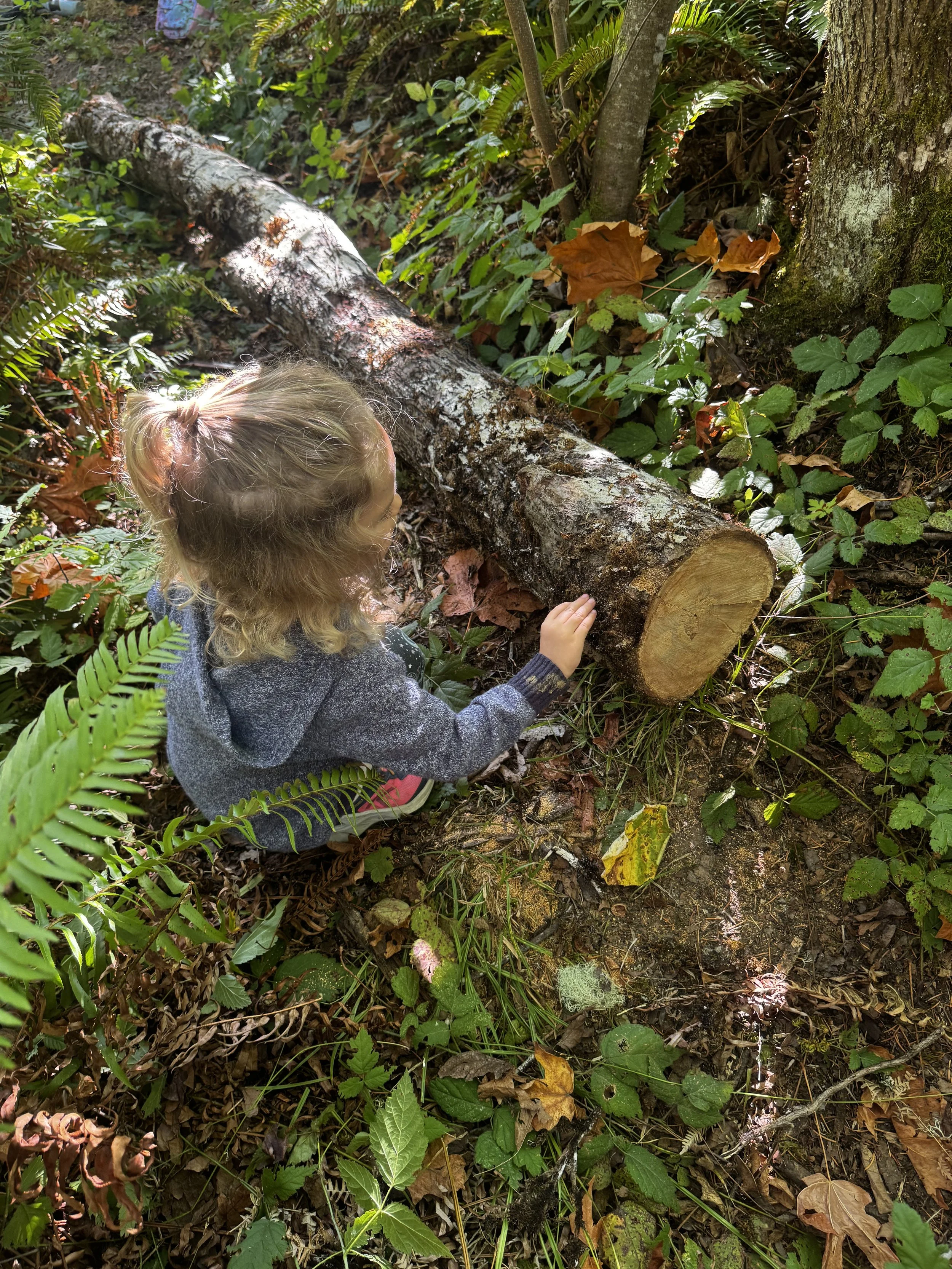
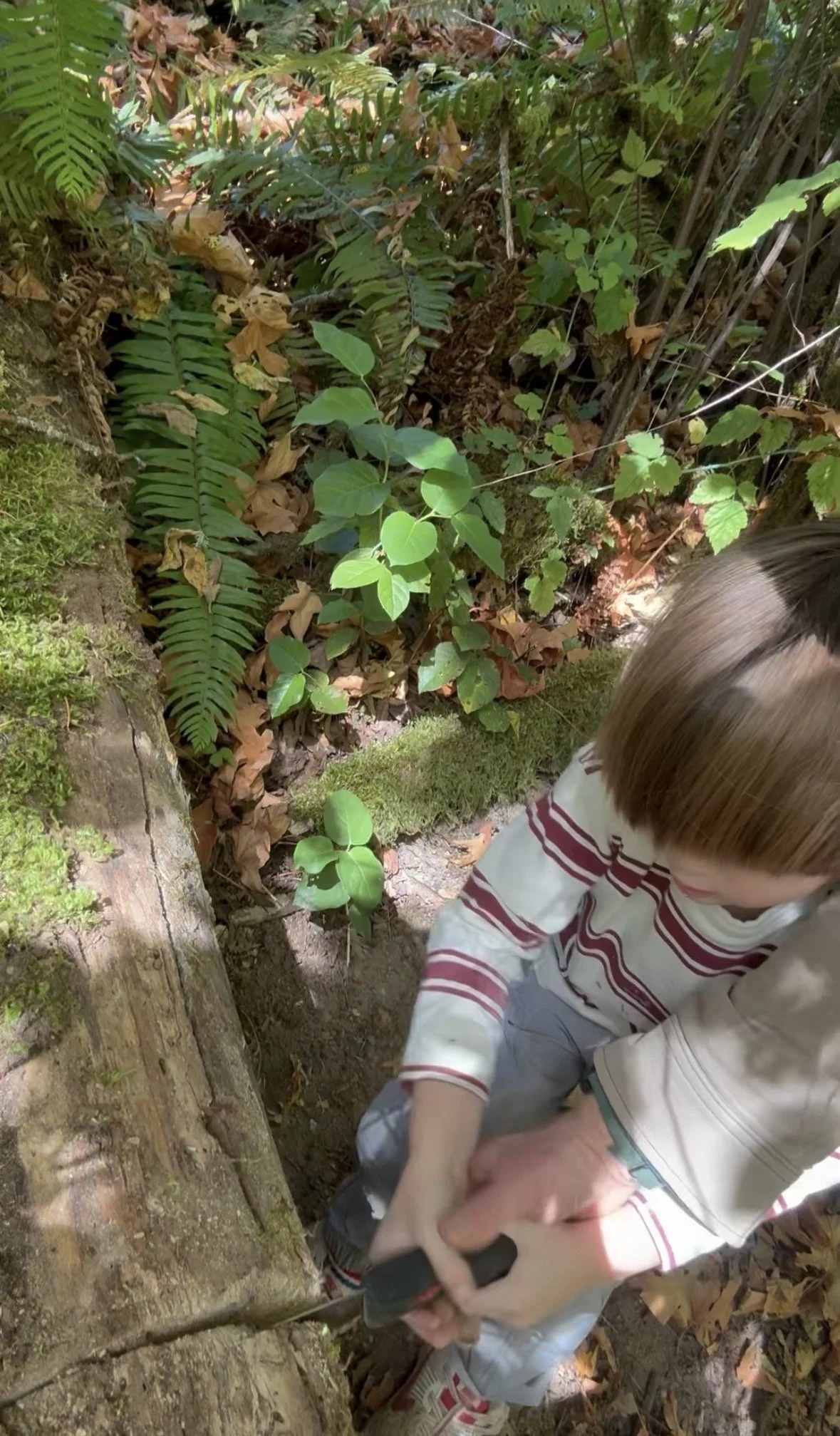
Several children had their first experience using a handsaw, working alongside teachers to cut substantial nurse logs for the trail. Thin hazelnut trunks have also become some of our go-to tools. Hazelnut is incredibly dense wood and makes great hammers, diggers and smashers.
We'll introduce tools gradually throughout the year, paying particular attention to teamwork and first-time listening. Using real tools gives children opportunities to practice focus, spatial awareness and problem-solving, while building confidence.
And then there are the dirt bombs.
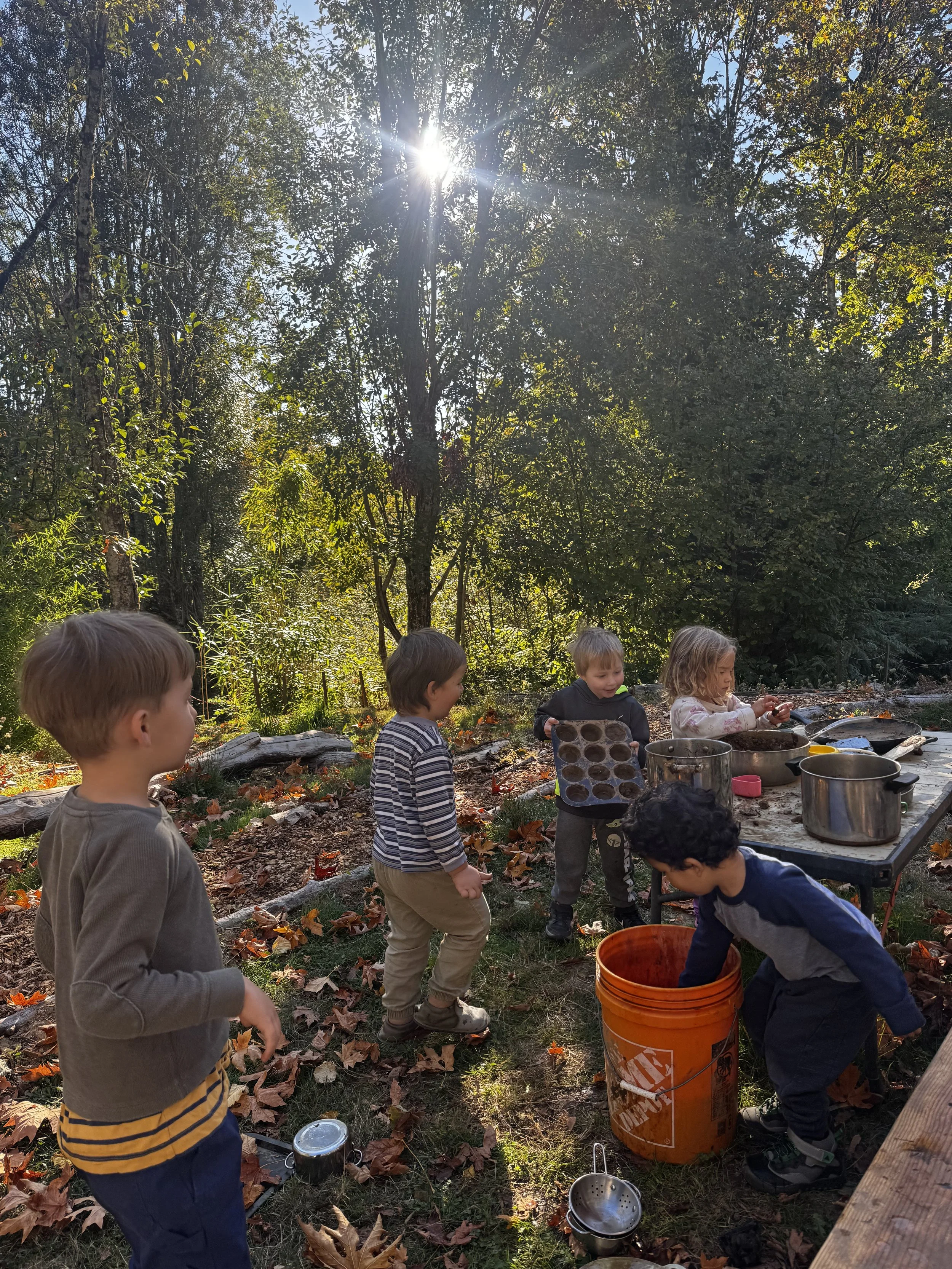
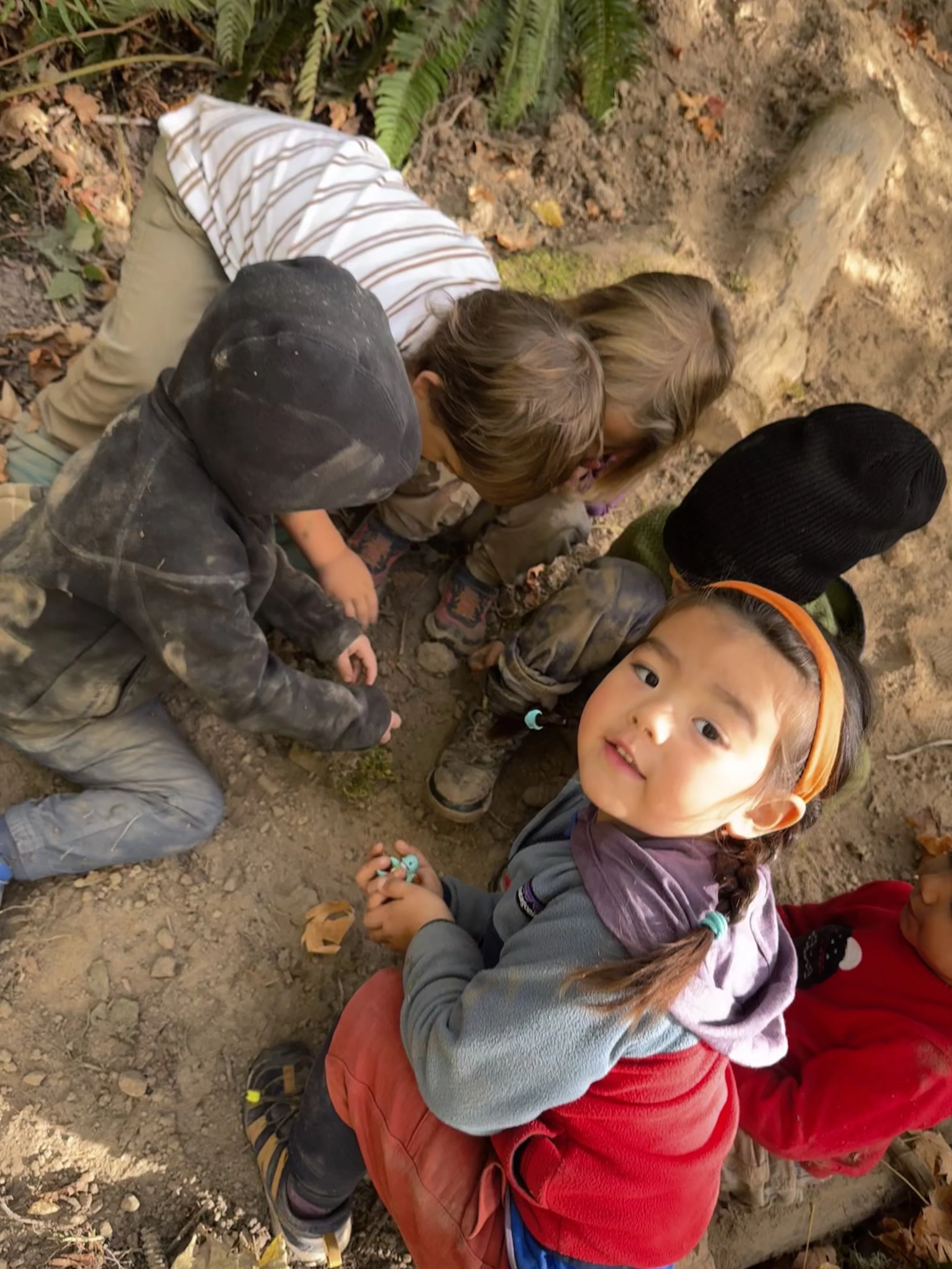
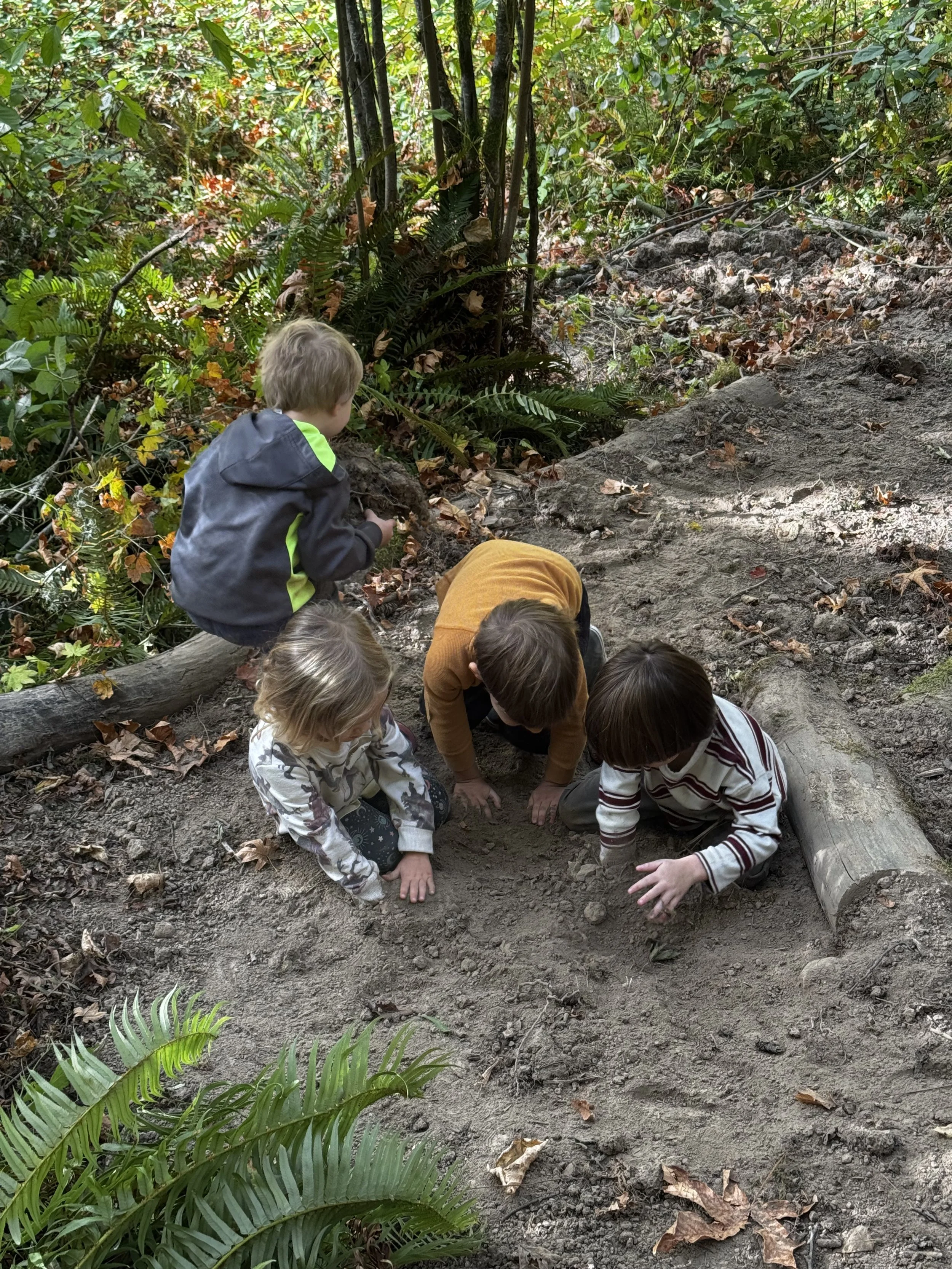
As I dig out the trail, the kids ask for the biggest chunks of dirt I can give them. They carry them, roll them downhill, smash them apart and come back asking for another.
There's a lot of pushing, pulling, carrying and balancing happening out there. It's hard work, and the kids keep coming back for more. All that movement and physical effort are key ingredients in a rich sensory diet.
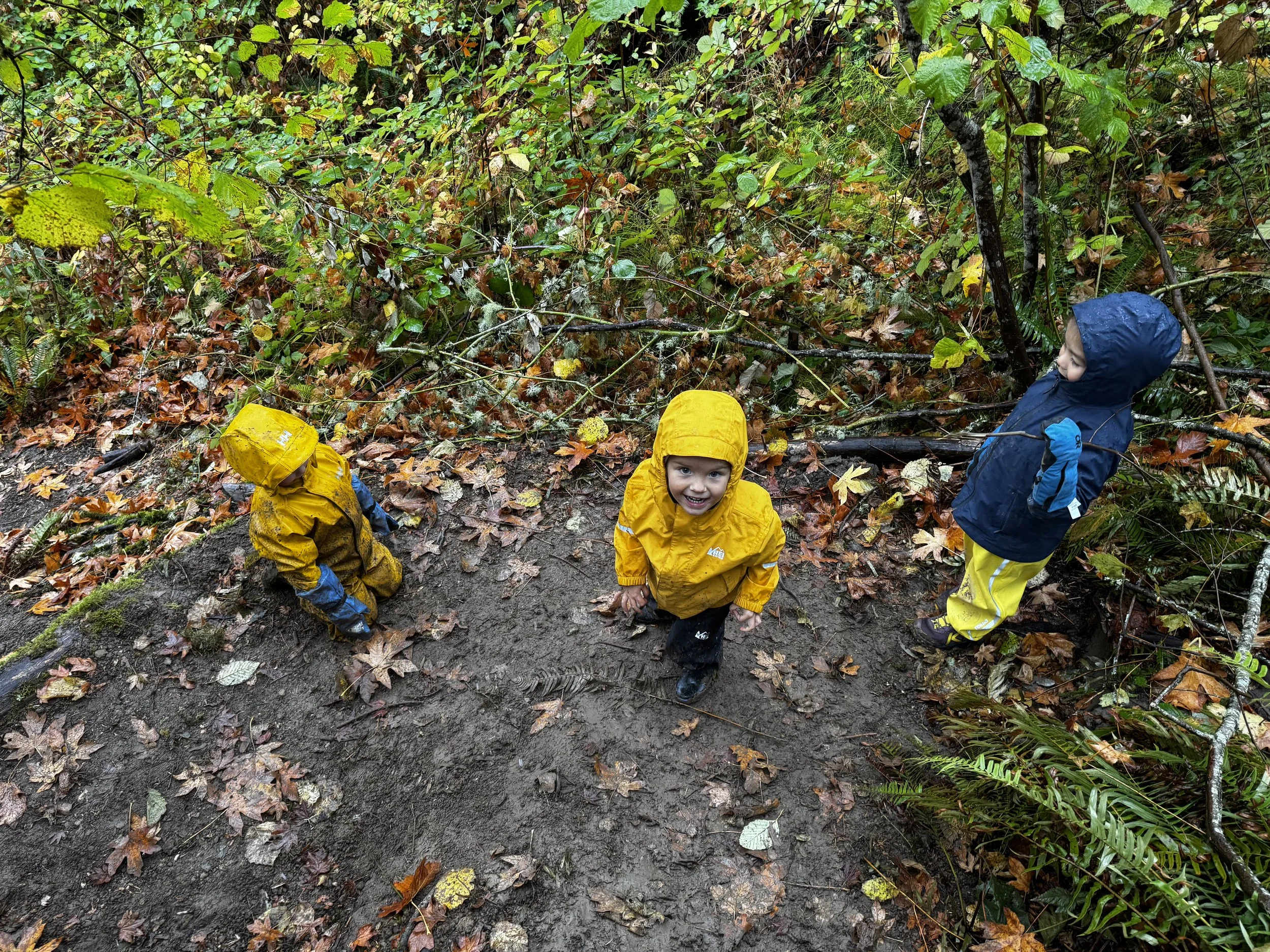
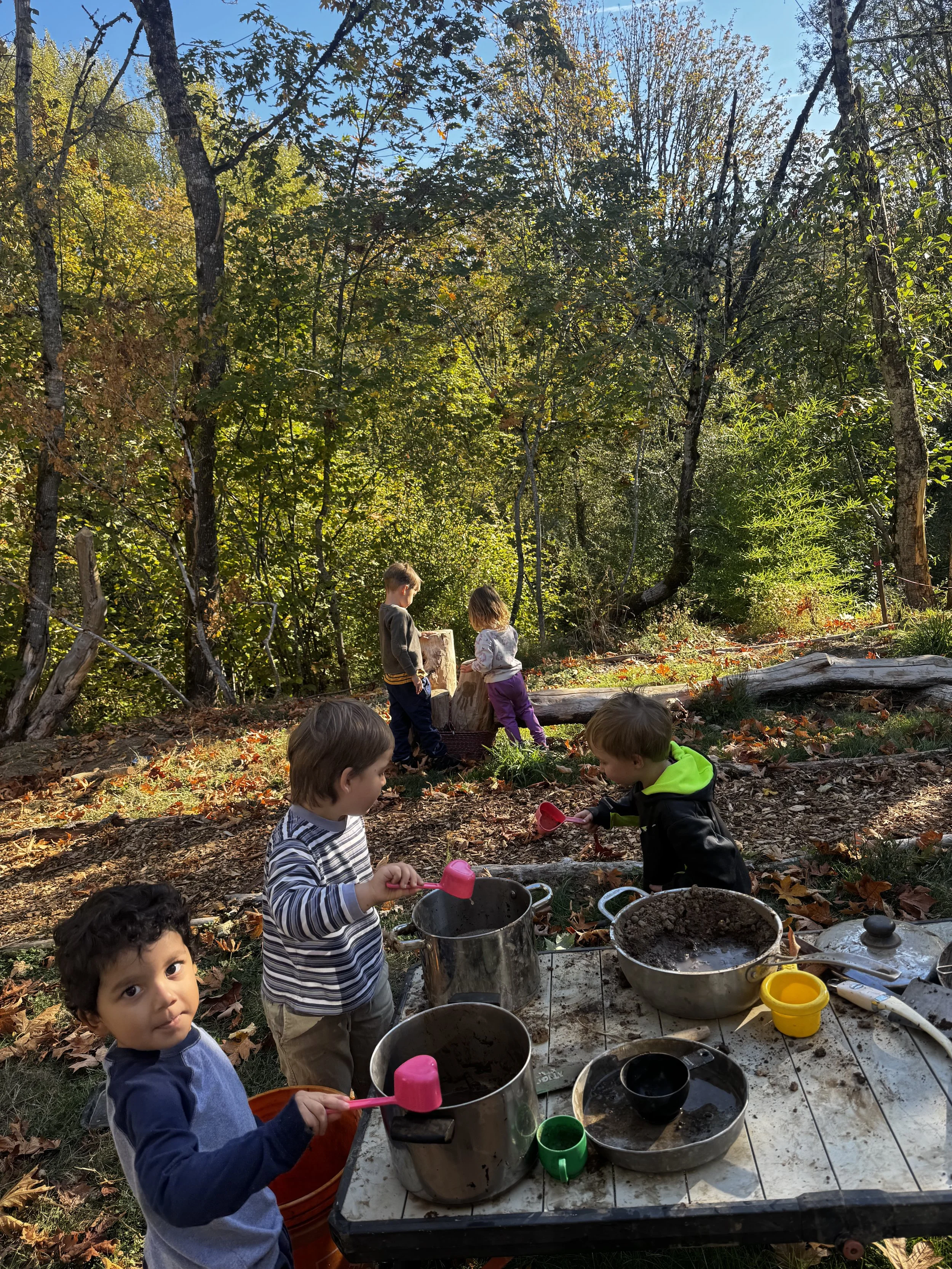
The best part is that they're helping build the very trails they use every day. We’ve had good timing the projects almost complete, and now that the rain has arrived, part of our beautiful new trail has become a mudslide! We may just have to let that one stay a little longer and hold off on the mulching.
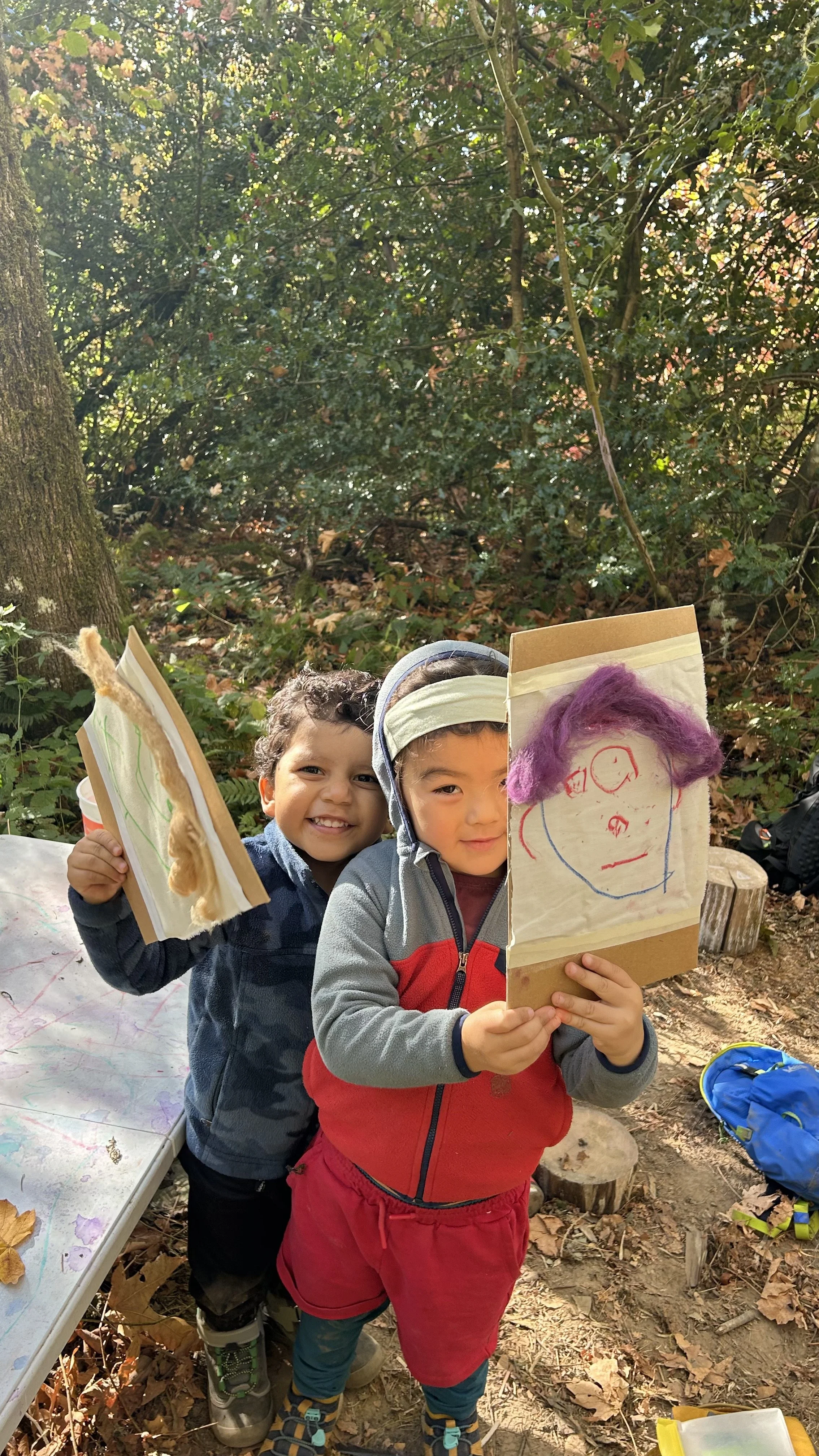
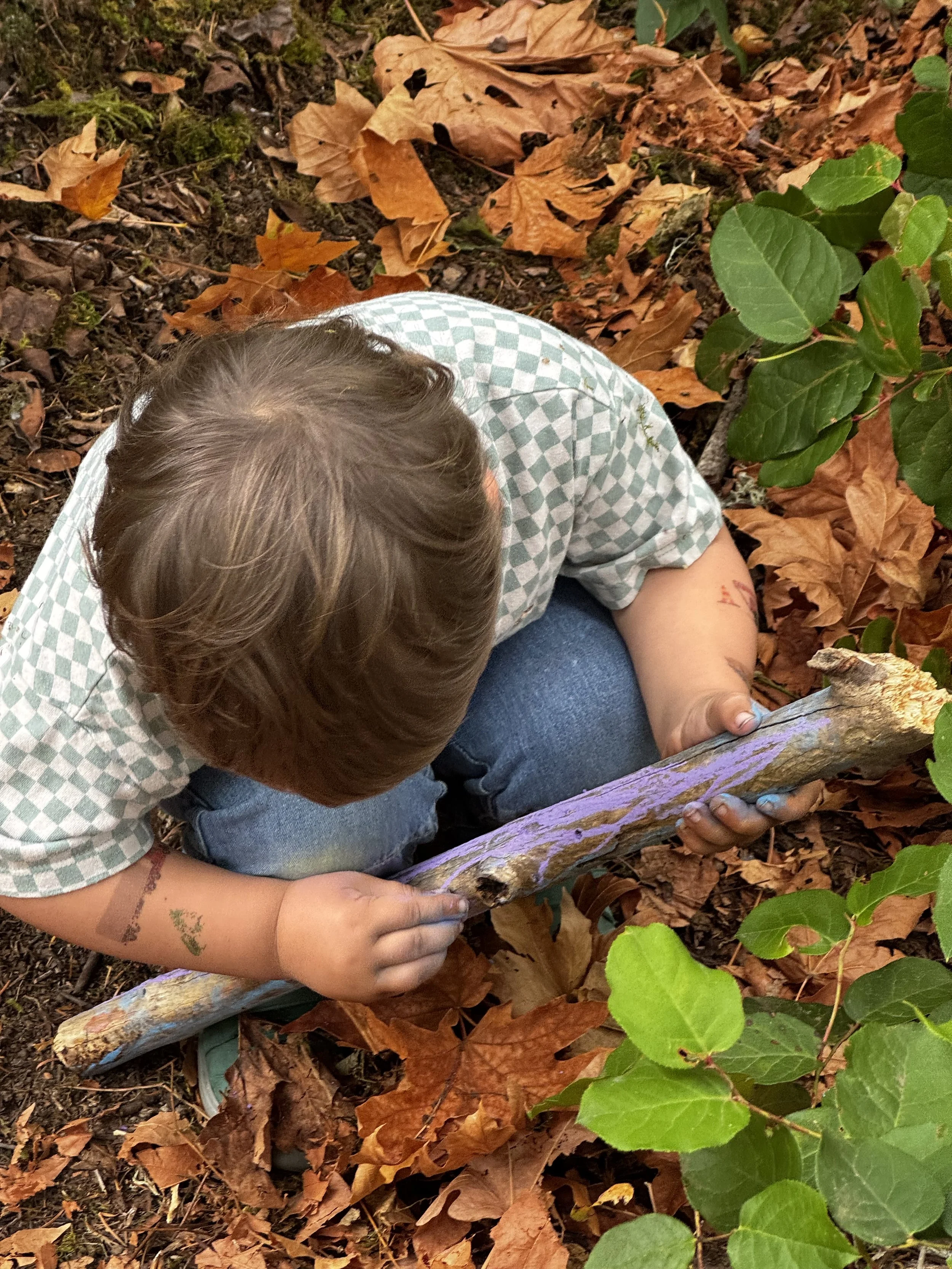
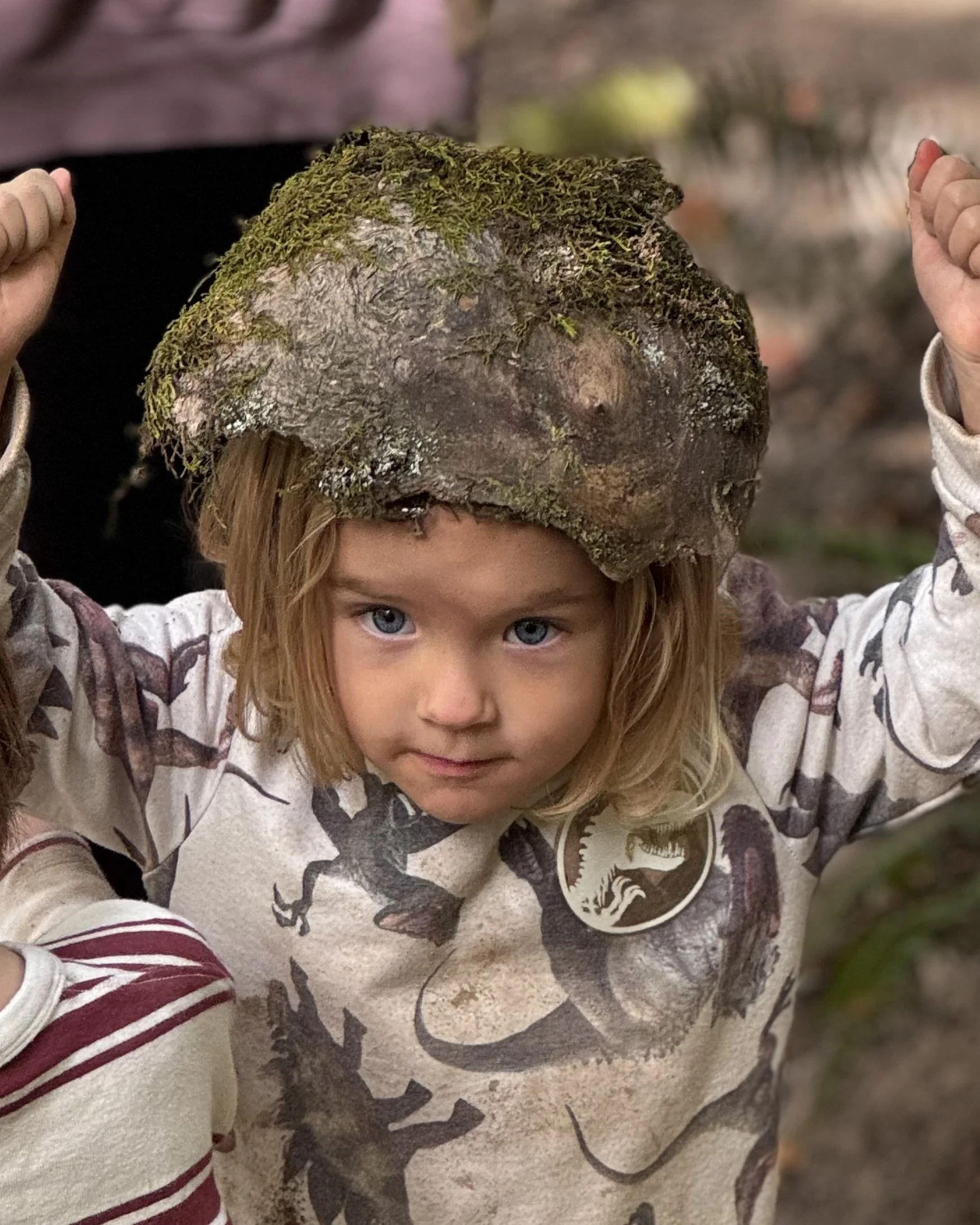
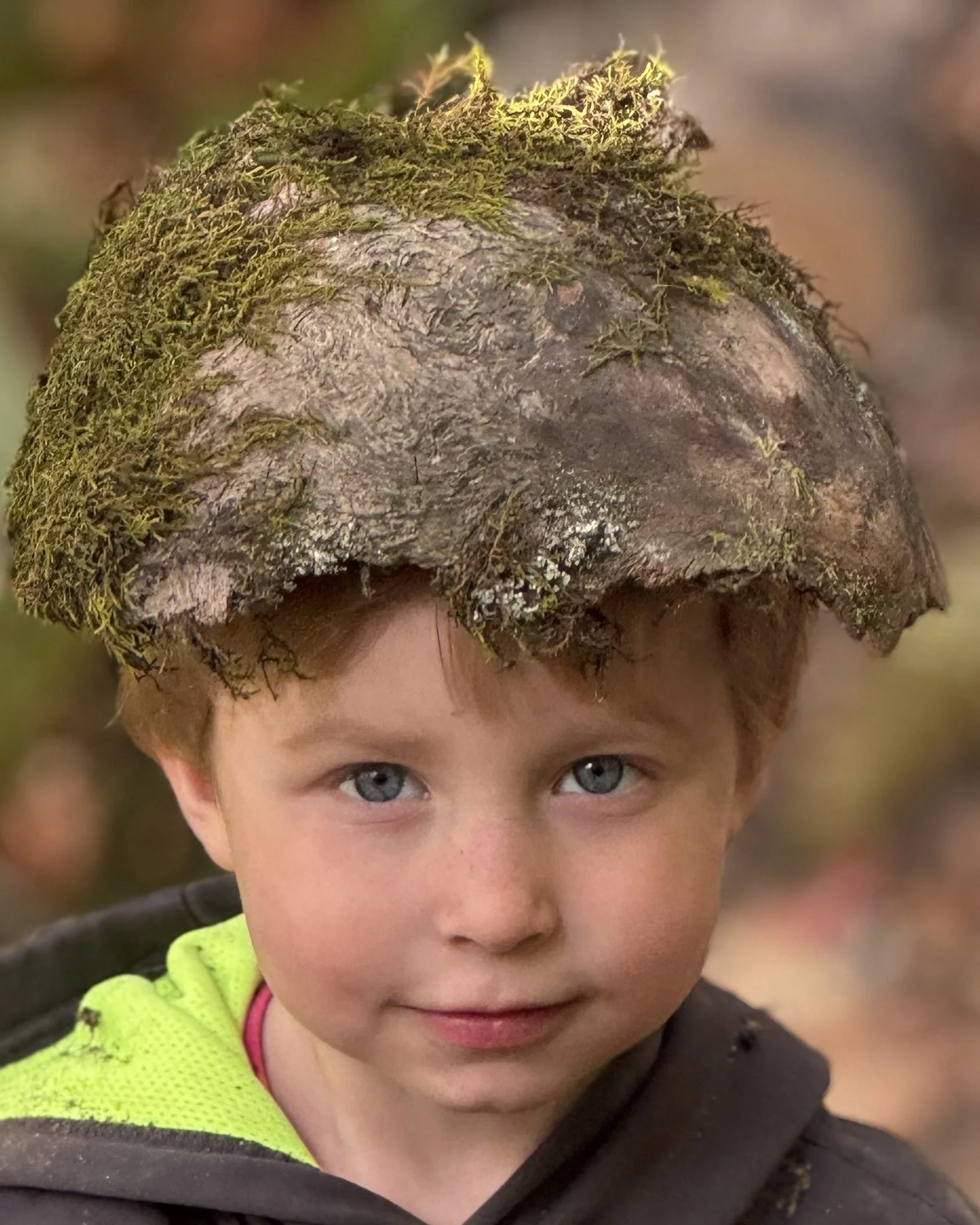
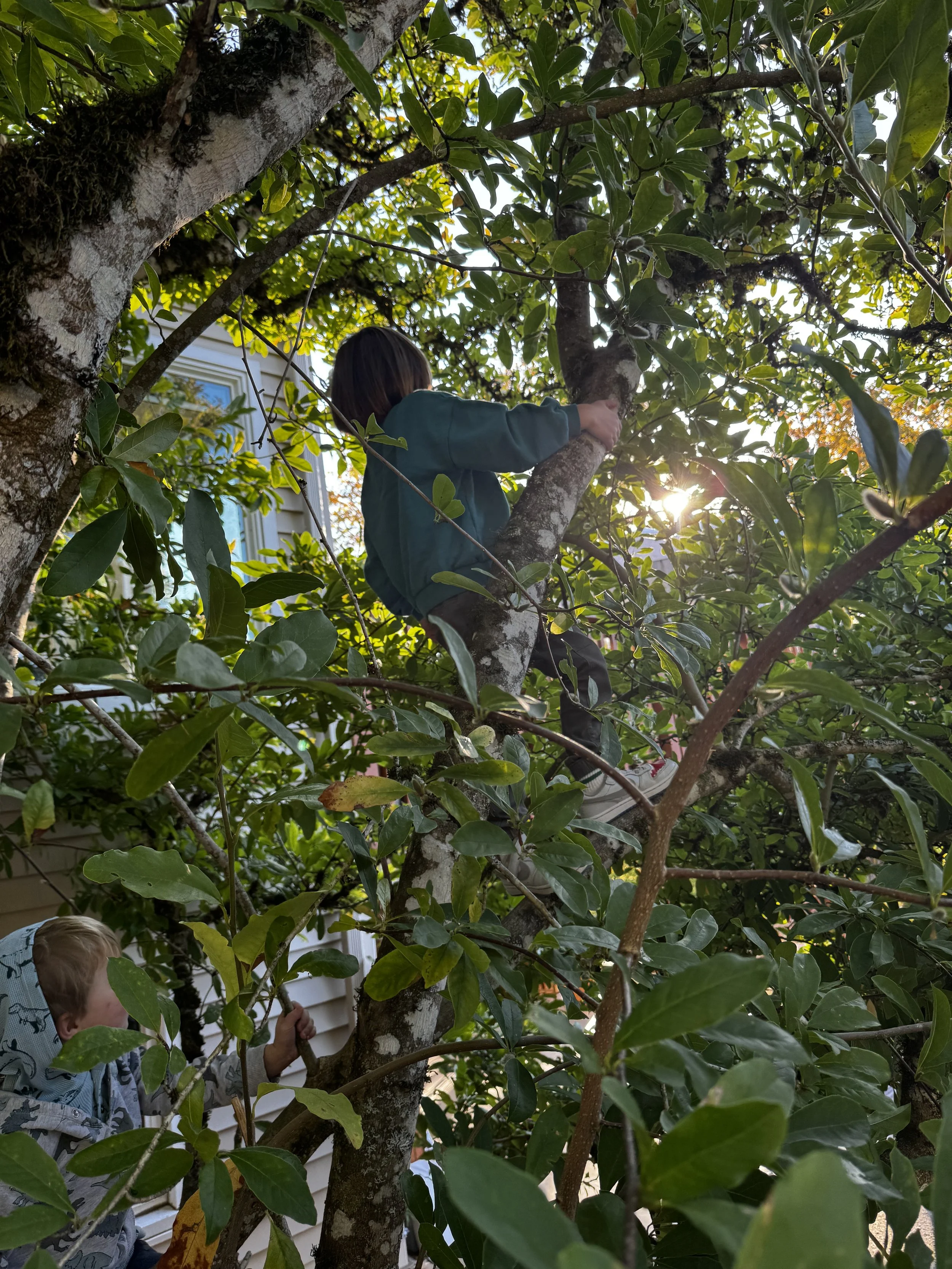
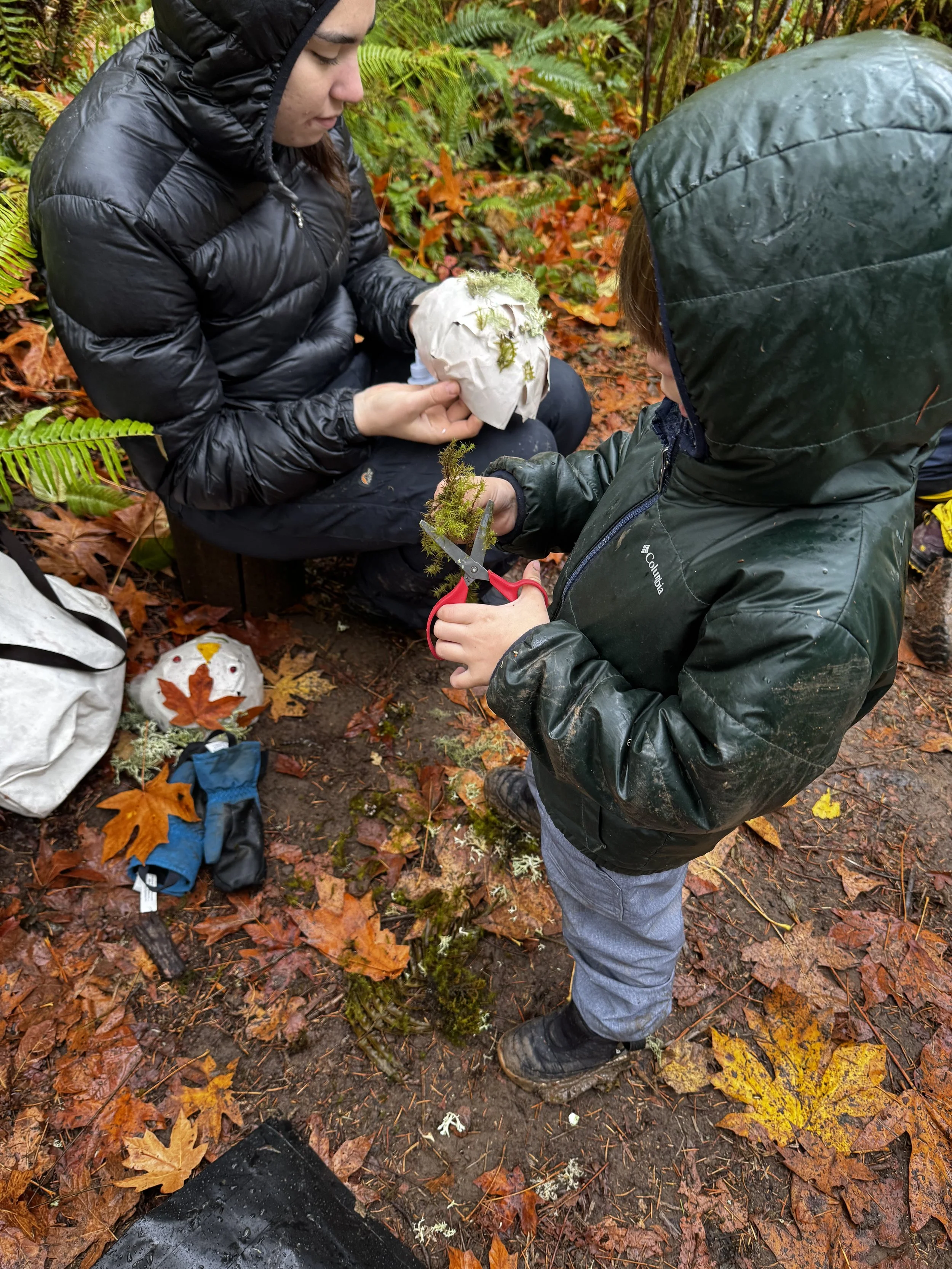
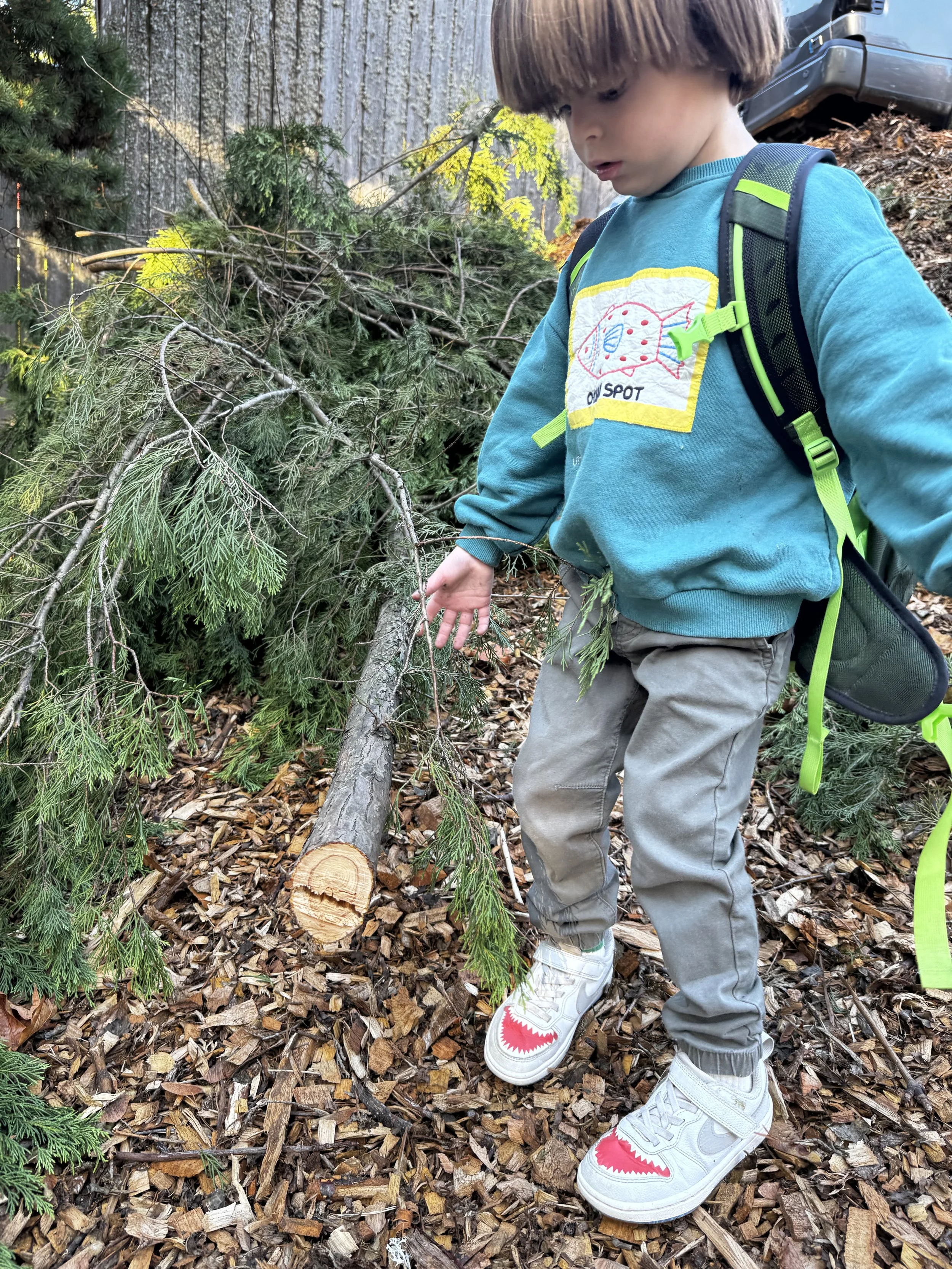
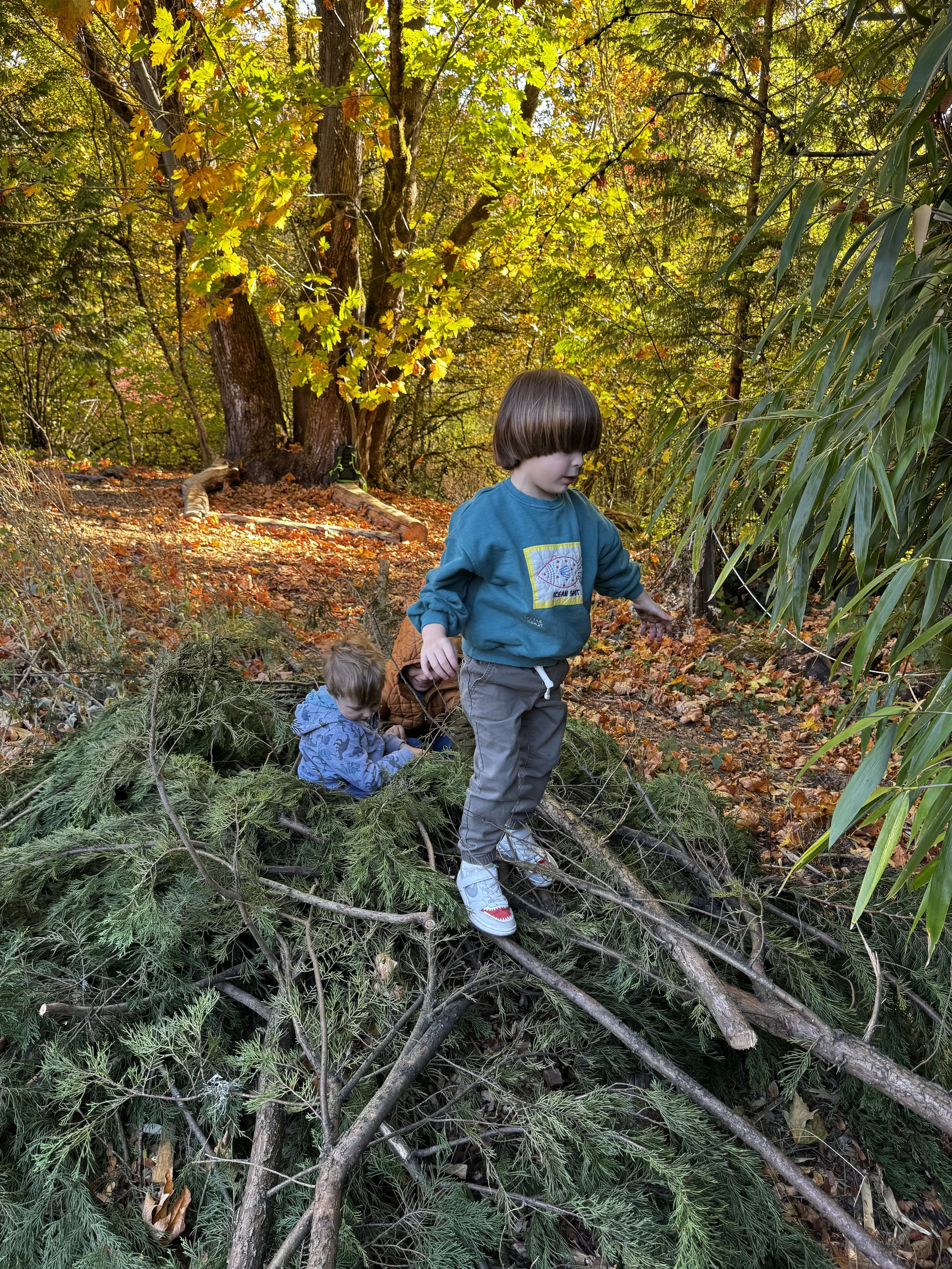
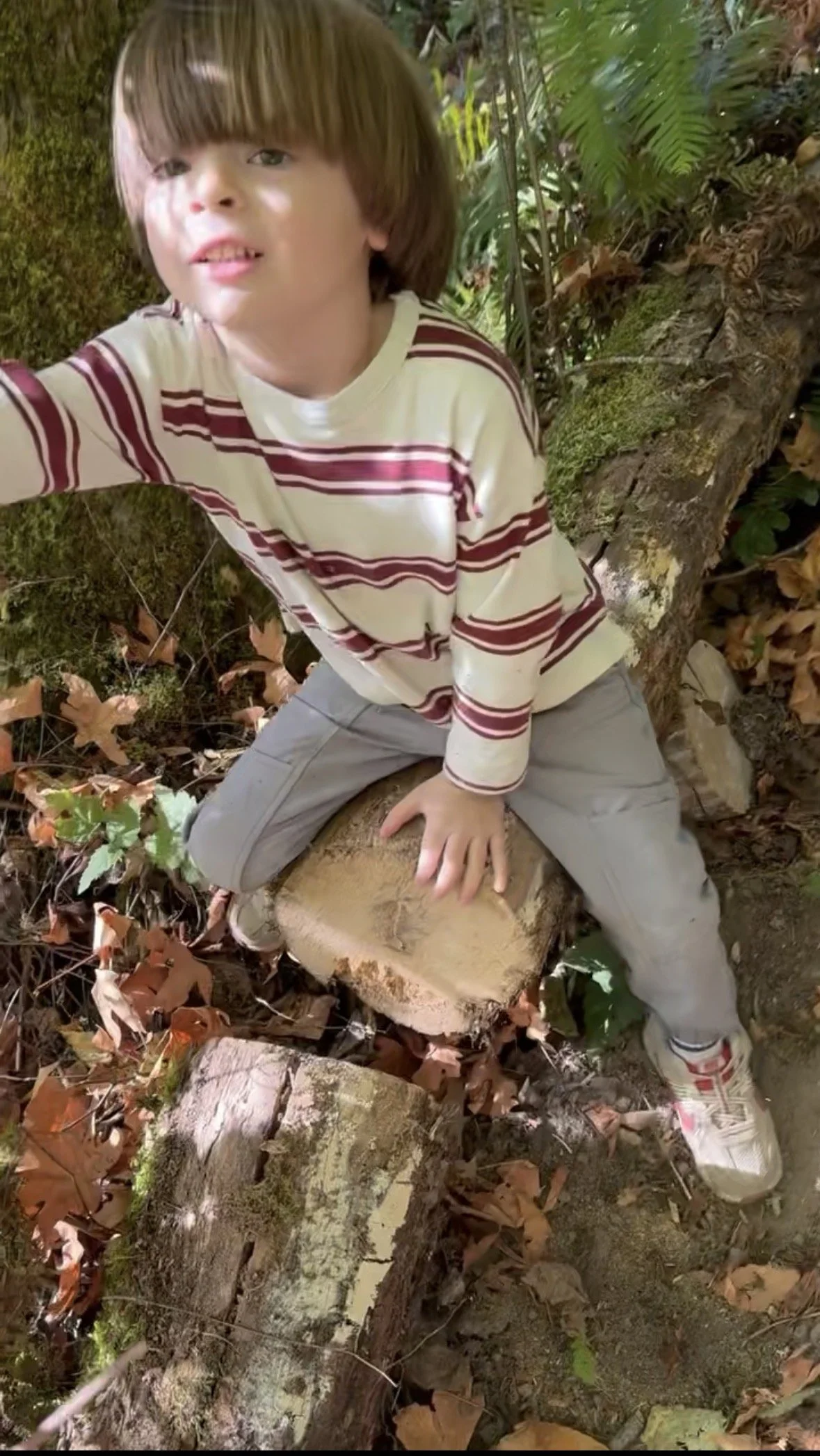
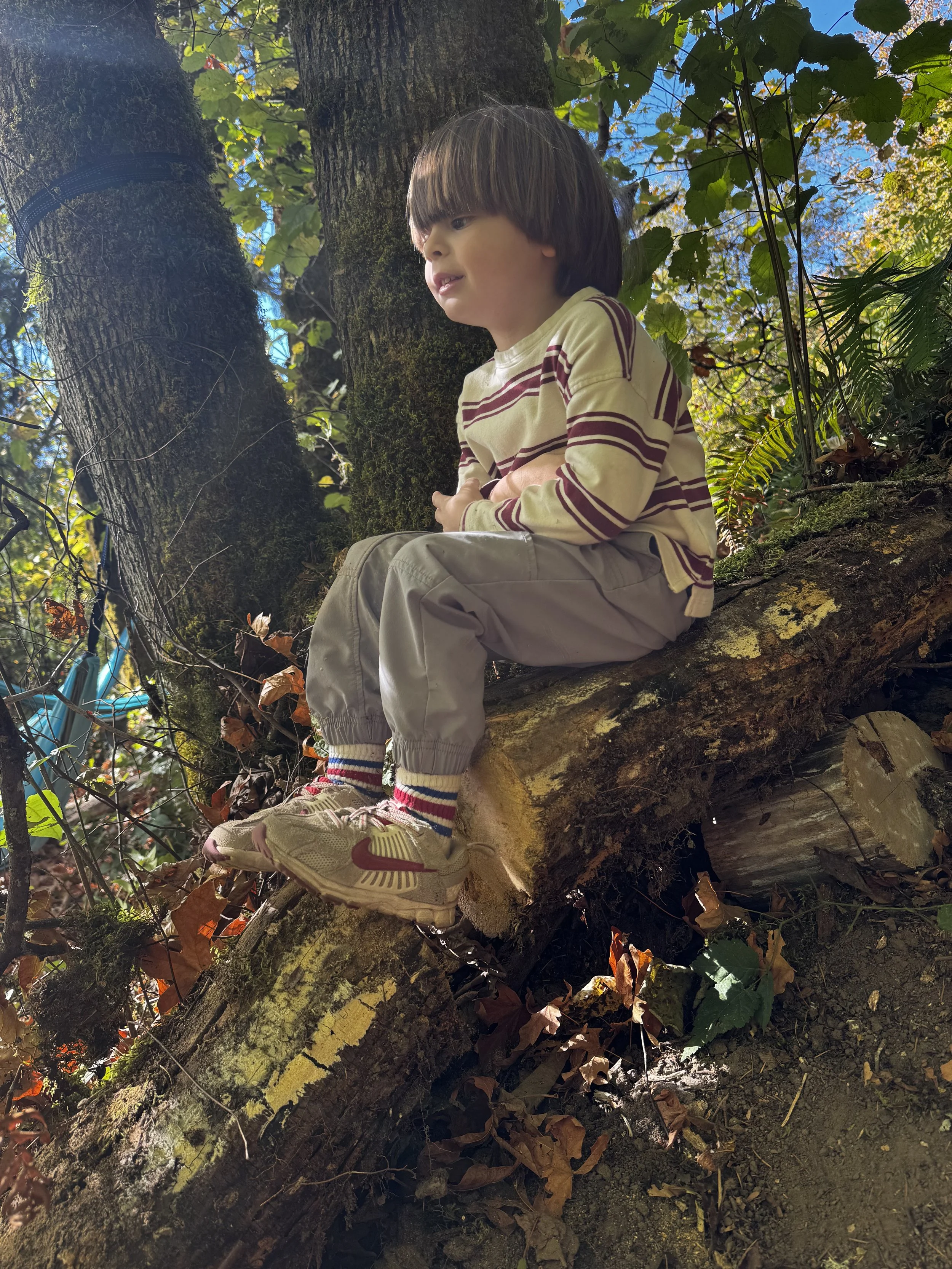
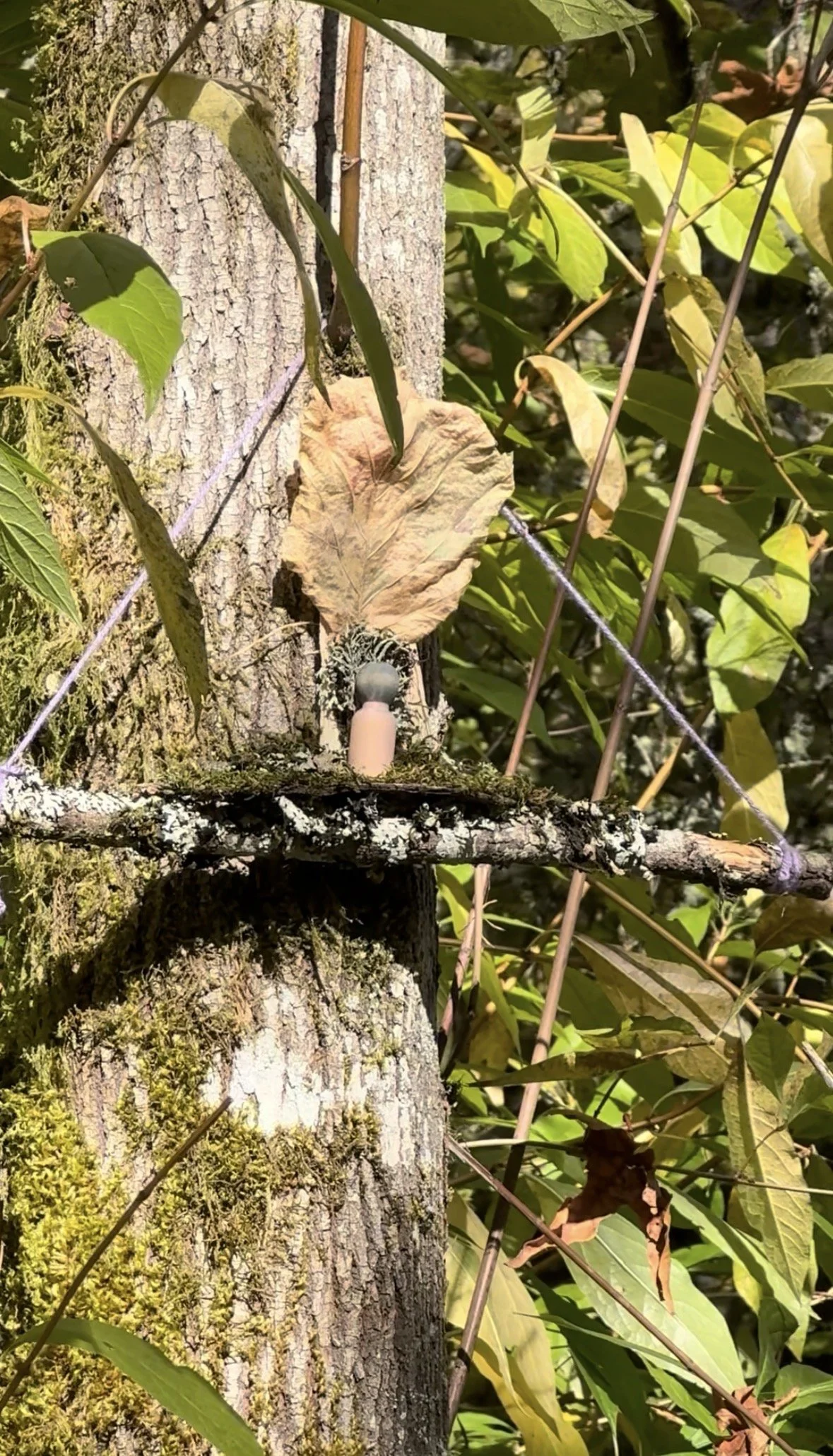
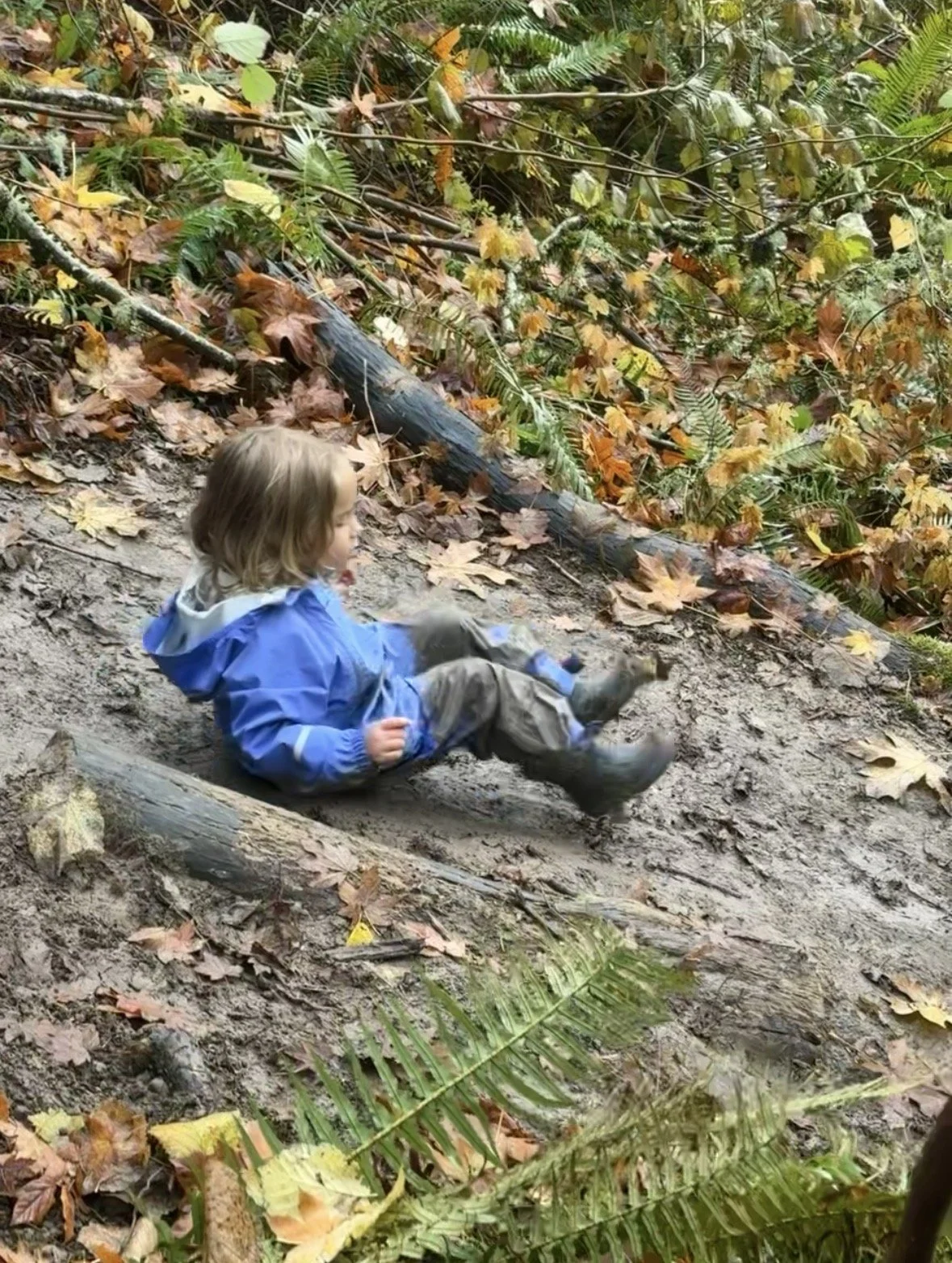
Applesauce with Kathy
Tour of Switchbacks
Everyone mudslide
Fun in the leaf pile
Mud boarding
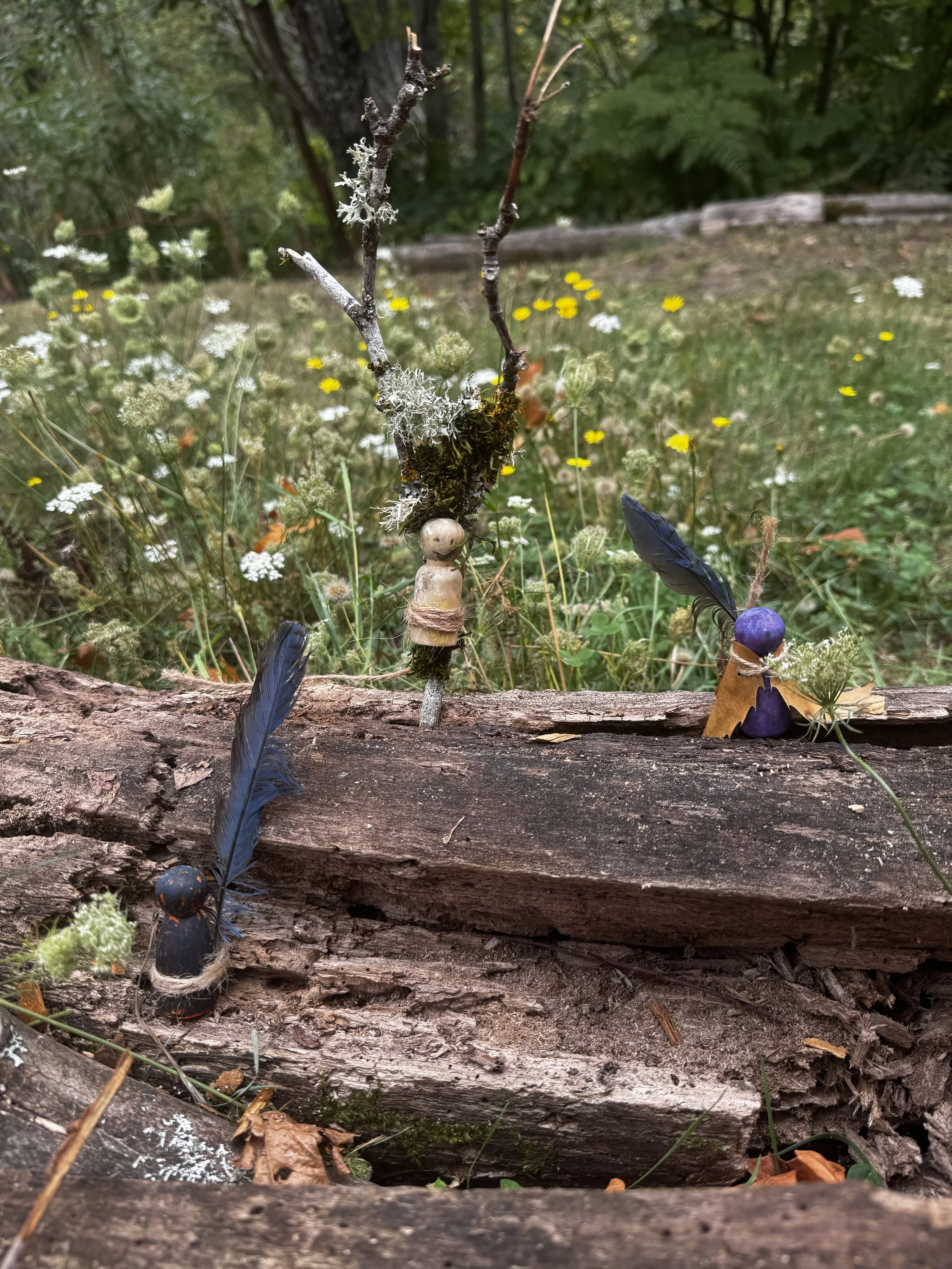
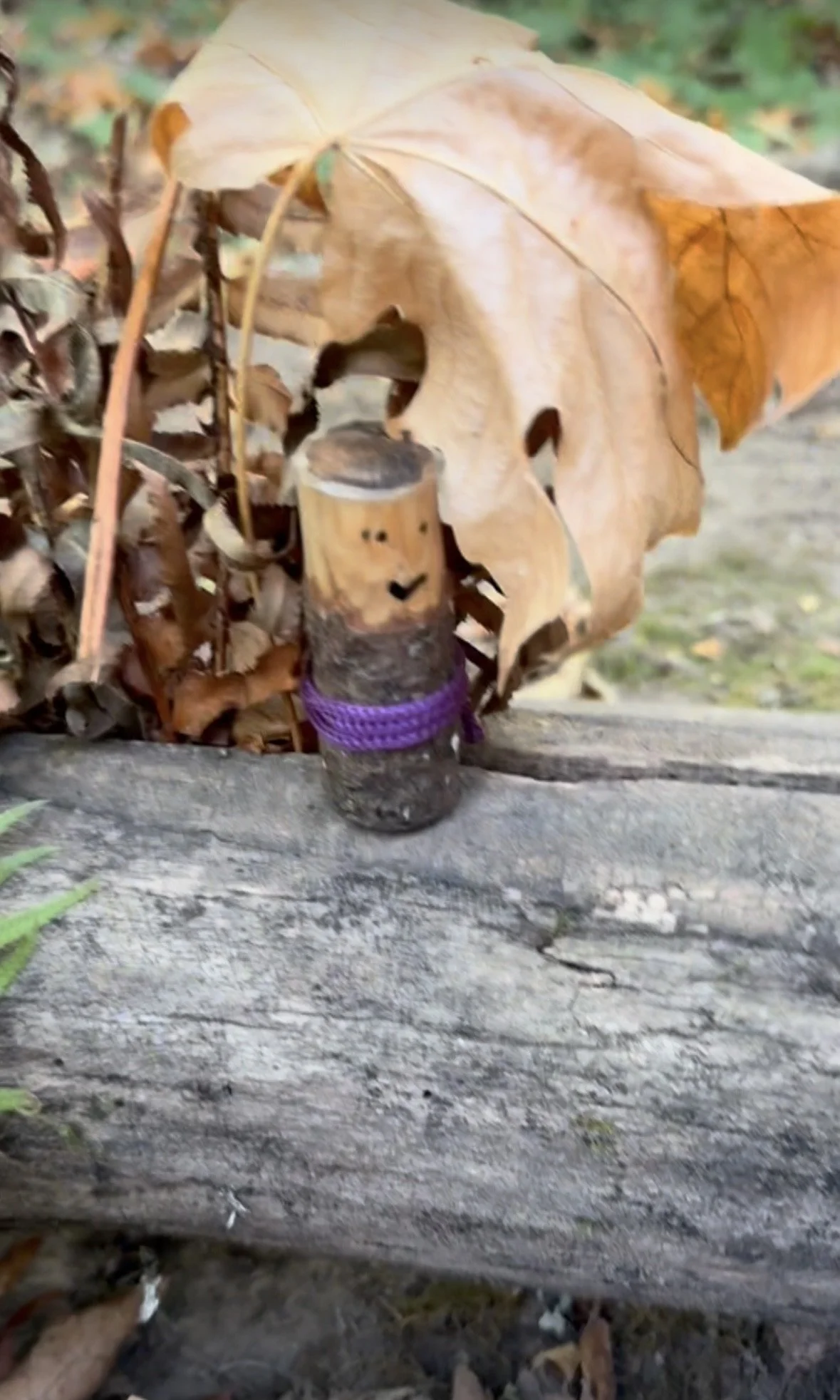
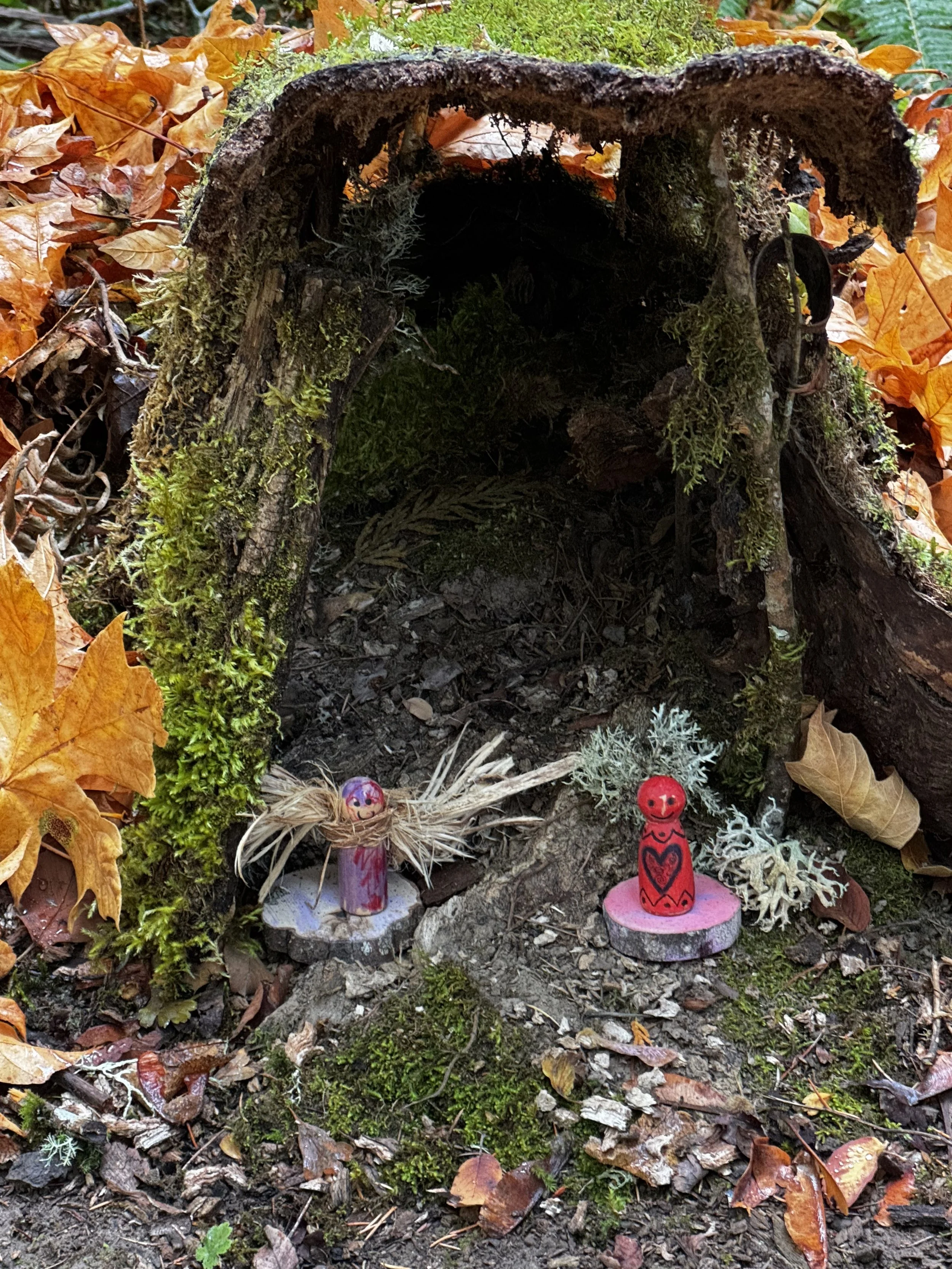
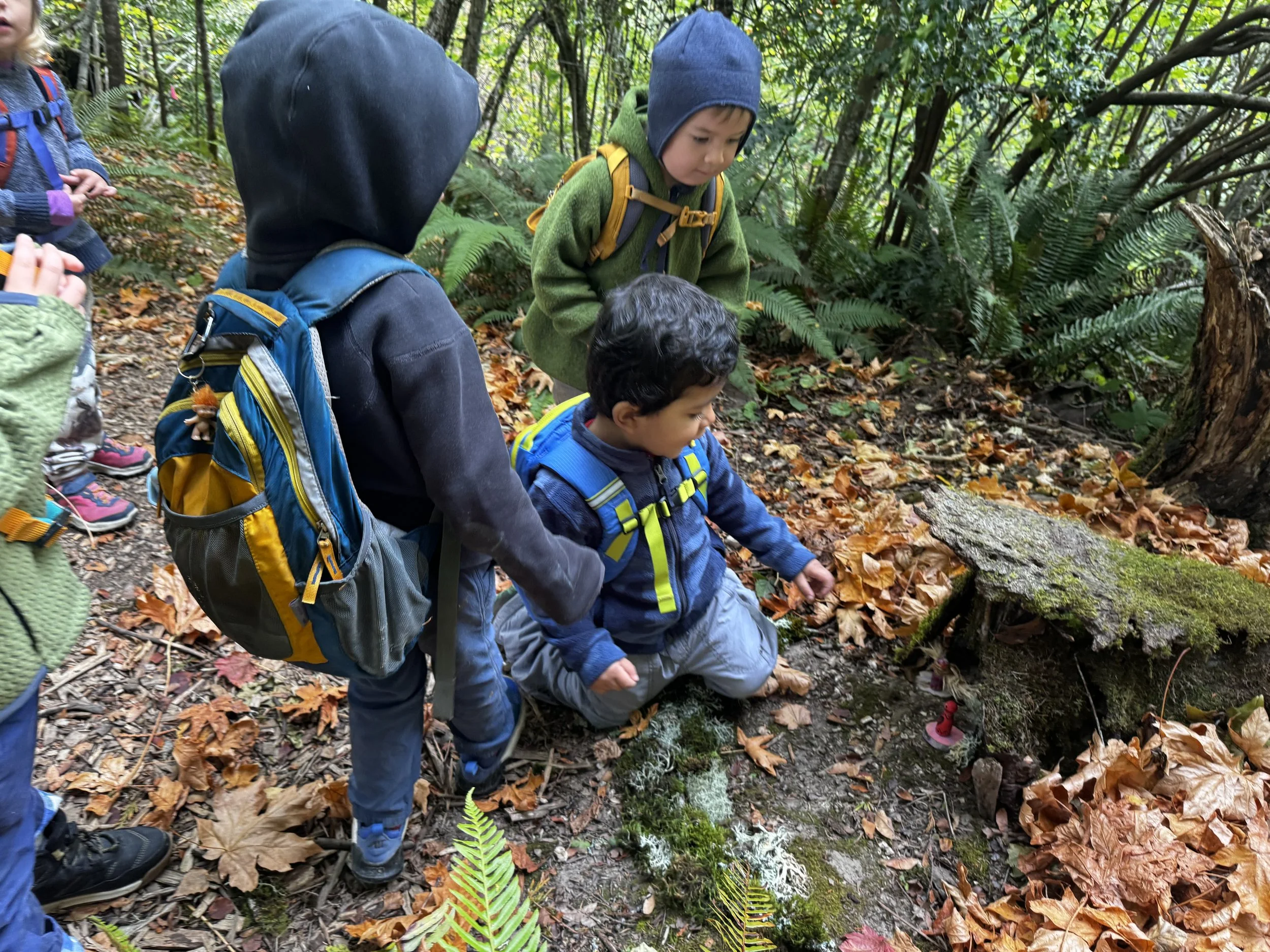
Hello to our new fairy
September 2026
Why We’re Closed Today
Today is Indigenous Peoples Day. Rachel is Seneca, part of the Haudenosaunee Confederacy, and marrying into her family has given me a lot of opportunities to listen, learn and rethink my own relationship with land, food, community and which version of Mother Earth we pass down to our kids. Since moving to Portland, we’ve found a few places and resources our family loves and wanted to share:
Javelina
Portland’s only Indigenous-owned and operated restaurant focused entirely on Indigenous cuisine. The food is incredible, the tea list is extraordinary, and it’s great for date night AND family dining.
Hózhó Herbal Creations
Lindsay makes teas, salts, herbal baths, salves and each concoction is a labor of love, rooted in traditional plant medicine.
Portland Indigenous Marketplace
One of the easiest ways to support Indigenous artists, makers and businesses locally, and their newsletter is a great way to stay plugged into markets and events happening around Portland.
Friends of Tryon Creek
A place our family has spent time, and where I did part of my nature educator training. They have some great Indigenous-led programming, including a community Salmon Bake next Saturday, Oct 17.
Quick Notes
Self-Portrait Totes are now Art Bags!
Completed artwork will come home in the children’s tote bags at the end of the week whenever there’s something ready to send home. Please bring the bag back empty the following week so we can use it again. If your child hasn’t made a bag yet, there will be more opportunities.
Tick checks
2 ticks have been found on kids since school started (and we found 1 on Clyde in Aug). Until colder temps set in, please keep doing regular tick checks at home.
Driveway
I just trimmed back shrubs along driveway to give a bit more breathing room, and I’ll continue to help direct cars as everyone gets more and more comfortable with backing down our driveway and making 2 lanes at the bottom.
Our library
Our little library is always evolving. If your family has favorite books you’d like to share with the group, send them in. We love having books from home become part of the children’s shared space.
September at Cedar + Bones
Our first month together was about becoming a school. The children learned the forest, learned about one another and, pretty quickly, started showing us what Cedar + Bones will become. We started in late summer and, over those first few weeks, watched the forest begin to turn to fall right alongside us, guiding much of what the children discovered, gathered and made.
Child-Led
Each day we found ourselves spending more and more time deep in the forest. What we originally built as a place just for morning gathering, has become the center of gravity for our days.
The children are beginning to really know this place. They wander, explore, discover and return to the same places again and again. They name them too. Ask them about The Hot Tub and The Bone Pit!
We don’t have many rules here. This is a place of yes. A place for children to be loud, to roam, to be wild, to be silent, to listen, to wonder, to create and most importantly, to be themselves and belong.
The rules we do have are about safety and respect. Teachers need to be able to see you. Ask before climbing. We don’t take, we ask.
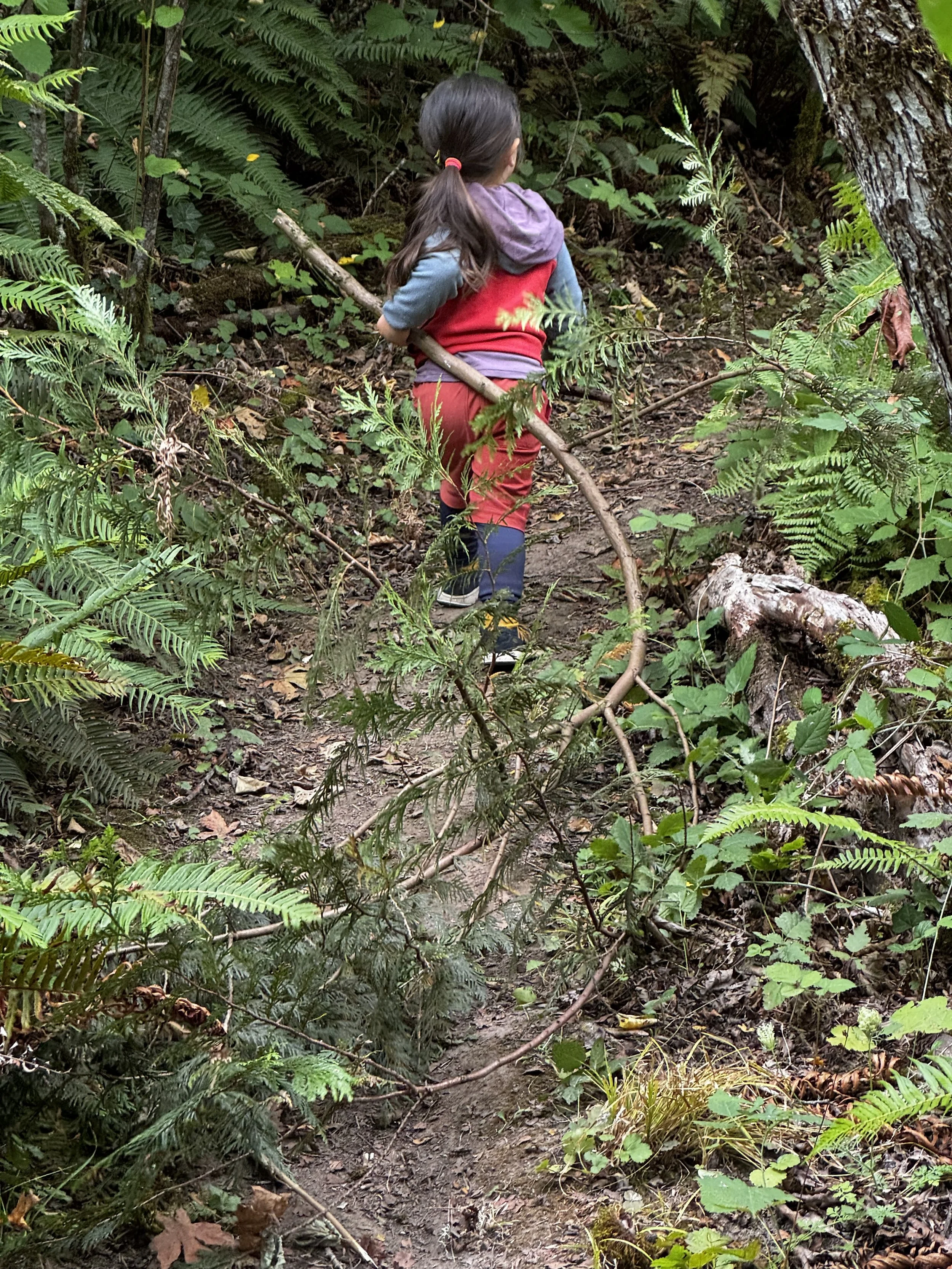
Sticks are for children. They’re tools, props, building materials, walking sticks, wands, and sometimes just something that makes a kid feel a little bigger and stronger. Our job is to help them use sticks safely around others.
So we taught them to measure sticks against their bodies: shorter than your arm is a tool, longer than your arm is a walking stick, and anything taller than your body gets dragged with one end on the ground. That gets boring pretty quickly, so they’ve also learned a variety of ways to make a giant stick the size they actually want.
What We Found + What We Made
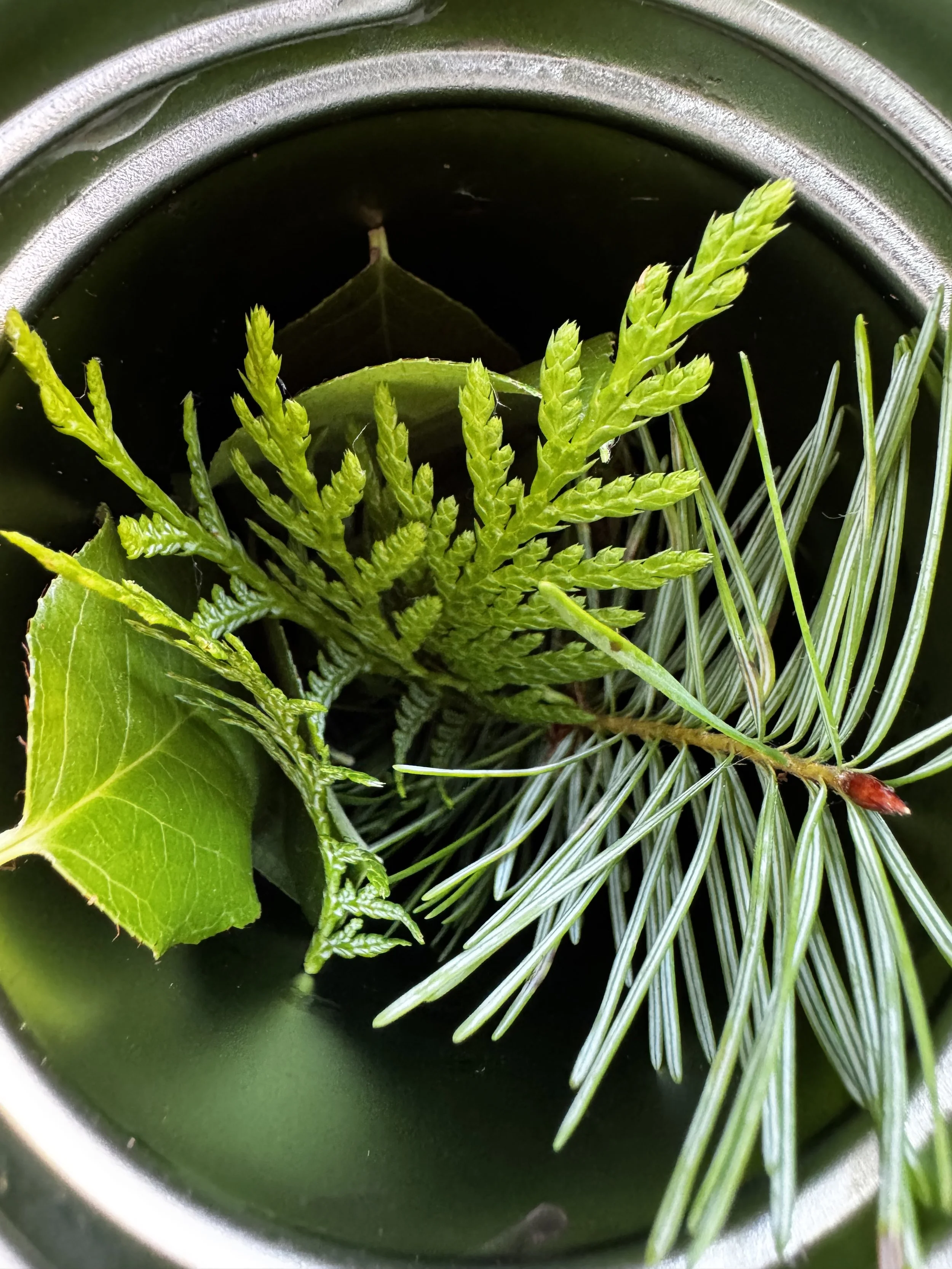
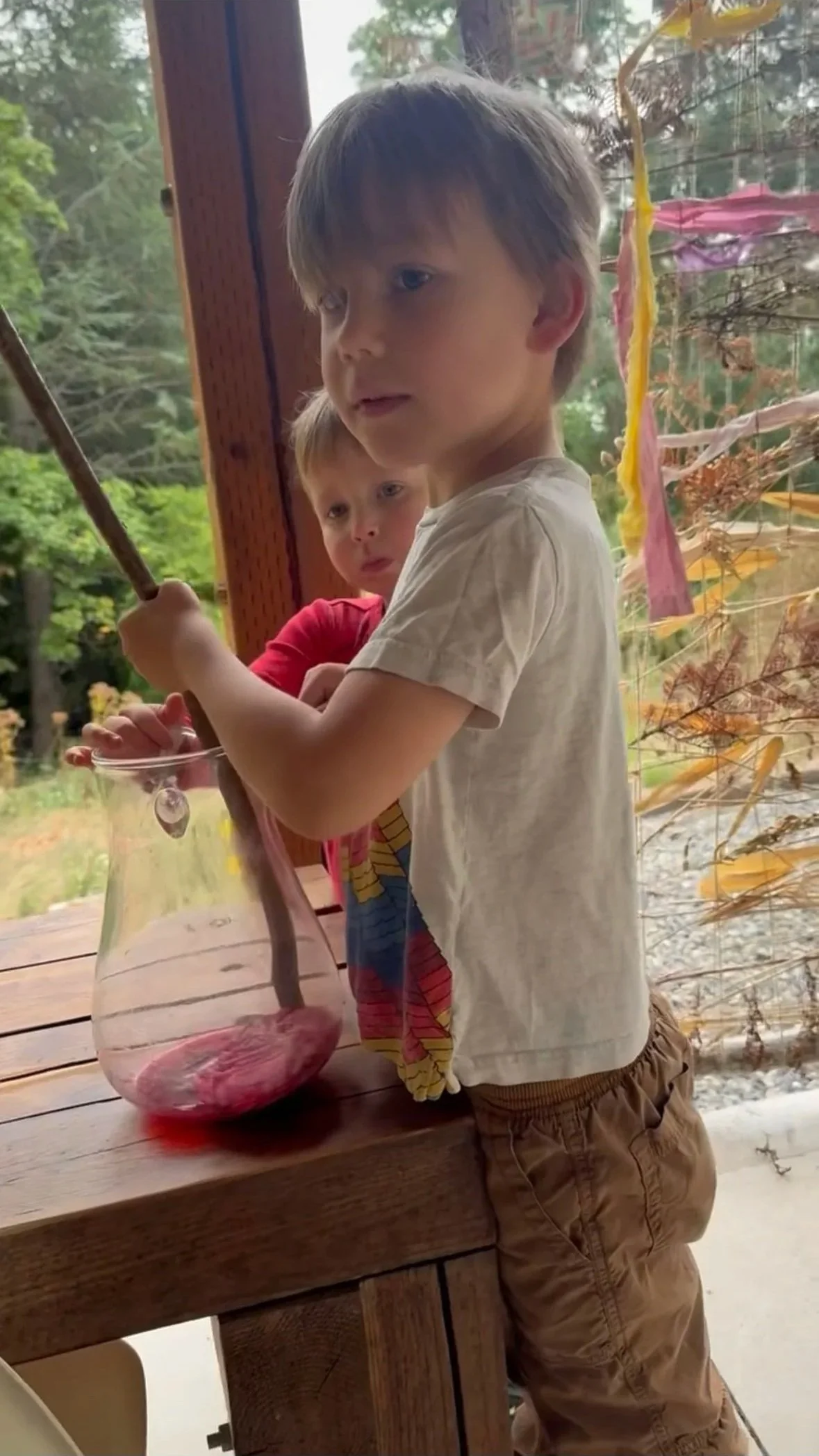
Forest tea was in high demand when the blackberries were everywhere. The children helped me gather blackberries, salal berries, trailing blackberry leaves, salal leaves, Doug-fir tips, Red cedar tips, hawthorne berries and sometimes even apples.
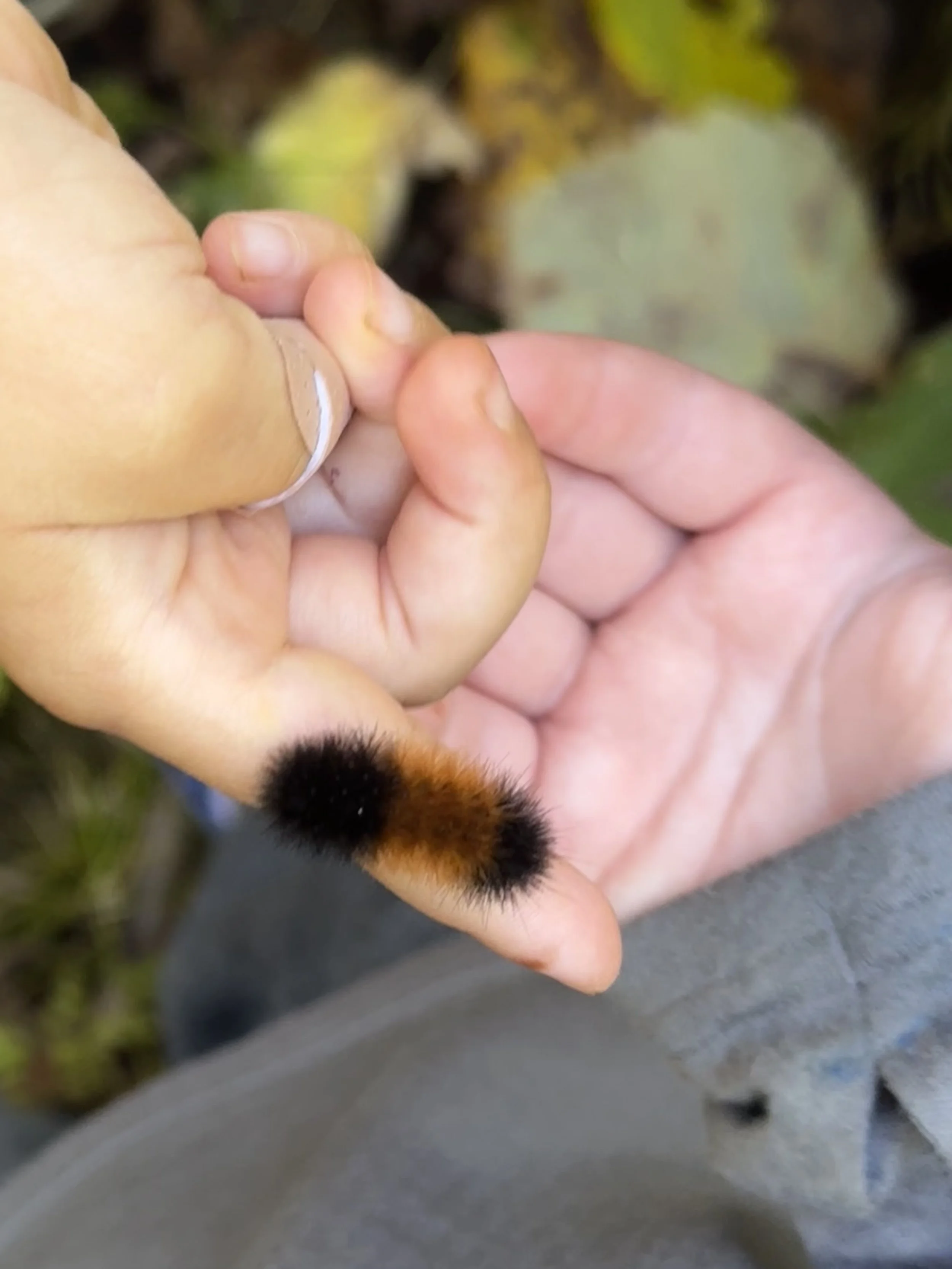
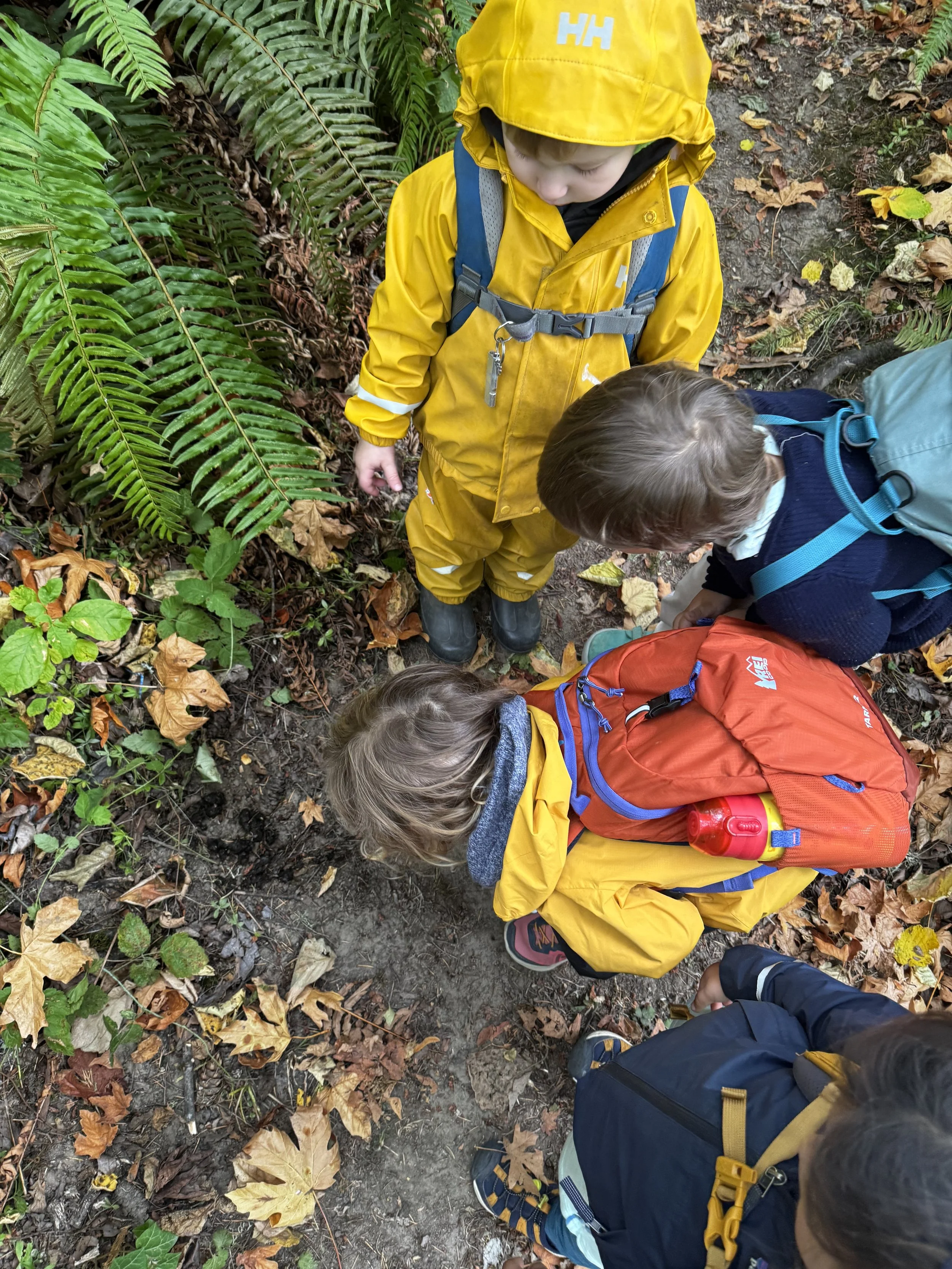
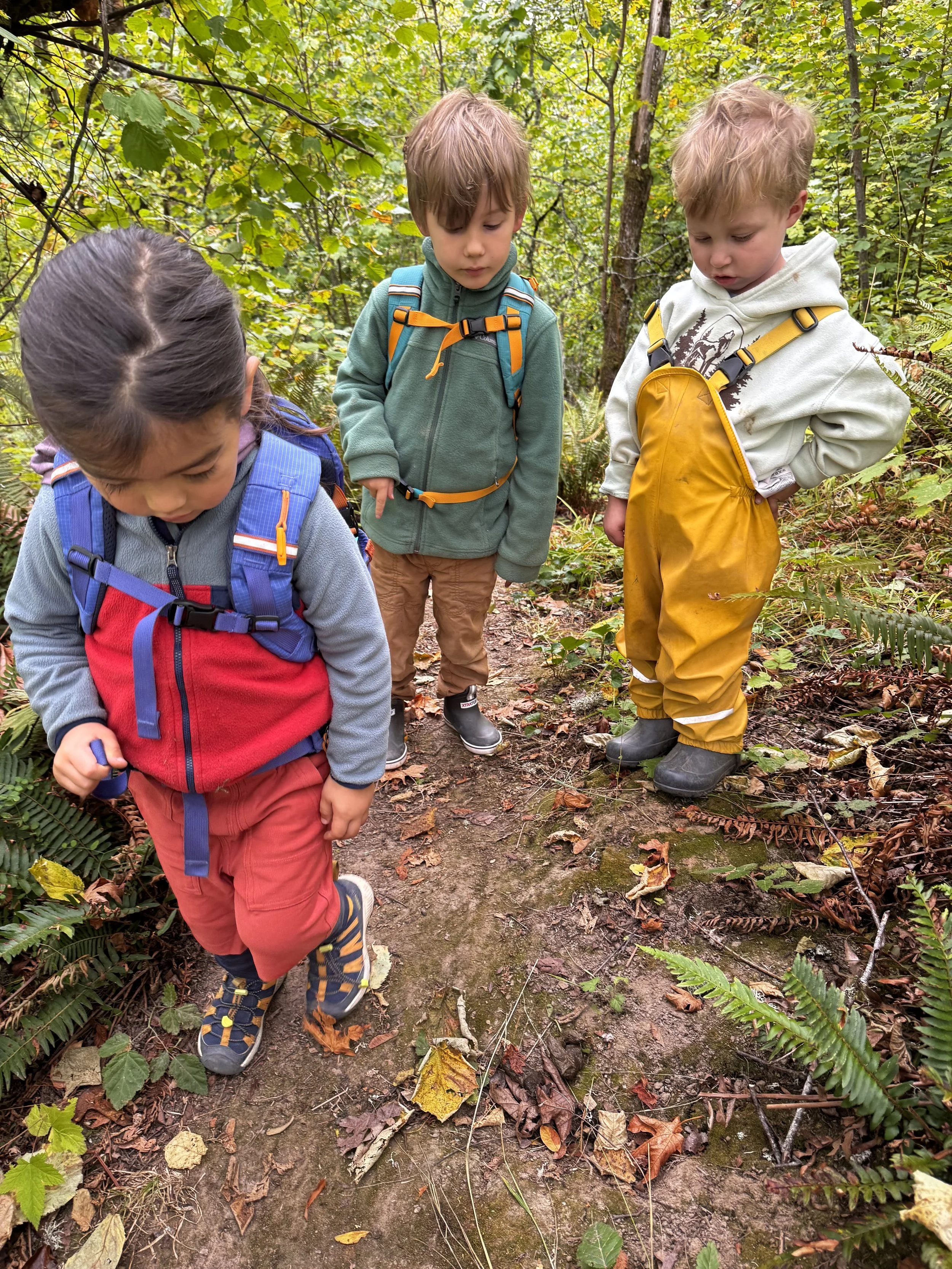
We found woolly bear caterpillars, snakes, deer, bones and plenty of evidence left behind by animals we didn’t actually see. Coyote scat showed up regularly on the trails, often with hair in it, which gave us plenty to investigate. We talked about camouflage and how animals and insects can “blend in” with the places around them.
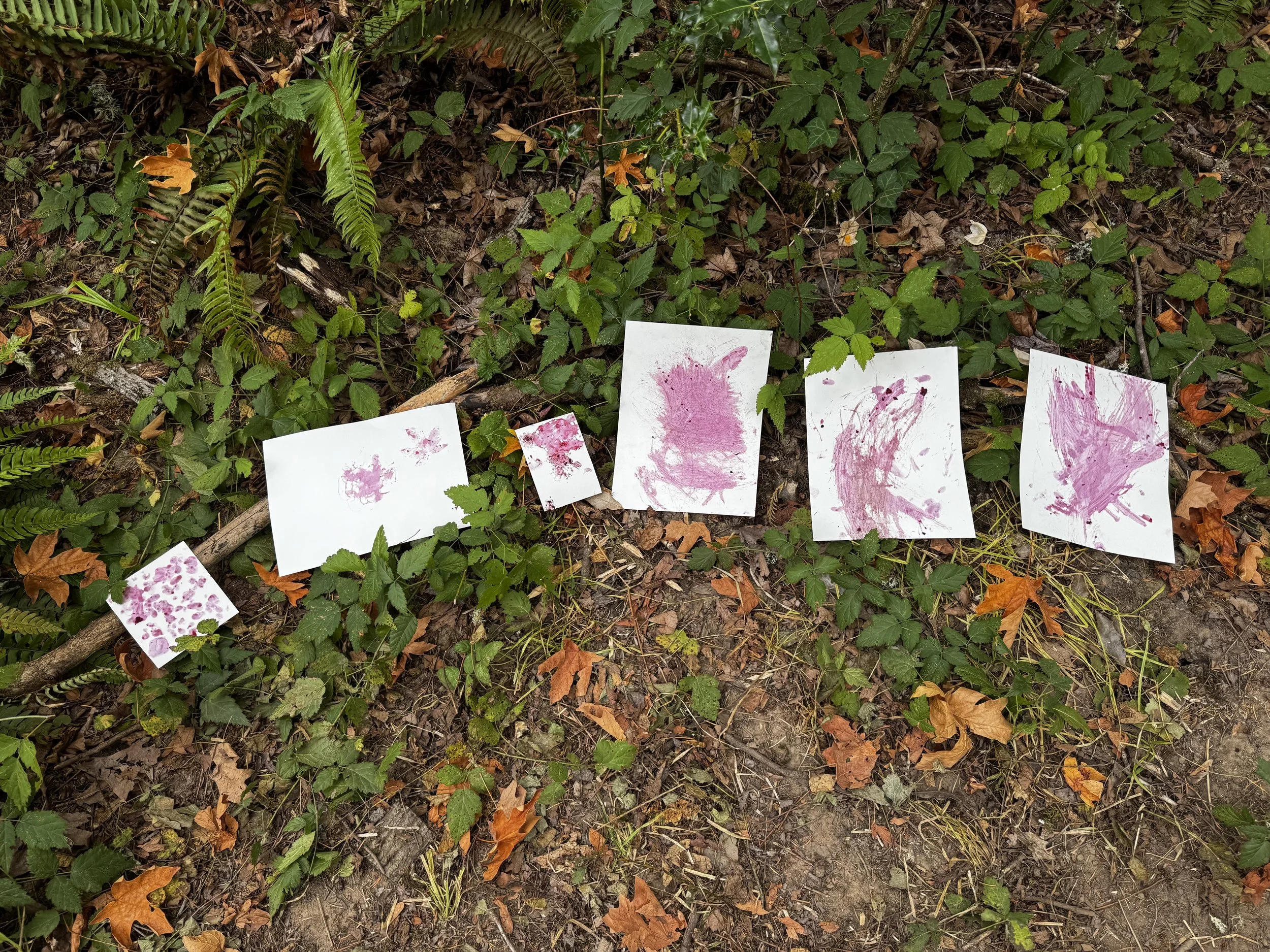
The forest also became part of the art studio. We crushed berries with mortar and pestle, gathered pitch and sap, painted with our hands, built fairies, worked on the fort and experimented with the materials we started to find around us.
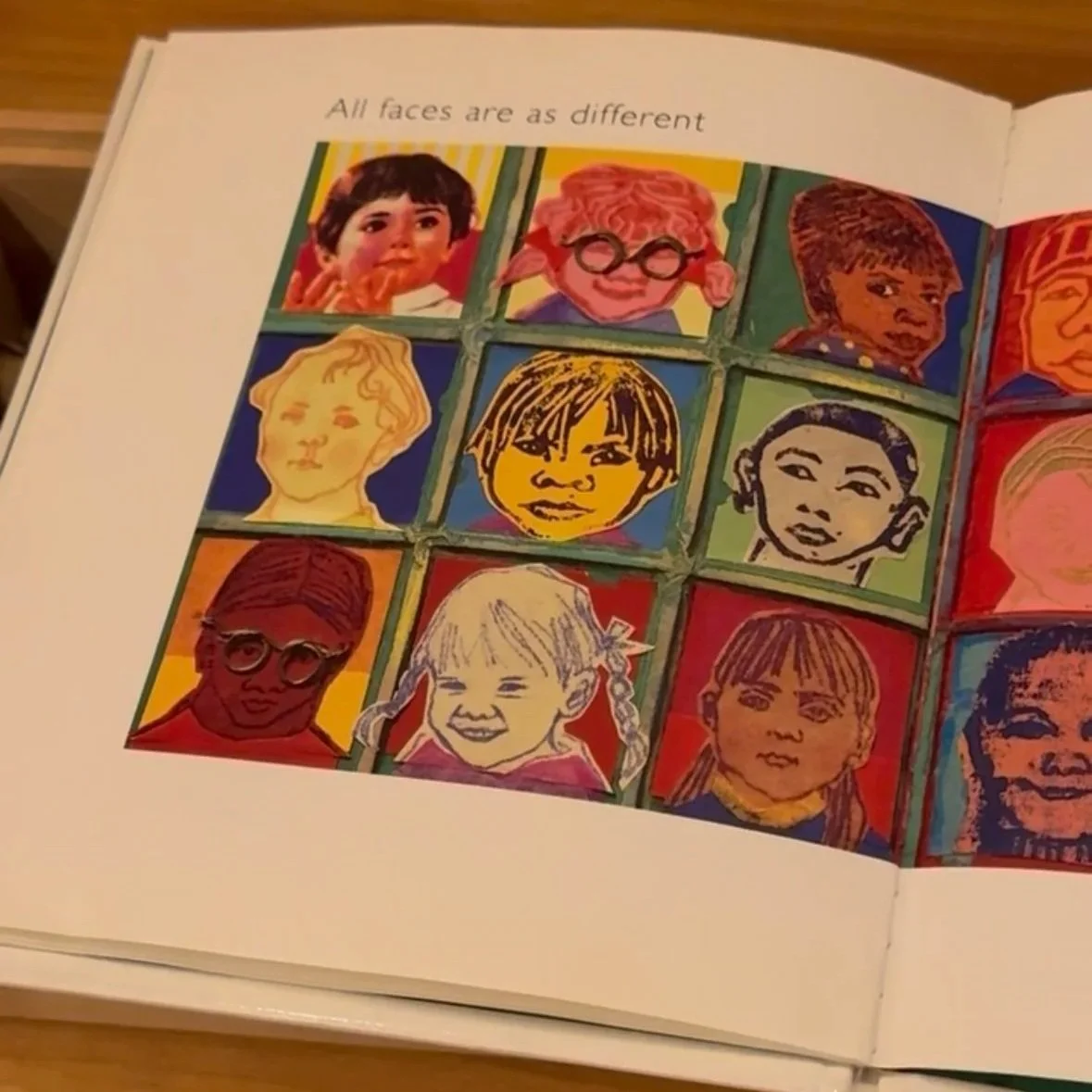
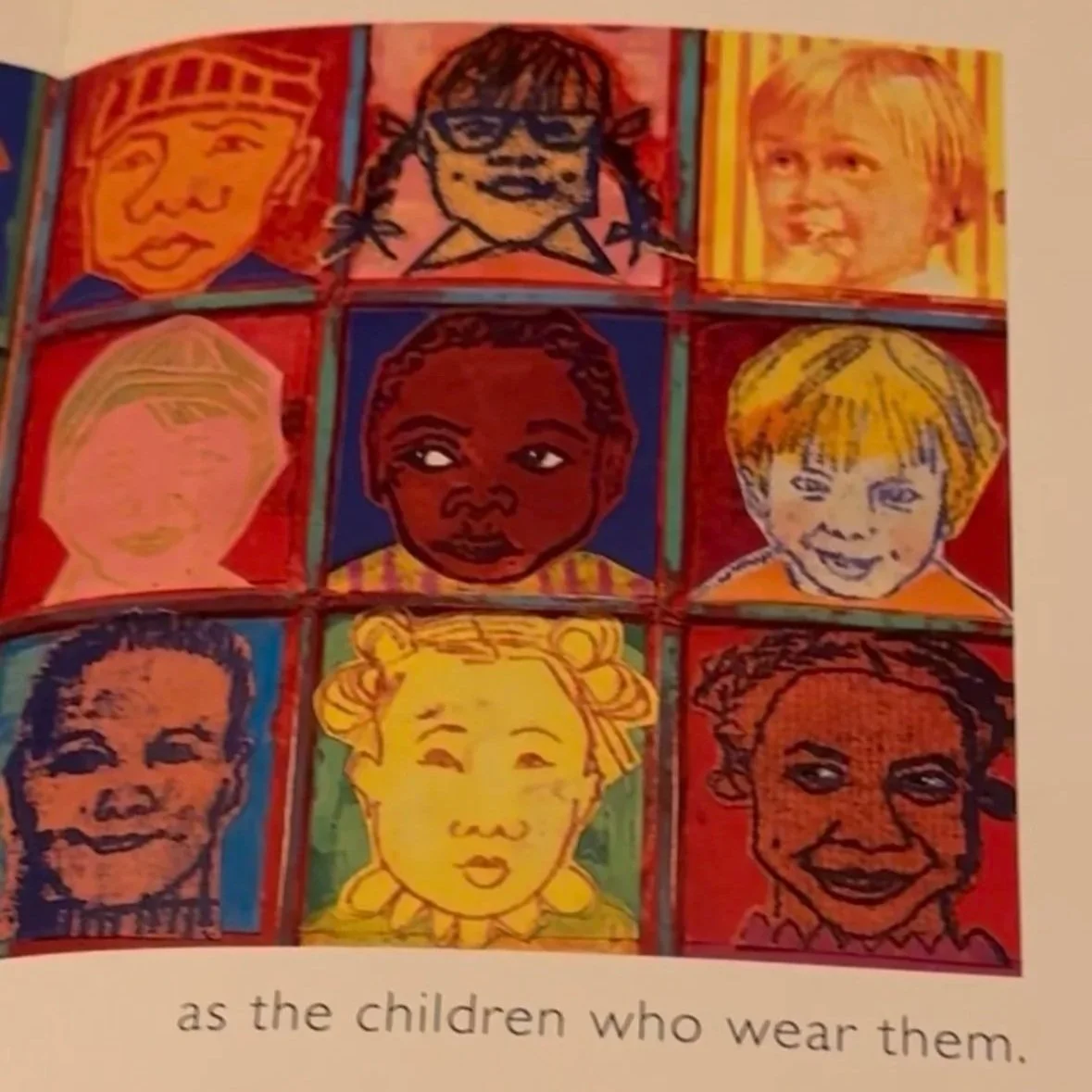
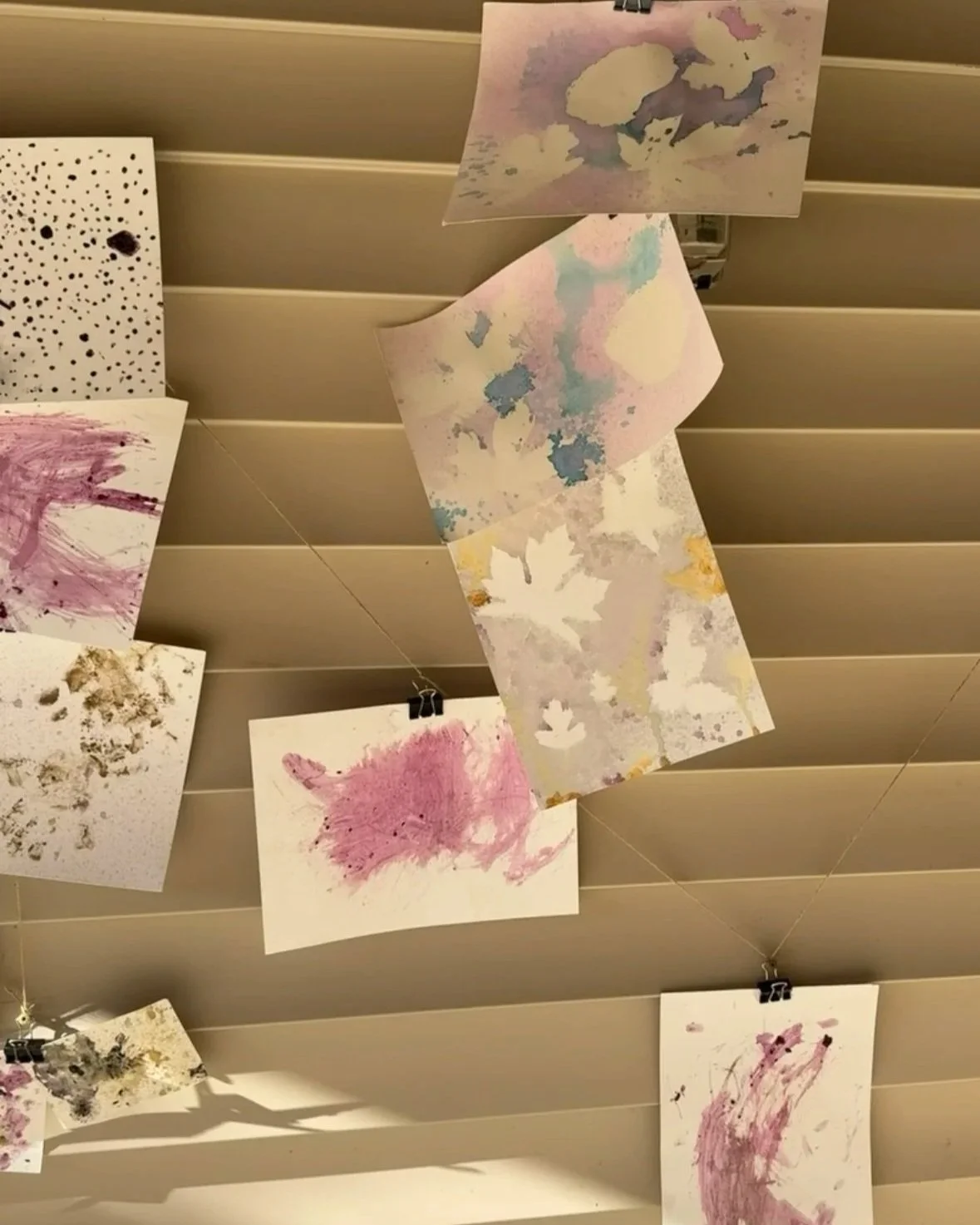
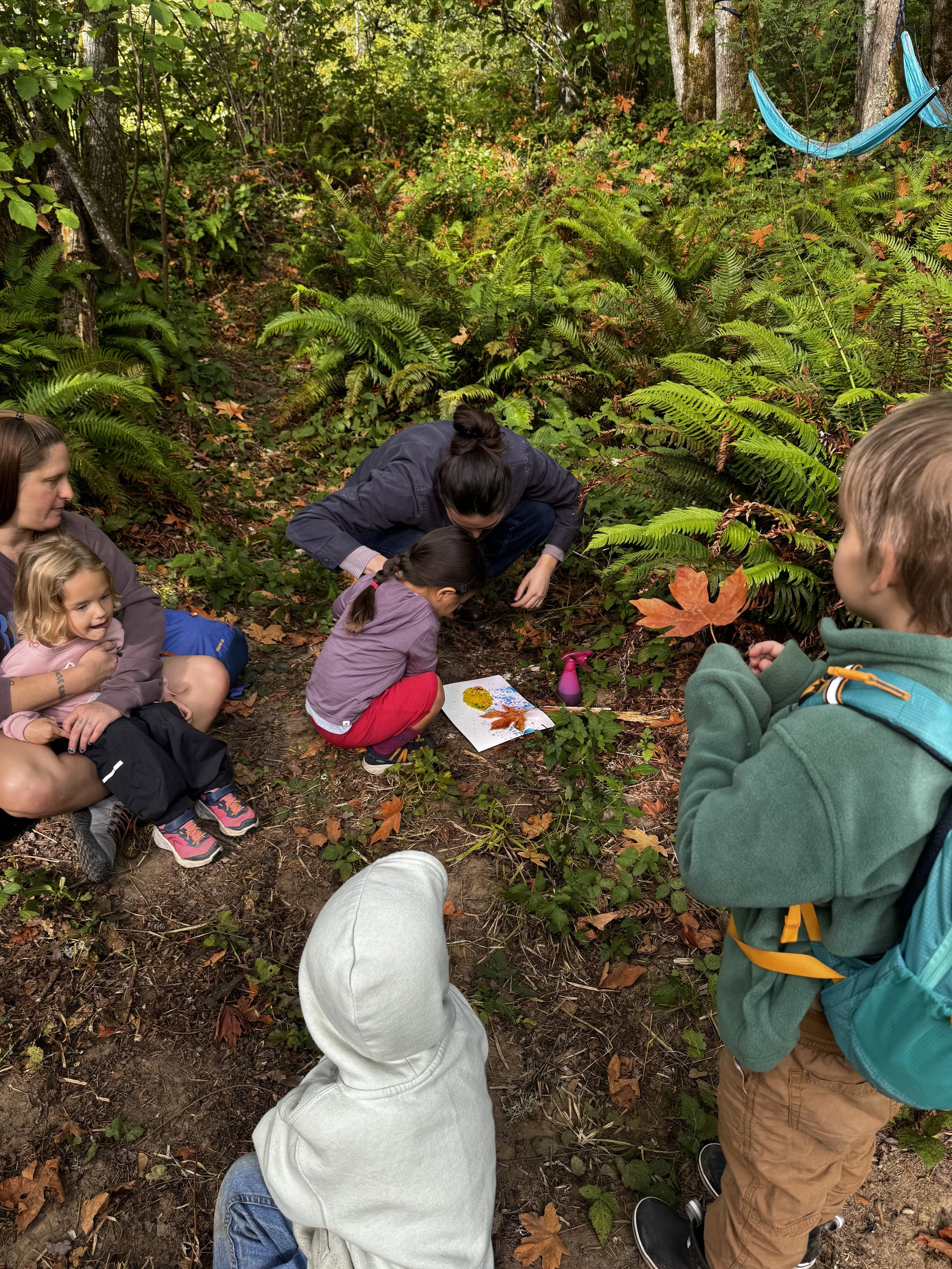
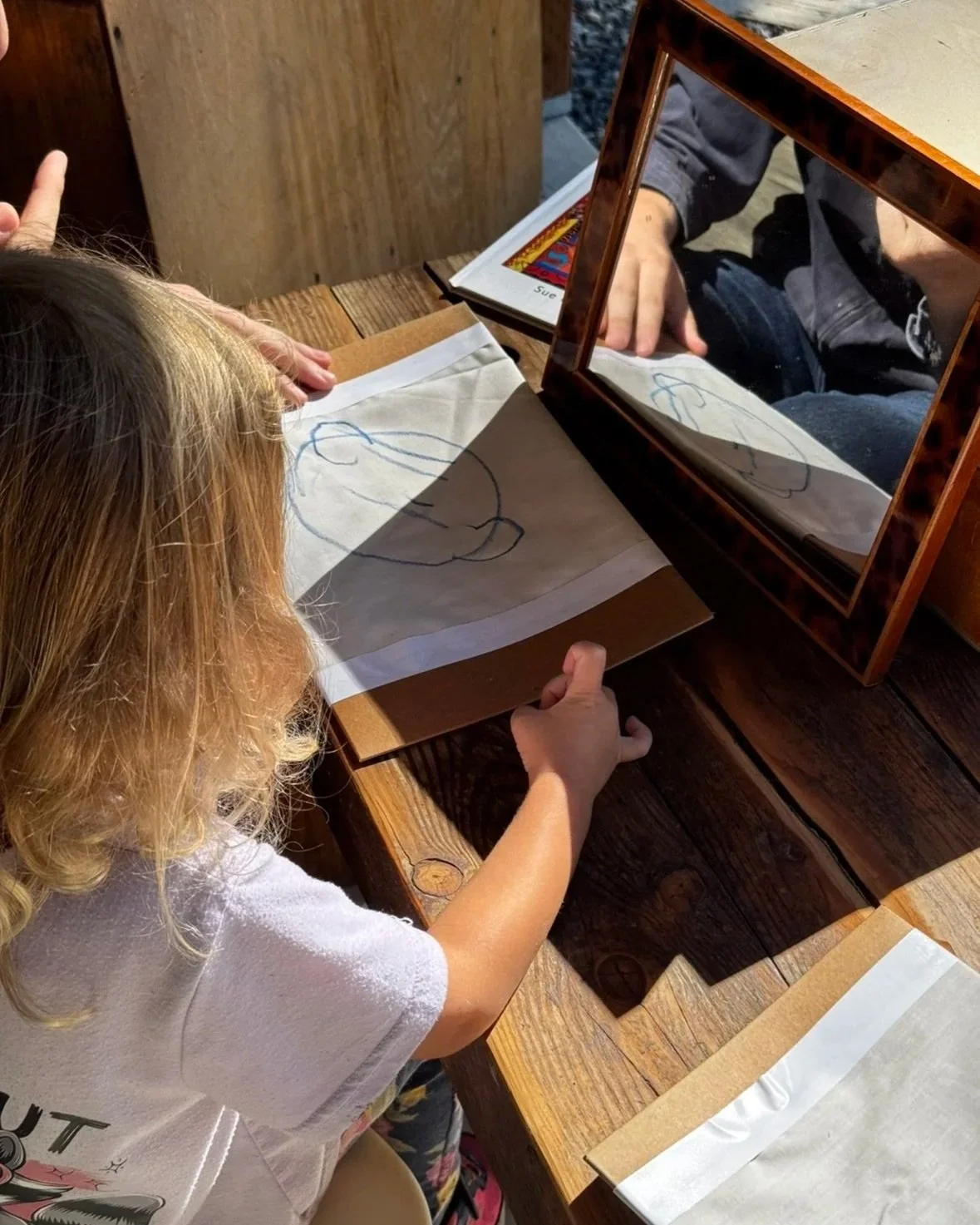
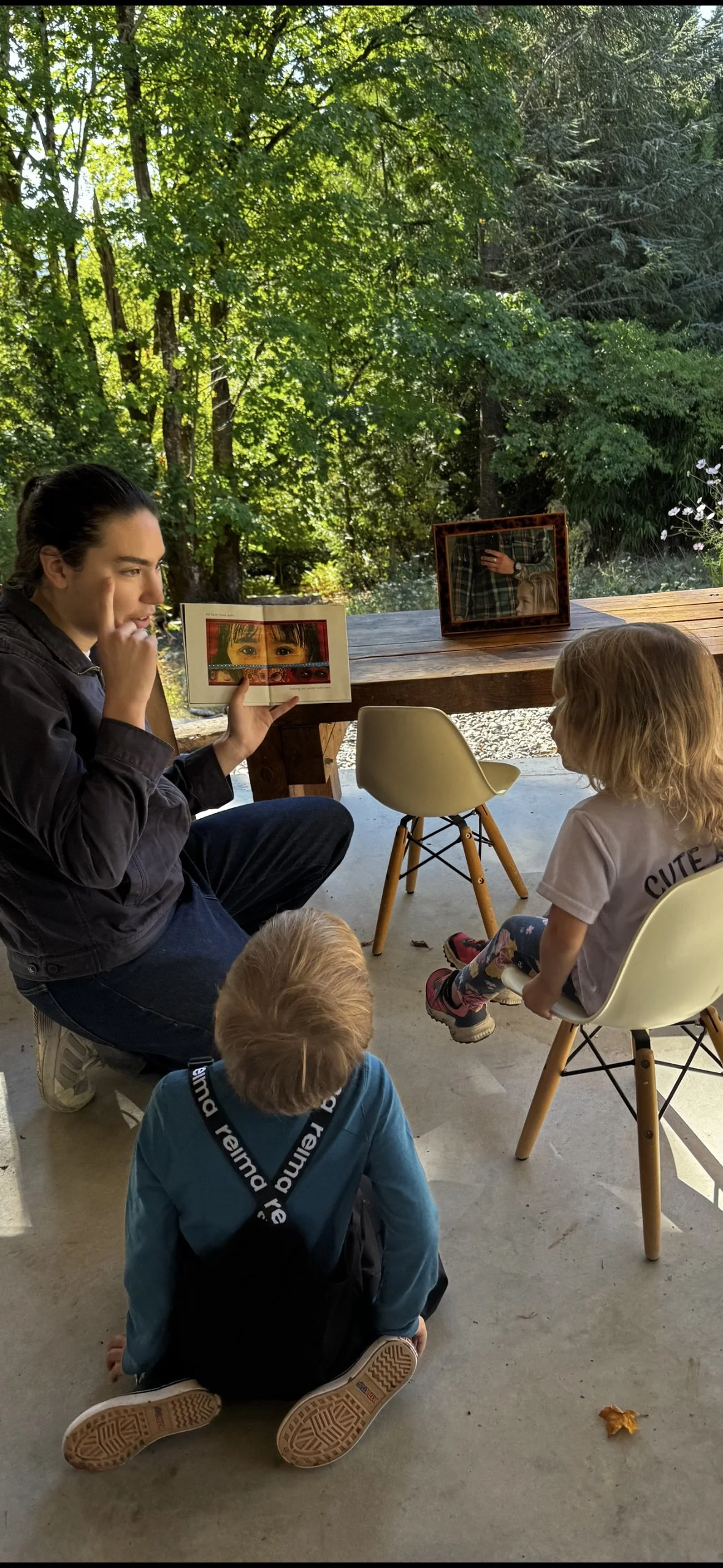
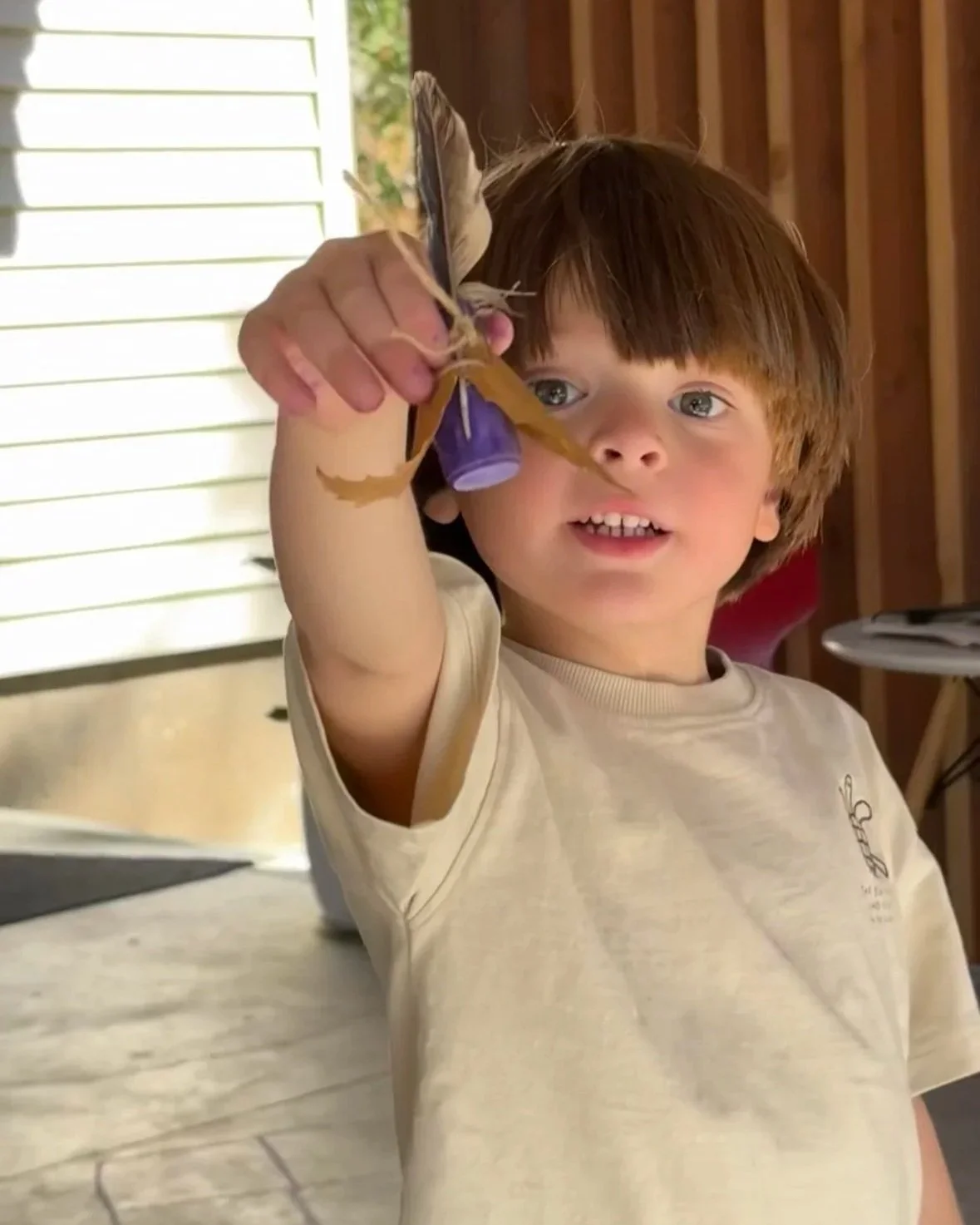
With Elena, the kids made self-portraits and spent time looking closely at faces, what we all share and what makes each of us different. We explored several printmaking techniques, including stunning sprays of leafs on watercolor paper, and from there the kids started experimenting with whatever was around them. Berries became paint. Fingers, feathers and fall leaves all became ways to make marks.
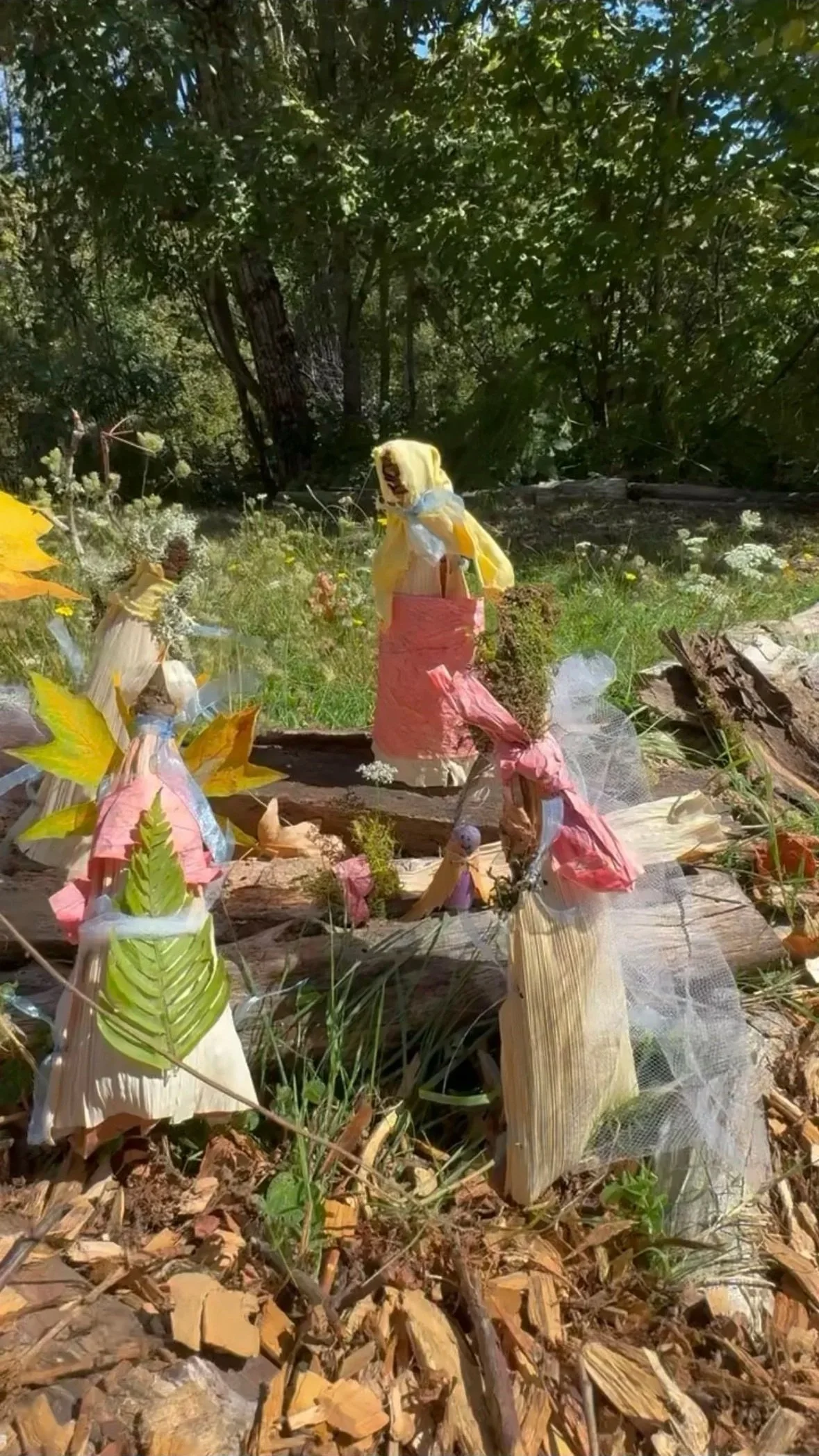
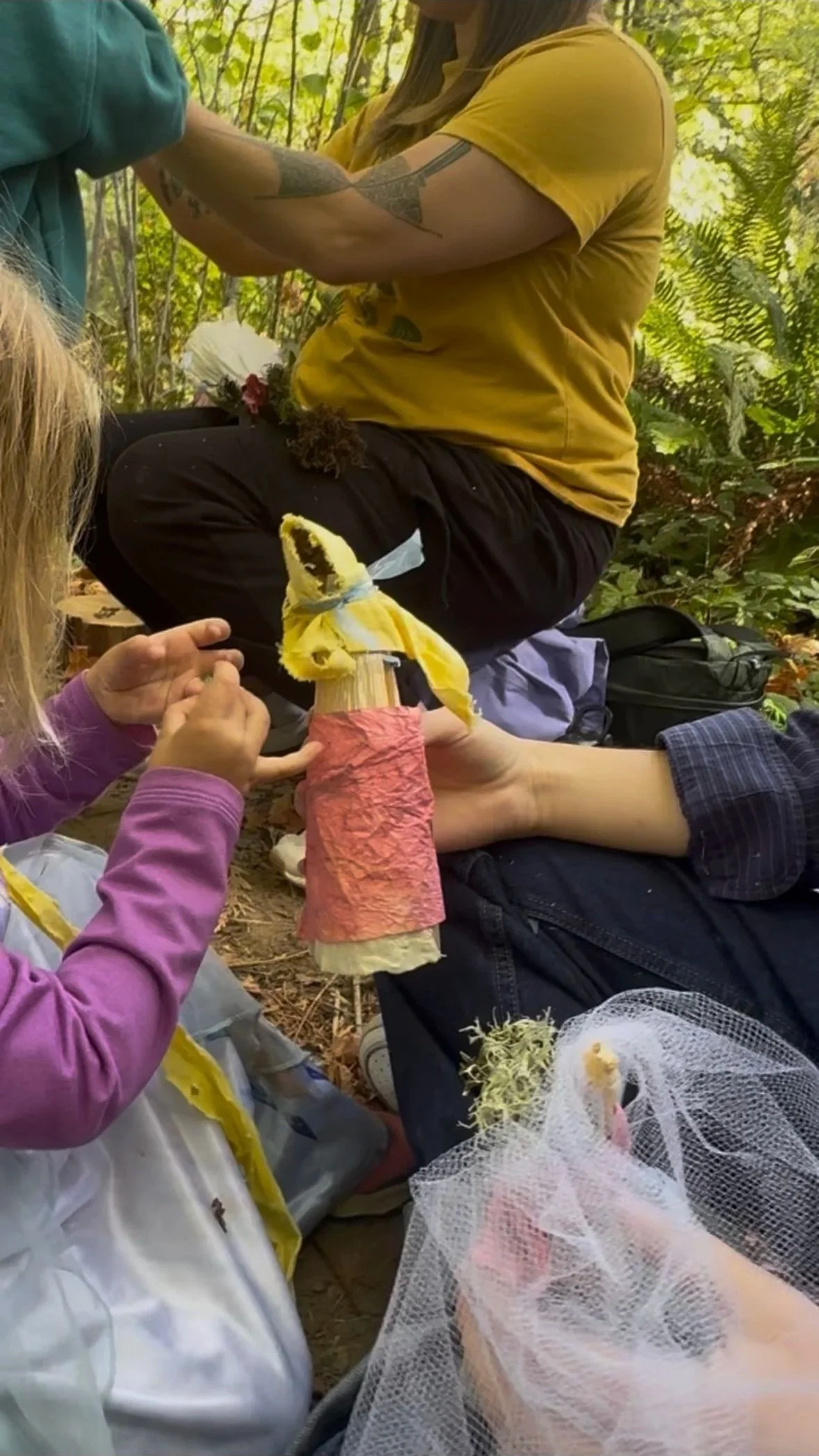
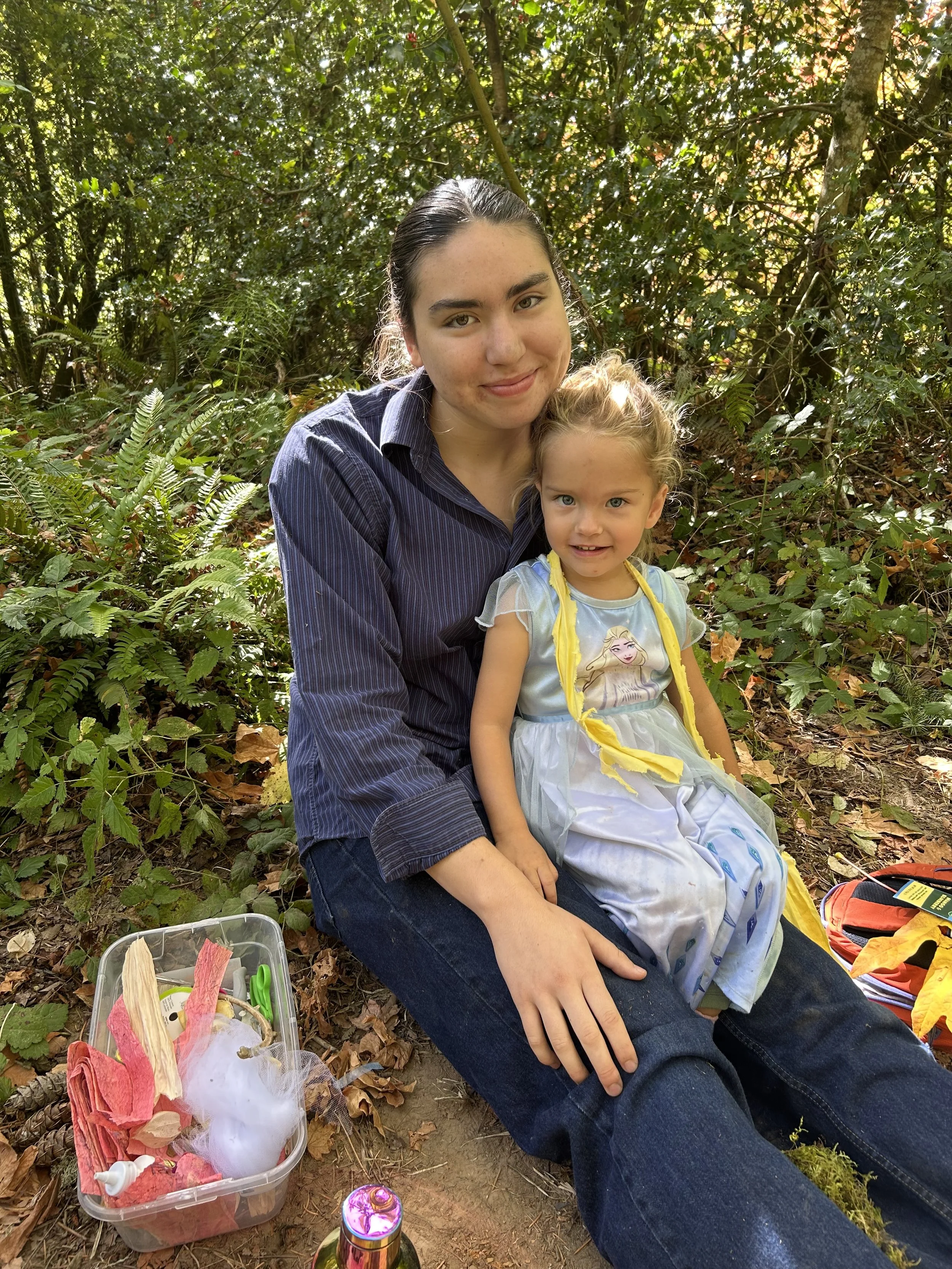
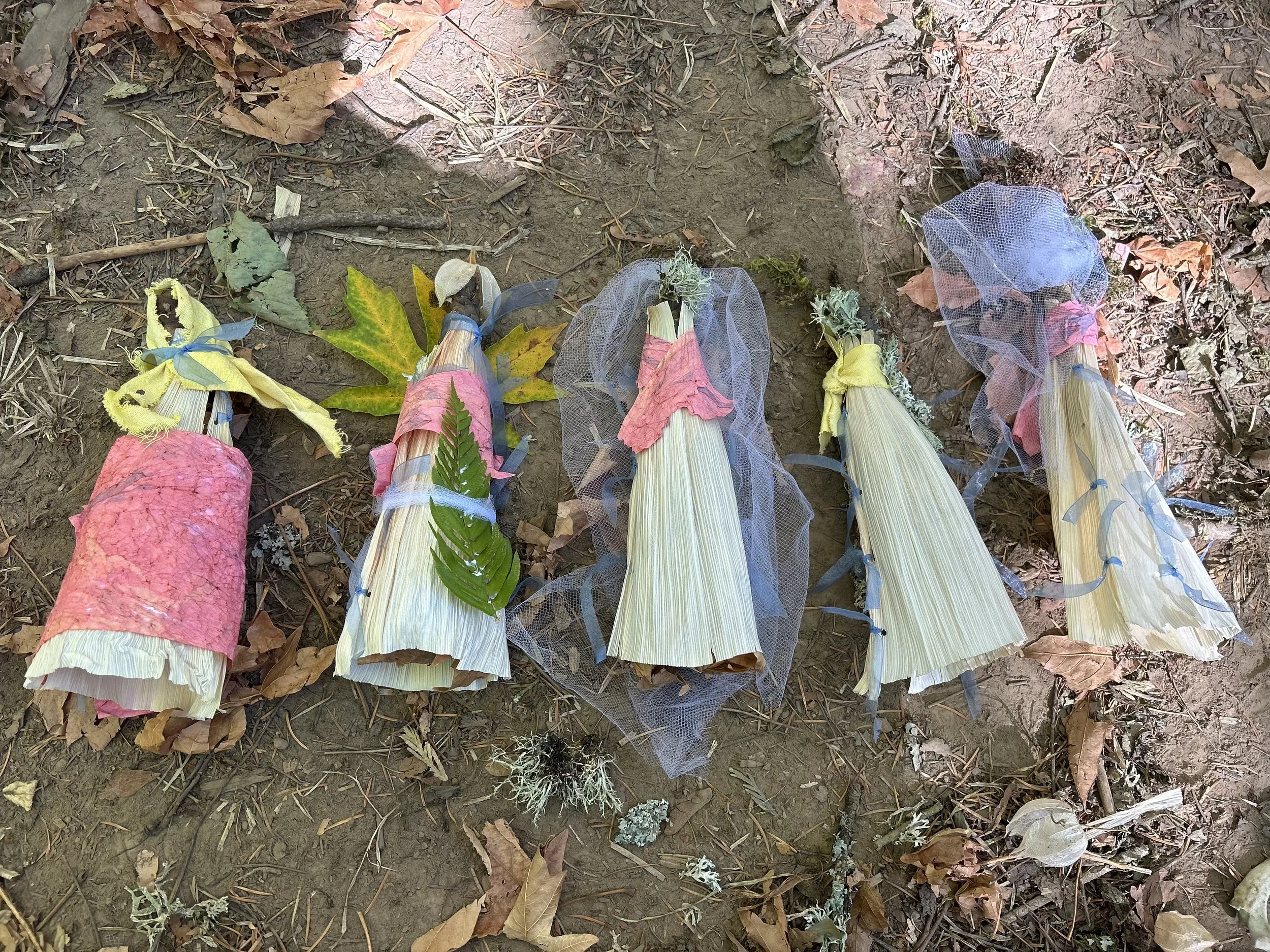
Elena also introduced her own take on corn husk dolls, giving the kids a mix of loose parts from the art table and the forest to work with. Fabric, ribbon, leaves, ferns, lichen, feathers and whatever else caught their eye became clothing, hair, wings, decorations and completely different characters. The materials were offered, but what each doll became was entirely up to each child.
New Friends + Finding Our Place
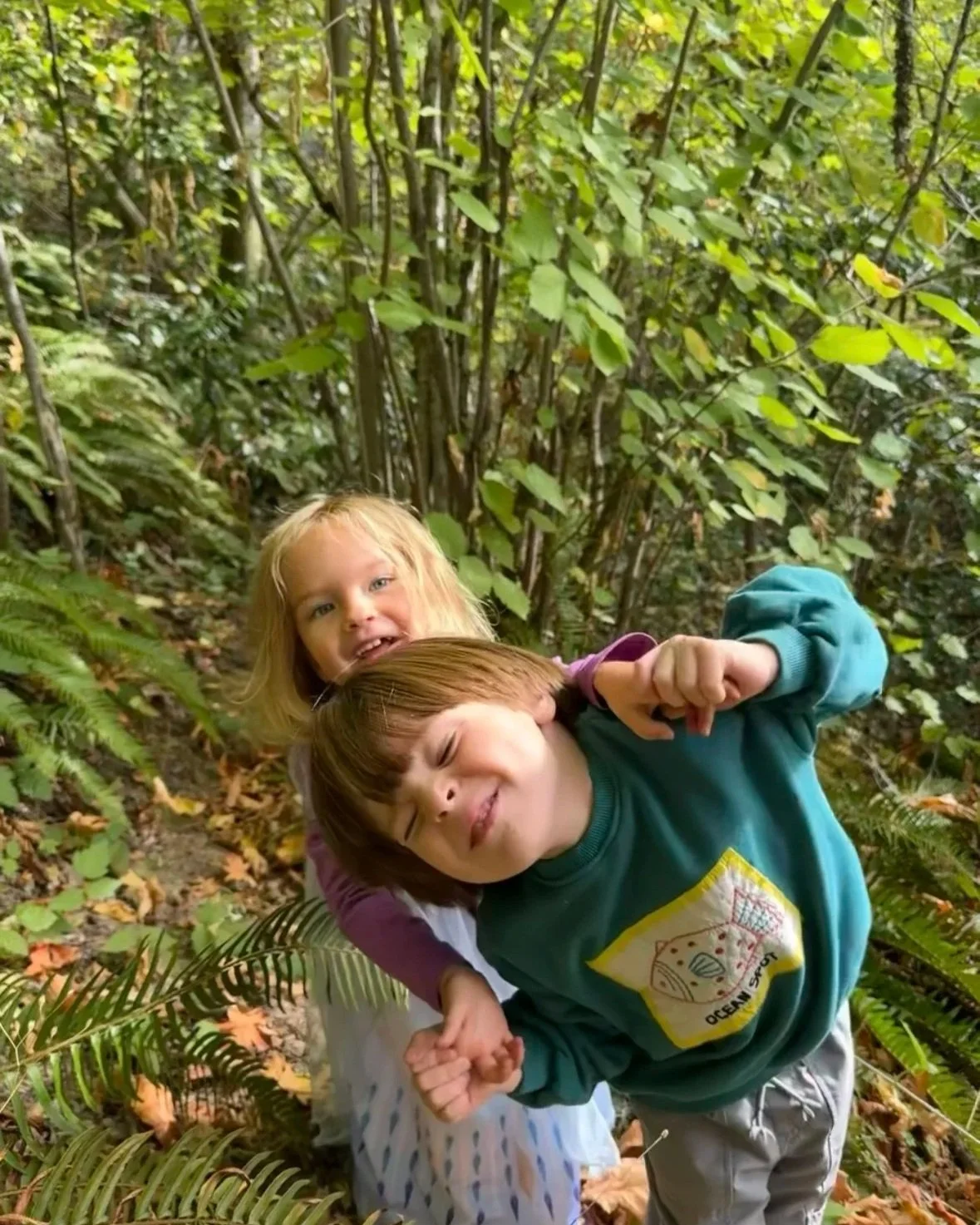
Over the past few weeks, the kids have gone from barely knowing one another to hugging, holding hands, running trails together, building together, sitting together, and creating games that carry from one day to the next.
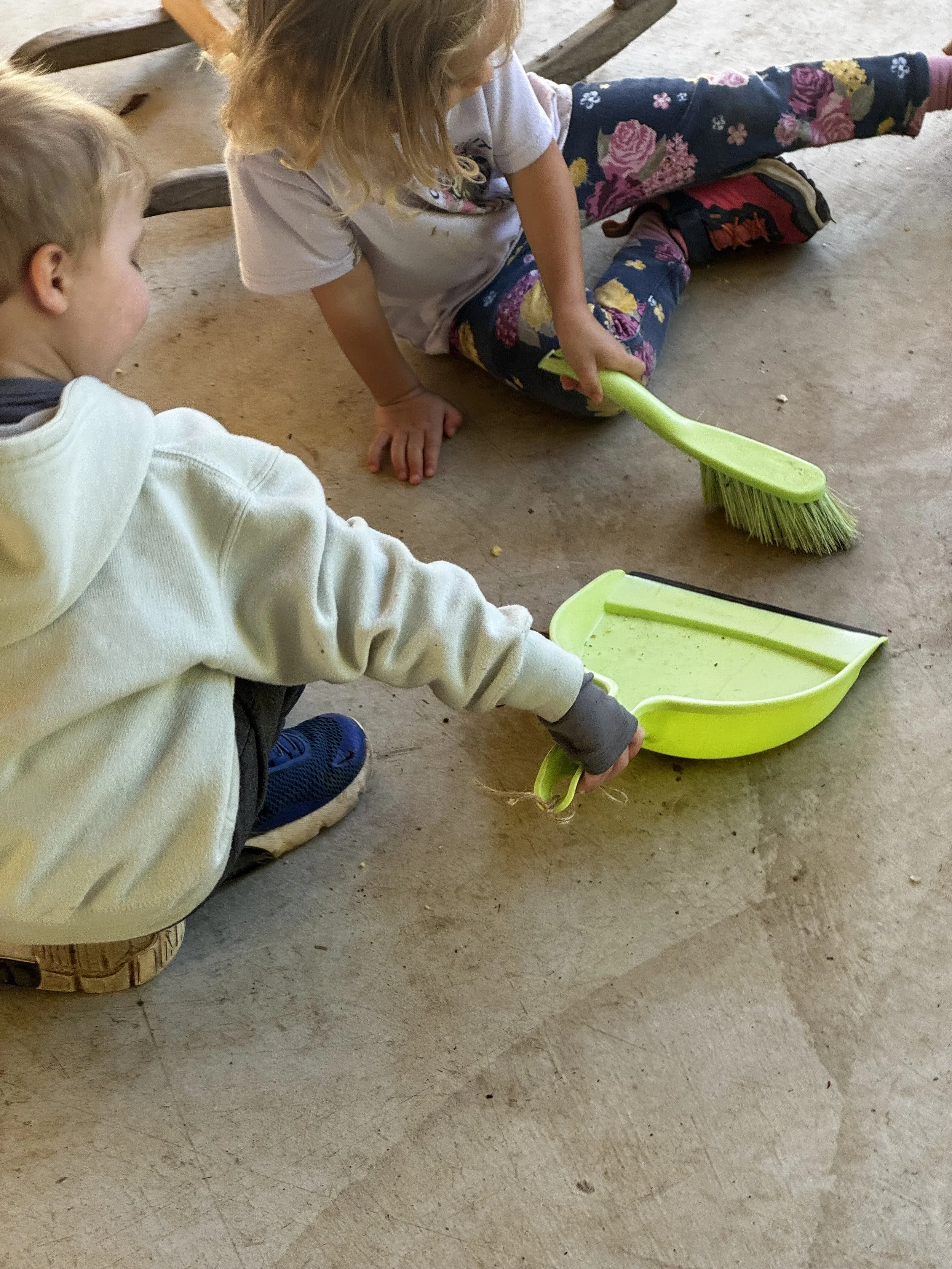
There has also been a lot of purposeful work. Sweeping after lunch. Carrying materials. Moving sticks and logs. Building the fort. Taking care of packs and belongings. Helping care for the places we use together.
Even our circle grew out of that process. We needed places to sit, so I cut a log. One stump became several. Now we have a circle in the forest where we gather, talk, sing and decide where the day might take us.
One of the songs we sometimes sing together is Put Your Roots Down. It’s a good one. We stomp our feet.
Questions We Followed
What’s that sound?
Whose poop is this?
What animal made it?
Why is there hair in it?
Who left this bone here?
What is this sticky stuff coming out of the tree?
What can we make with this?
If your interested in identifying birds you can hear or see, check out Merlin Bird ID, it is completely free and incredibly fast and reliable.