There is no description
no image in any book
capable of replacing
the sight of real trees.
Something emanates
from those trees
that speaks to the soul.
— Maria Montessori
What Shapes Our Approach
We draw inspiration from several child-centered educational approaches that shape how we support children, design learning experiences, and build relationships with all the life to be found in the forest.
Place-Based Emergent Curriculum
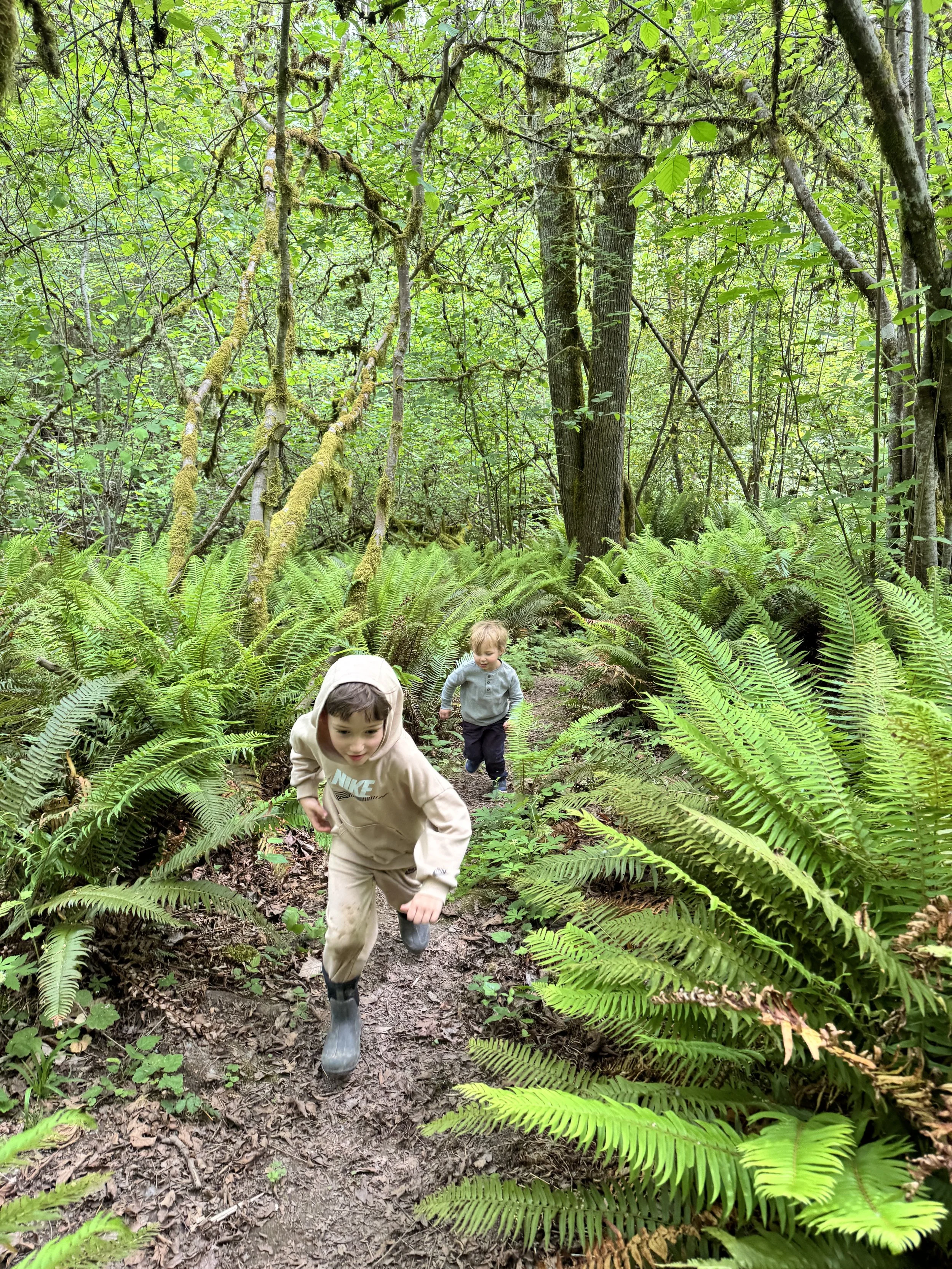
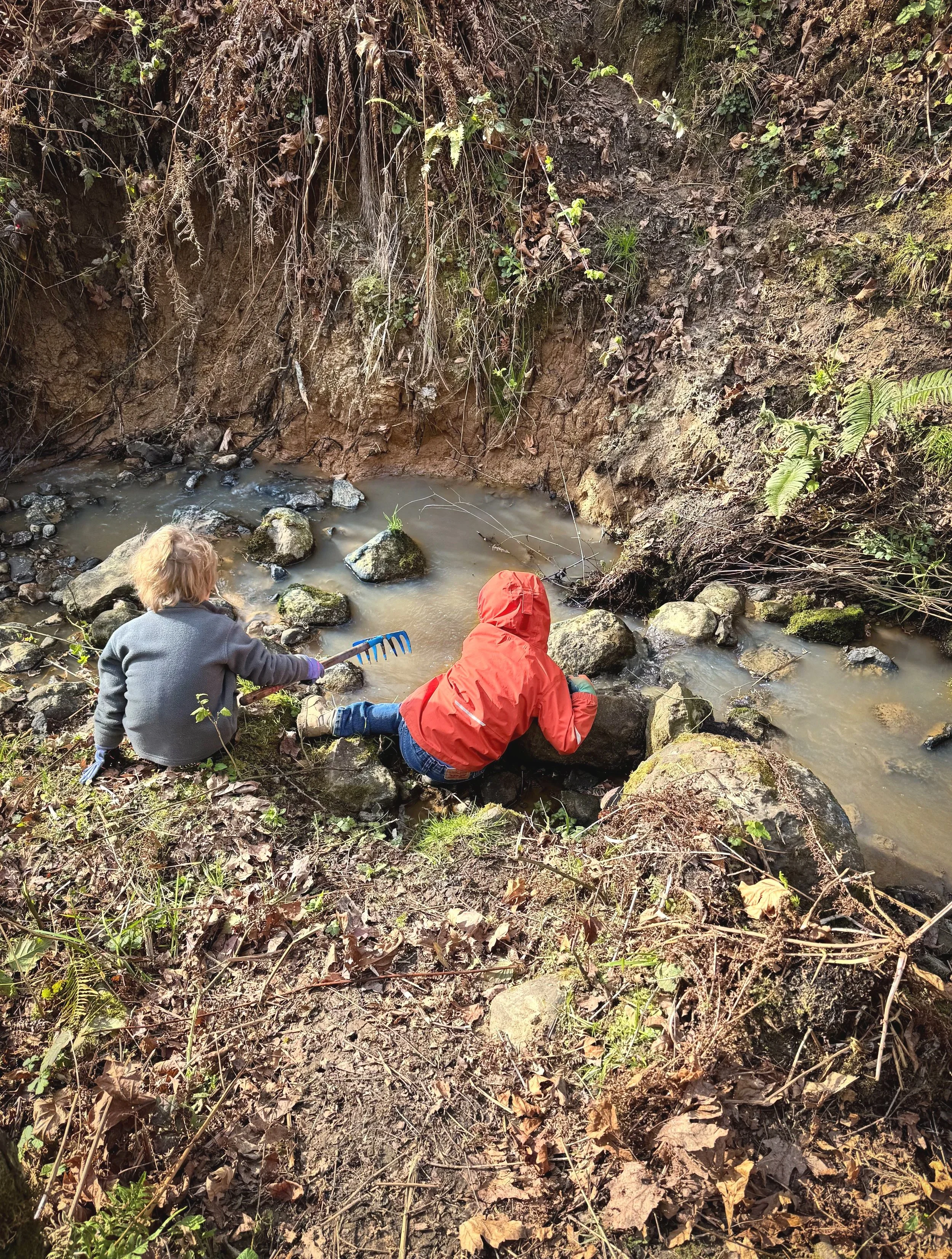
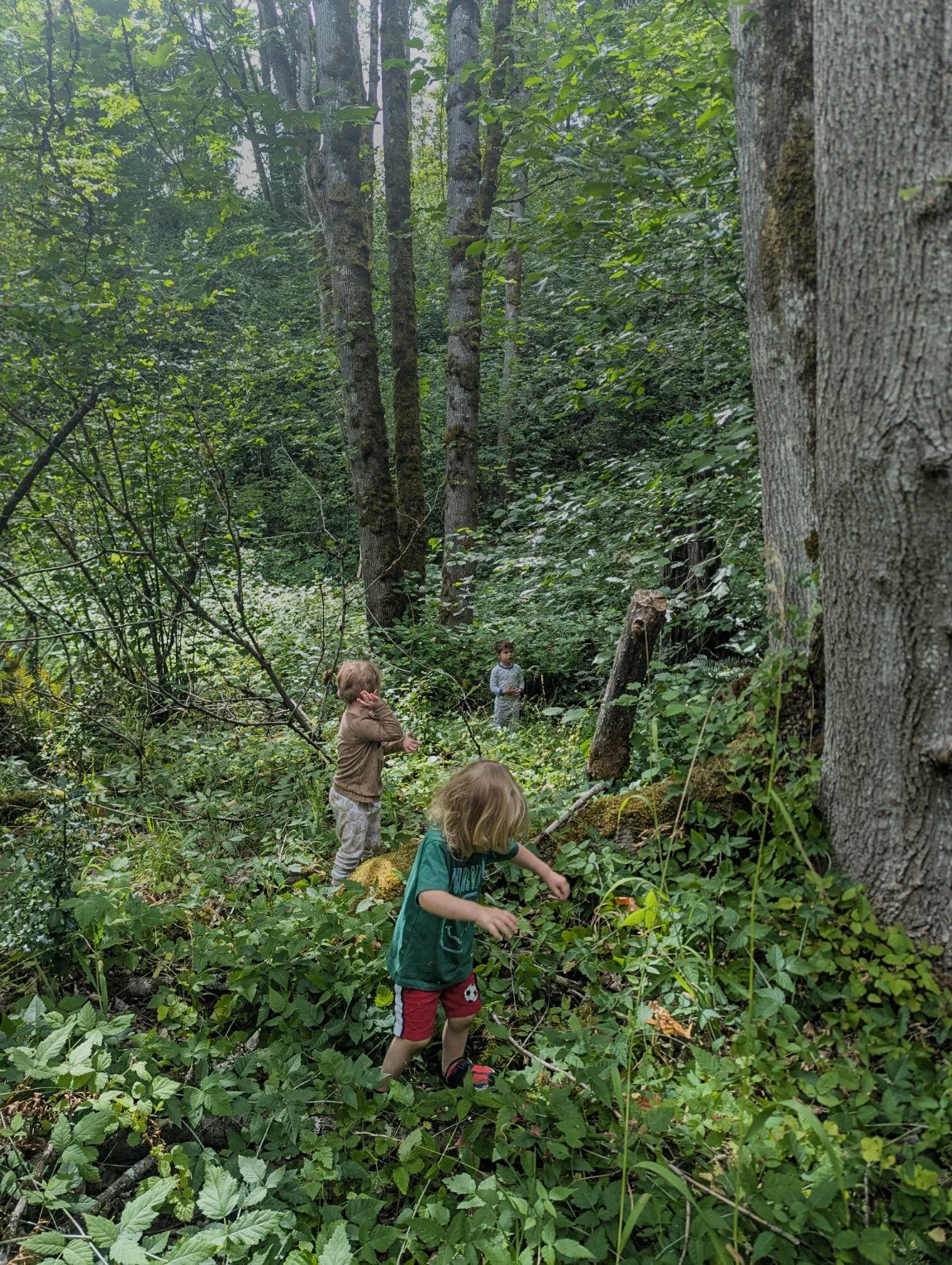
We believe the forest itself is one of the children’s most important teachers. Rather than following a predetermined curriculum, learning emerges from the place we return to each day: the changing seasons, weather, plants, animals, insects, trails, garden, and the questions children ask as they come to know them over time.
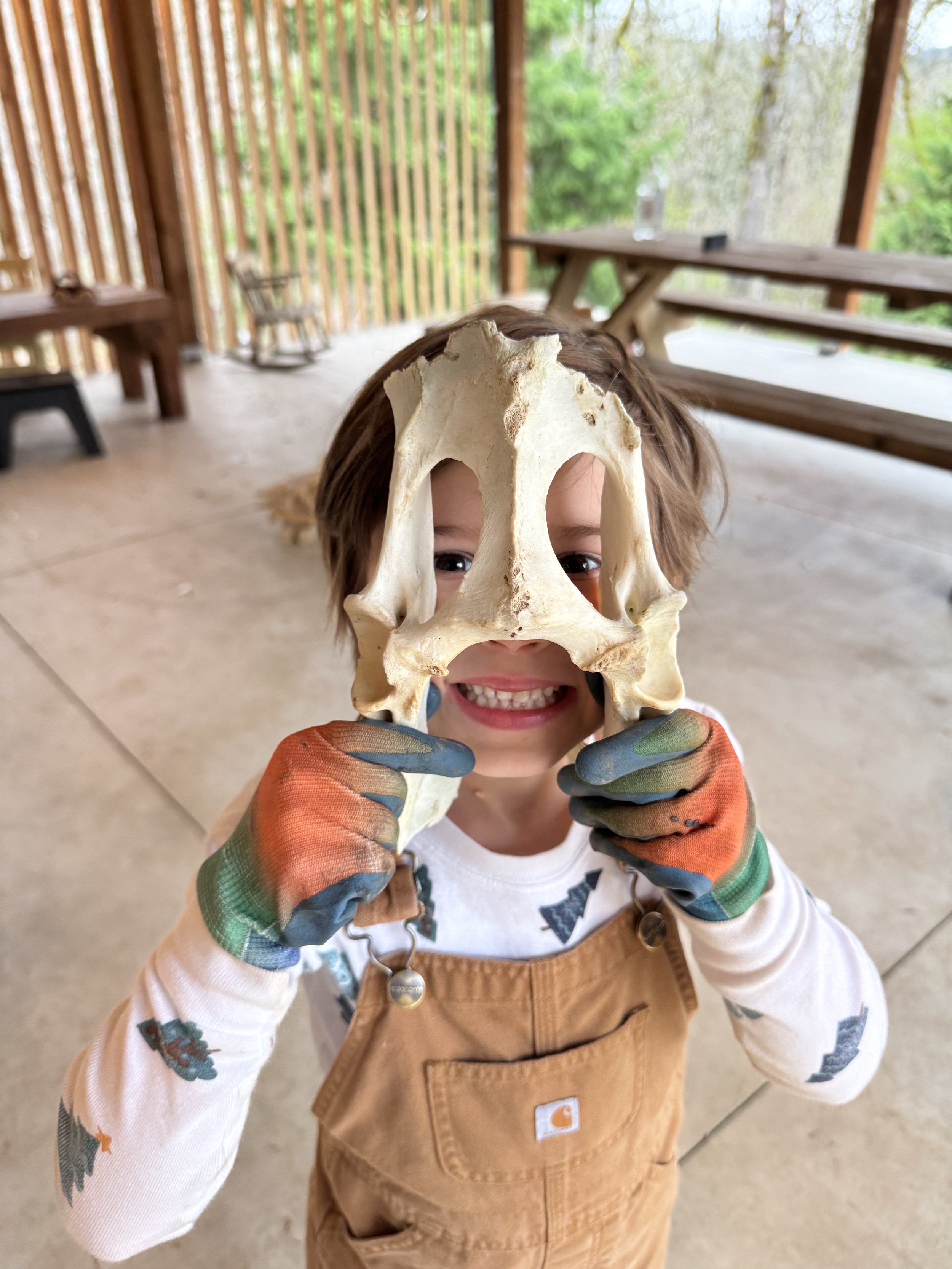
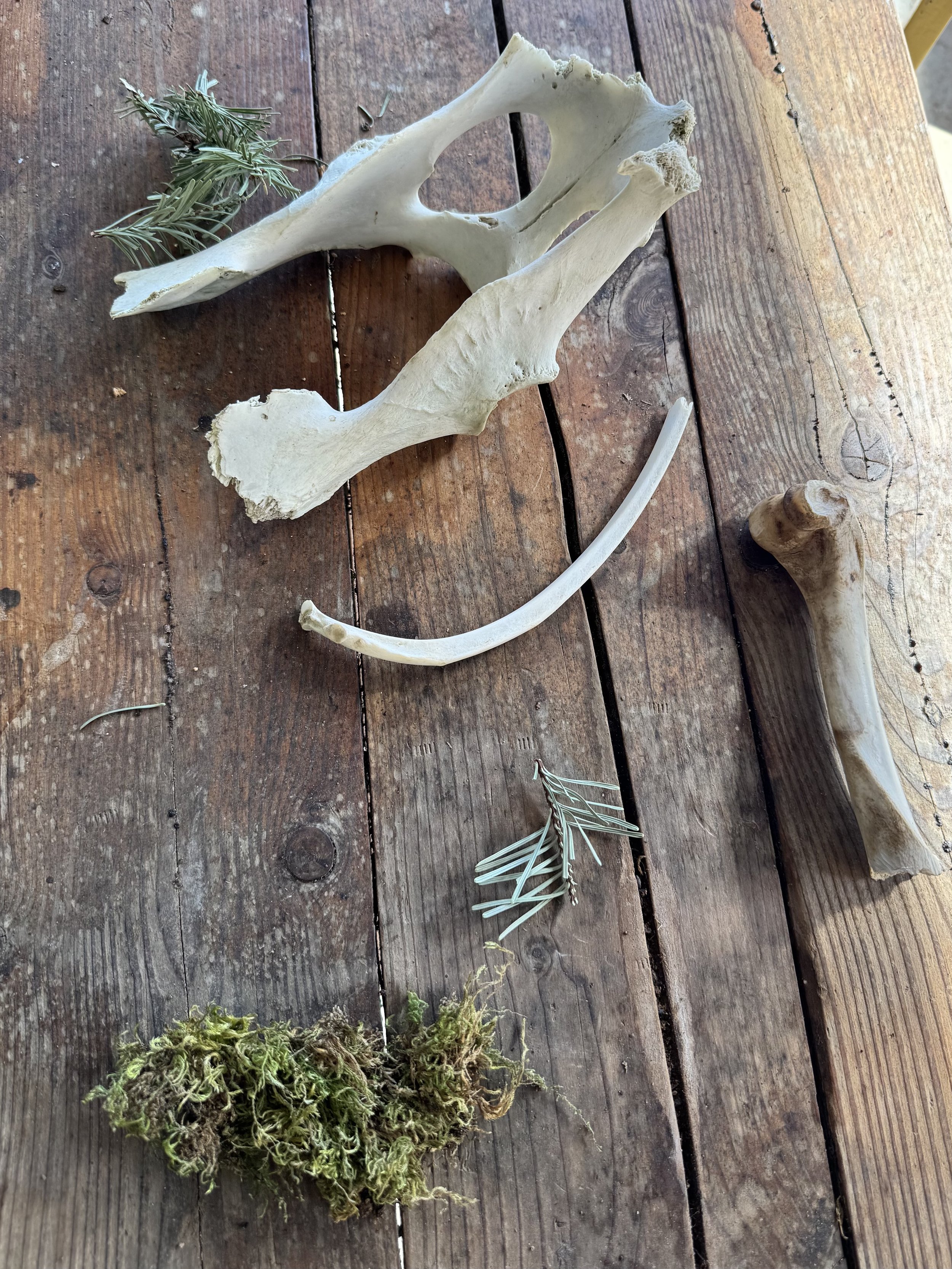
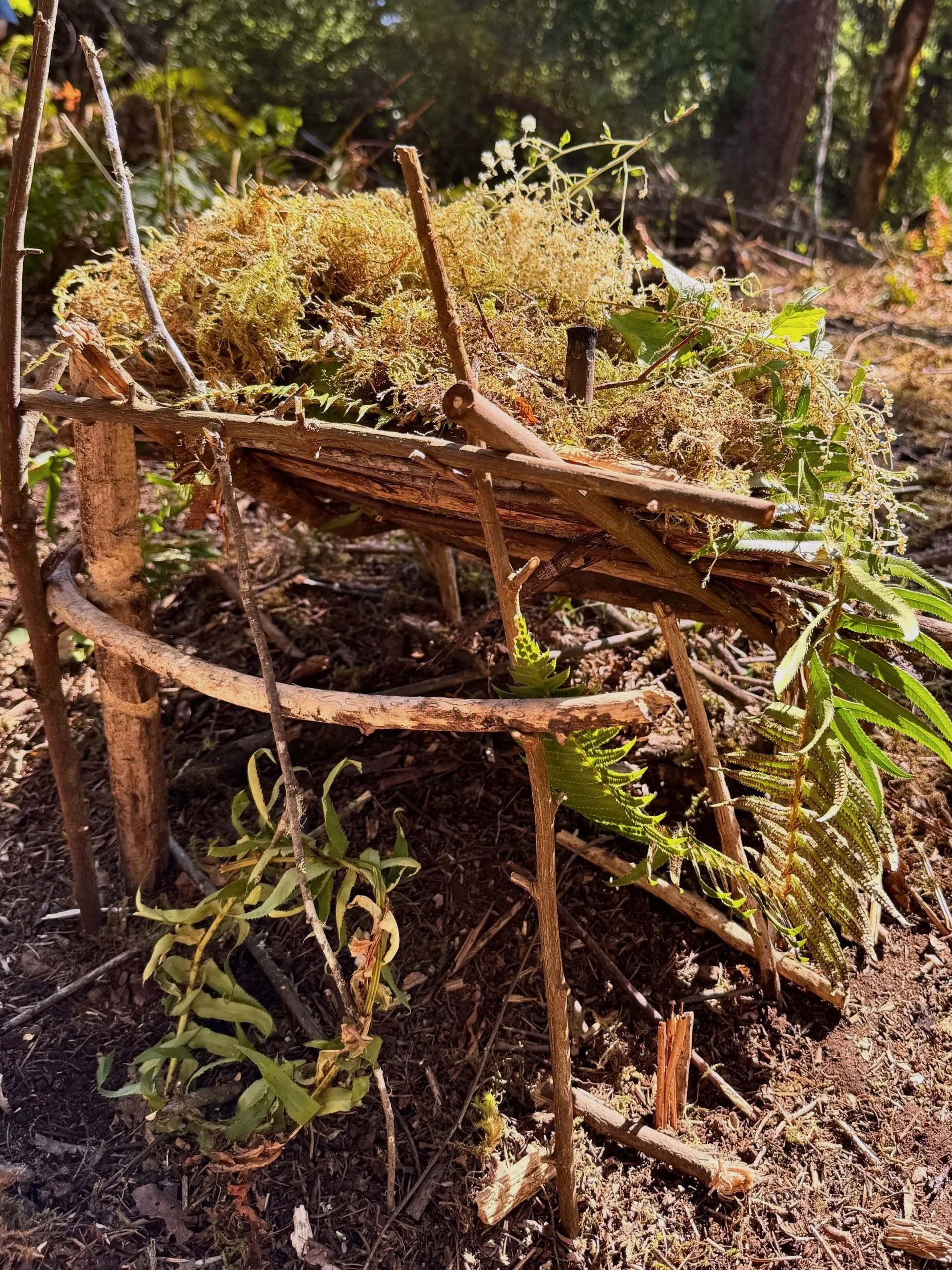
A fresh animal track might lead to a morning of tracking. A fallen branch becomes an engineering problem, a bird’s nest a conversation about shelter, berries an invitation to make pigments. Teachers pay attention to what children notice, ask questions that deepen observation, and help experiences unfold across science, art, storytelling, movement, math, practical work, and play.
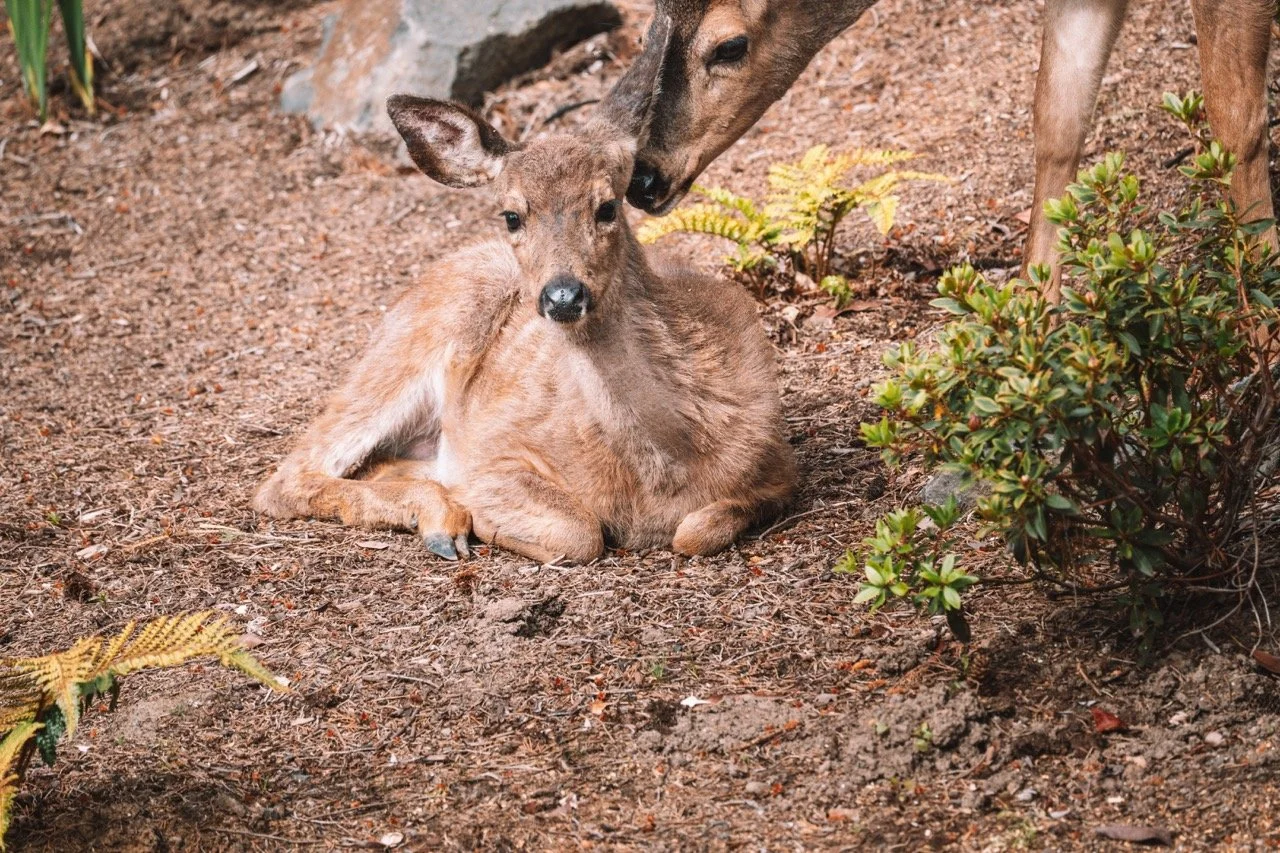
Over time, children don’t simply spend time outdoors. They develop a relationship with this place. They begin to recognize what grows here, where animals move, what changes with the weather, and what returns each season. They also begin practicing empathy + care: rescuing a slug from the trail, wondering whether a curled-up millipede feels safe, taking only what is needed, tending shared spaces, and learning how to give back to a place that gives us so much.
Reggio Emilia
We believe children are capable creators whose ideas, questions, and interests are worth following. Teachers observe what children notice and return to, introduce materials and possibilities, and give children space to take their ideas somewhere we may not have anticipated.
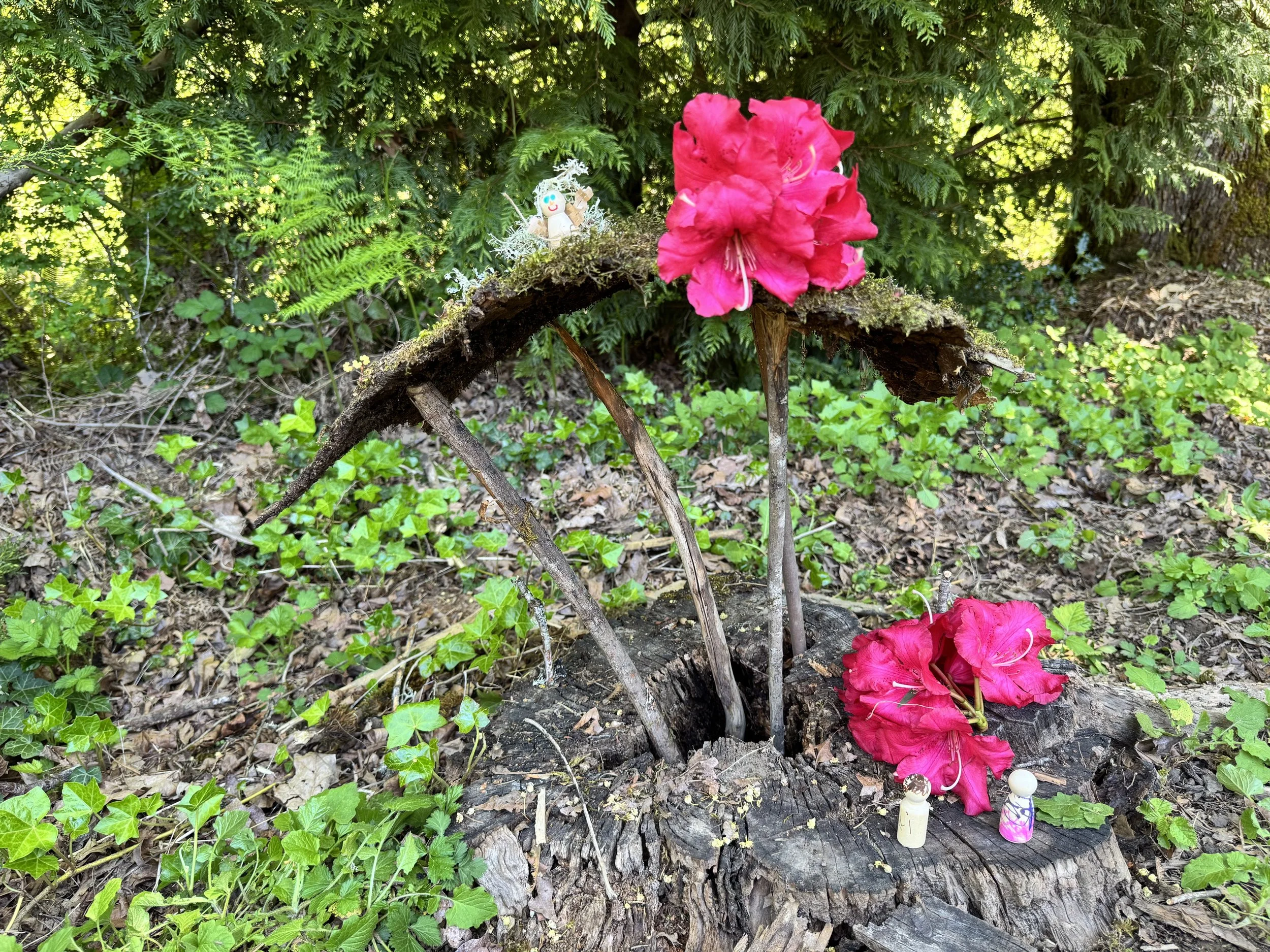
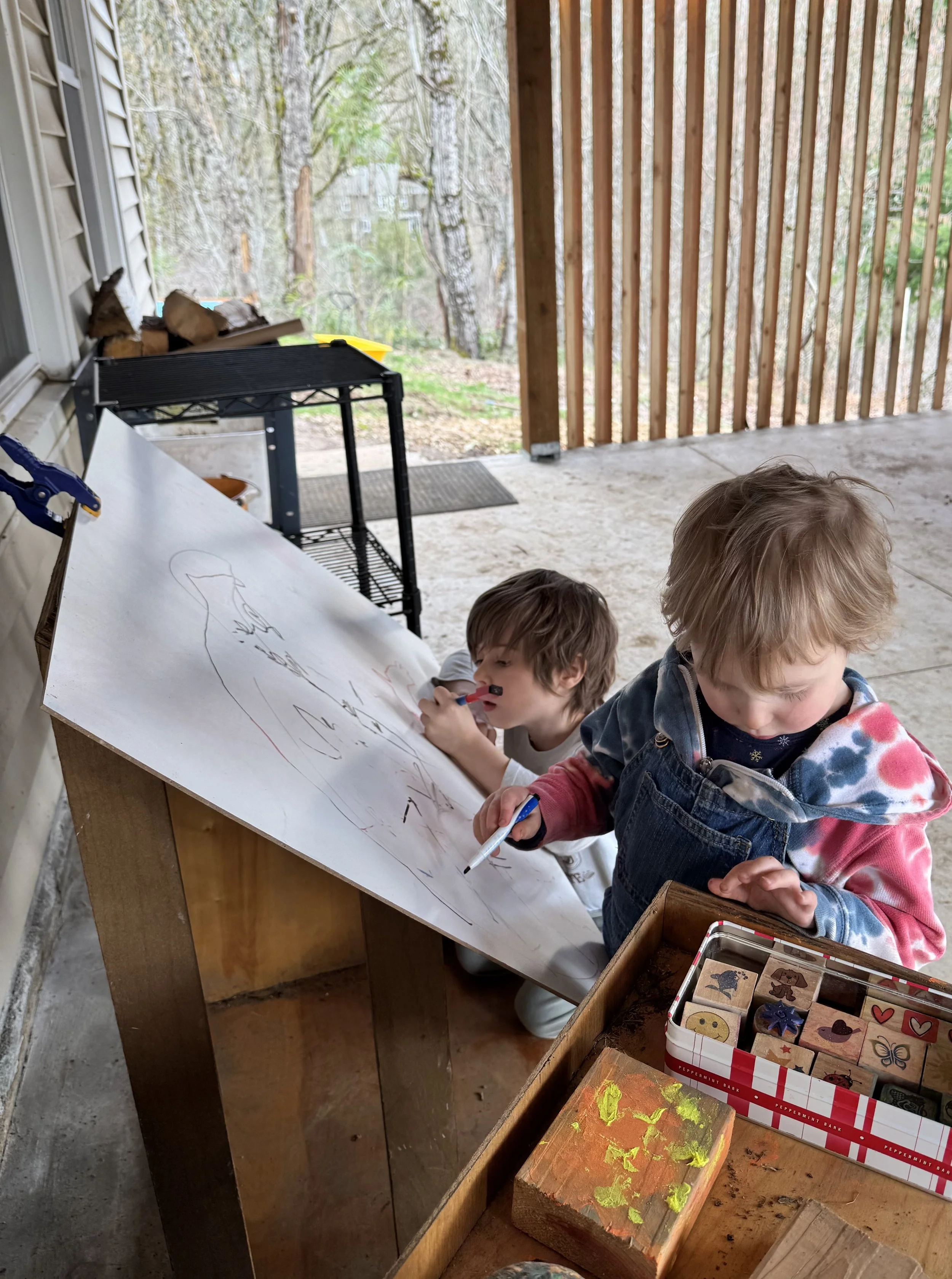
At Cedar & Bones, this comes to life in our open-ended art studio immersed in nature. Children are introduced to real artistic materials and techniques, then given time to experiment, create, revisit ideas, and develop their own forms of expression.
The studio is not separate from the forest. What children encounter, the materials, colors, patterns, questions, and seasonal changes, all become part of what they investigate and create in the studio. This is supported by the modeling and guidance of our young artist residents.
Montessori
Cedar & Bones is a place where children are seen and heard. We believe children are inherently wise and capable. We value independence, practical life skills, purposeful work, and interest-led learning. Children build confidence through hands-on experiences, meaningful responsibility, and opportunities to do things for themselves.
Teachers offer support without rushing to do for children what they can begin learning to do for themselves.
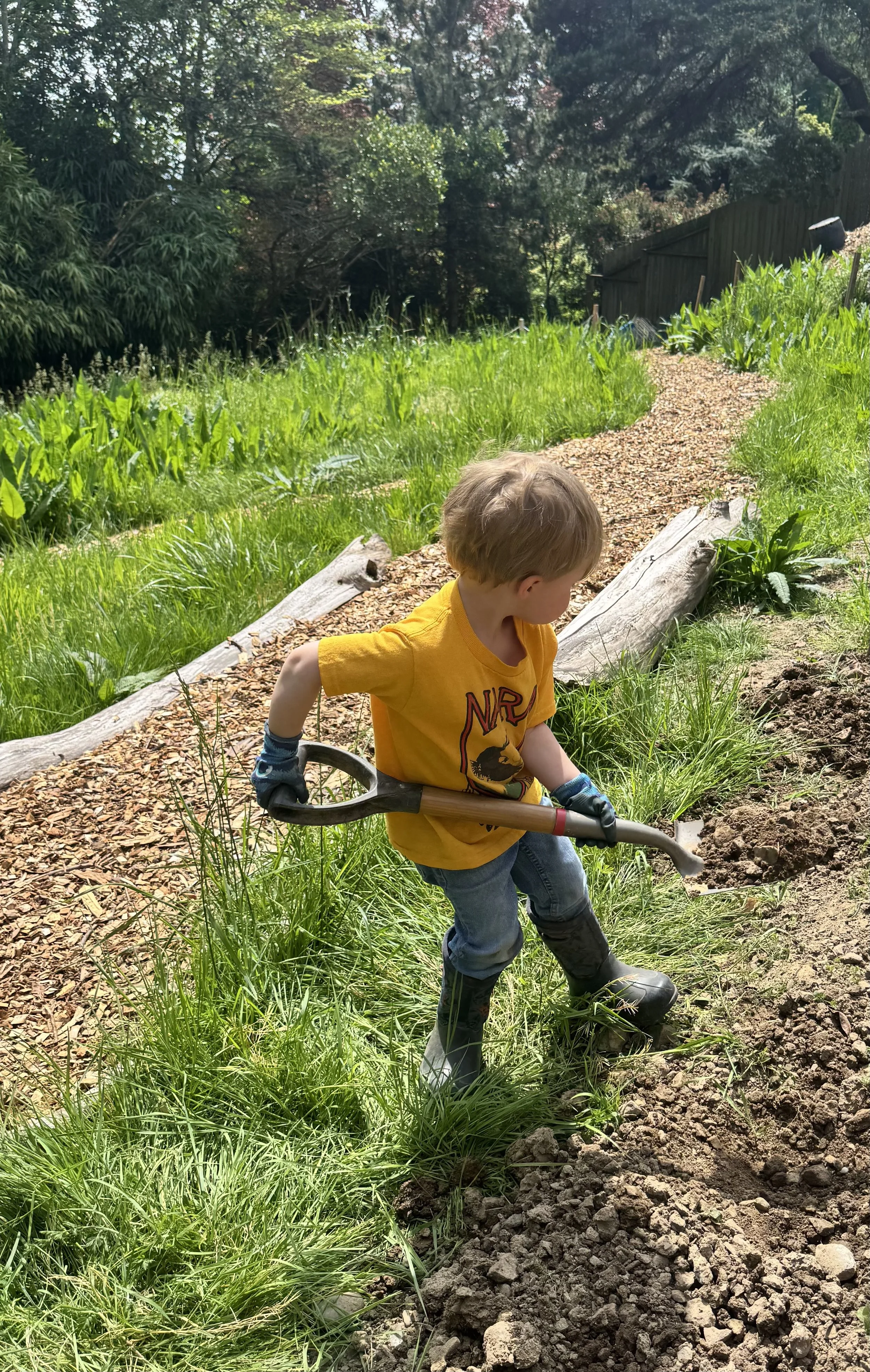
This means trusting children with real responsibility. They care for materials, help prepare and restore shared spaces, use tools with guidance, make choices about their work, and take increasing ownership of their belongings and needs.

Ways Children Learn
Curiosity-Led
Children’s interests, questions, problem-solving, and observations help guide the rhythm of learning each day, while repetition, routine, and seasonal rhythms create a sense of security.
Hands-On, Whole-Body Learning
Children learn through doing: climbing, building, storytelling, creating, experimenting, and exploring the natural world through movement and play.
Confidence, Connection, & Emotional Growth
By forming meaningful relationships with one another and the living world around them, children develop empathy, confidence, resilience, and a strong sense of belonging.